
Artificial Seeds and an Authentic Mystery
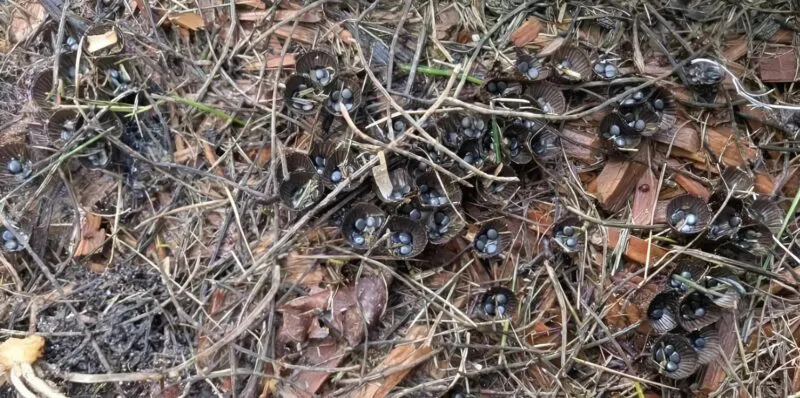
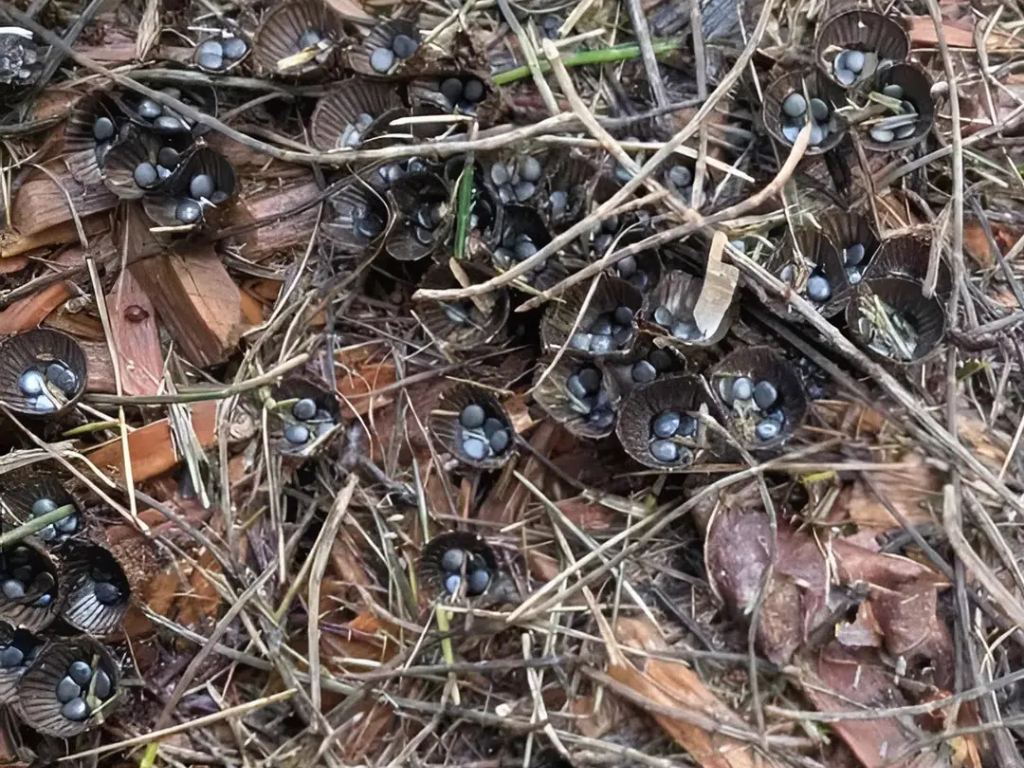
At first glance, we imagined these were simply a few seeds that had fallen by chance, or perhaps tiny eggs laid by an insect. Curious, we leaned in to examine these astonishing “little bowls” whose design was so perfect it seemed almost artificial. Their overly flawless appearance, too neat to be natural, sparked in us both curiosity and a mild perplexity. None of the initial hypotheses seemed fully satisfying, so we decided to discuss the mystery with my friend’s grandfather, a passionate gardener, to uncover the truth behind these fascinating objects.
The Diagnosis of an Experienced Gardener
As soon as he glanced at the photos, his eyes lit up: “But it’s obvious! These are bird’s nest mushrooms!” We were both fascinated and slightly skeptical. How could simple mushrooms realistically imitate tiny nests filled with eggs so convincingly? Yet, nature sometimes demonstrates creativity far beyond that of any artist or sculptor.
These Mushrooms That Trick the Eye by Imitating Nests
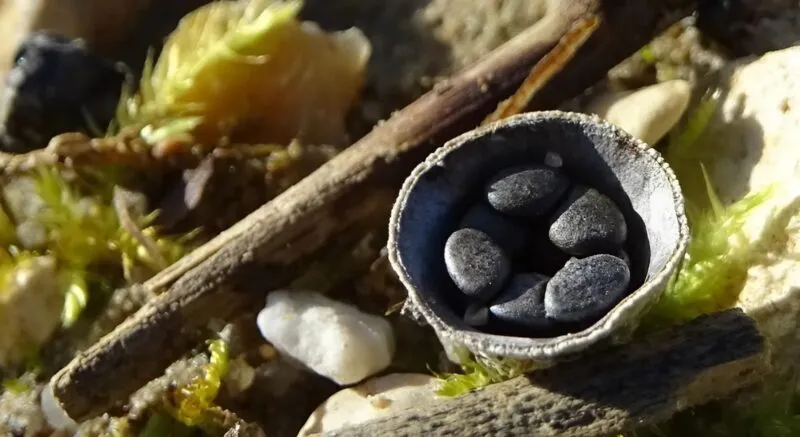
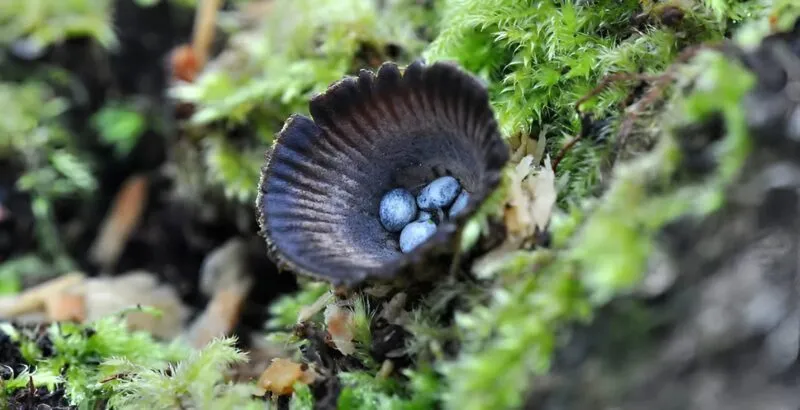
These astounding little organisms are called nidulariaceae, a scientific term referring to mushrooms that resemble authentic miniature bird’s nests. Their unique feature lies in their “cup” shape, cradling tiny spherical capsules that look like small eggs. But these so-called eggs will never hatch into chicks: in reality, they contain spores, microscopic dust essential for the reproduction of the mushroom.

And here is where nature reveals its full ingenuity: when it rains, each drop that falls on the nest bursts these capsules, projecting the spores into the surrounding environment and thus ensuring their dispersal. This natural mechanism is one of astonishing precision and profound beauty!
A Genuine Invitation to Curiosity and Wonder
What struck us most was not only the surprising appearance of these mushrooms, but also their extreme discretion. They so often go unnoticed, growing in mulch, wood chips, or compost—places we frequently overlook. Yet beneath our feet, an authentic ballet of life unfolds, a miniature universe where every detail holds immense significance.
Since this discovery, it has become impossible to walk through any garden without viewing the ground with fresh eyes. Who knows what else remains to be discovered? A rare insect, an unsuspected plant, or another small miracle of nature?
Rediscovering the Magic in Everyday Life
This experience reminded us of an essential truth: nature doesn’t need grand stages to amaze us. Sometimes, it only takes a little attention to reveal beauty where we least expect it. So, the next time you stroll through your garden or a park, open your eyes wide! The marvelous is often hidden in the simplest corners.
