
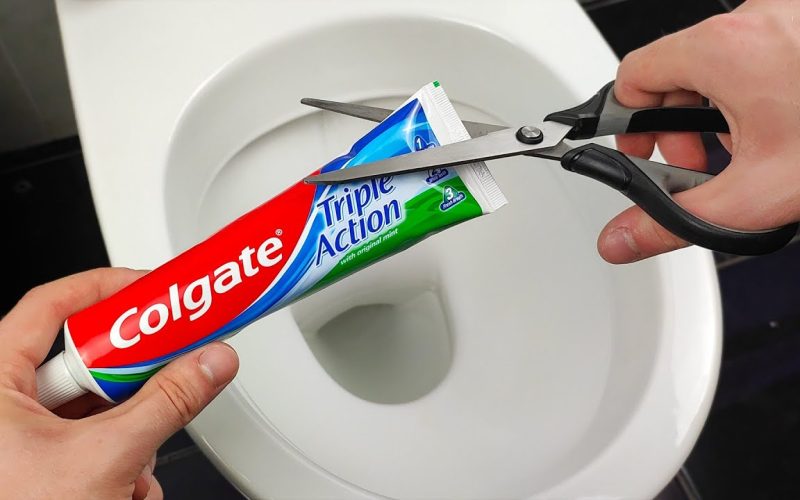
Toothpaste usually belongs on the bathroom shelf—but in the toilet tank? This unusual household trick has been circulating online for years. Supposedly, placing toothpaste in the cistern can neutralize odors, keep the toilet smelling fresh, and even help clean it. But does it really work, or is it just another questionable life hack?
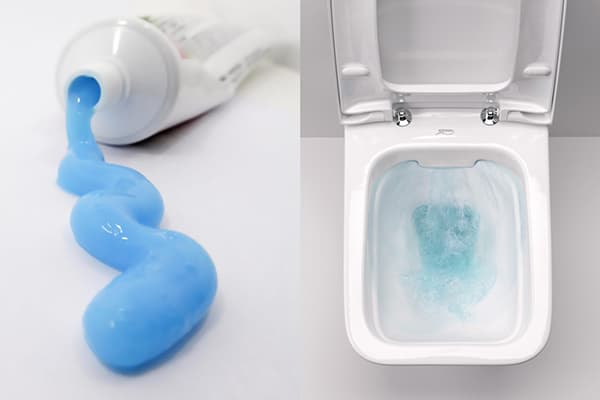
Why Put Toothpaste in the Toilet Tank?
Supporters of this trick usually have three goals. First, they want to reduce unpleasant odors in the bathroom. Second, they hope the toilet will clean itself without scrubbing or direct contact. Third, there is the promise of saving money, as toothpaste is said to replace both toilet cleaner and air freshener.
As with most so-called miracle solutions, however, the chances of a real breakthrough are fairly low.

Preparation: How the Trick Is Supposed to Work
According to online instructions, not every toothpaste is suitable. Only mint-flavored toothpaste is recommended, as the menthol is meant to provide the fresh scent.
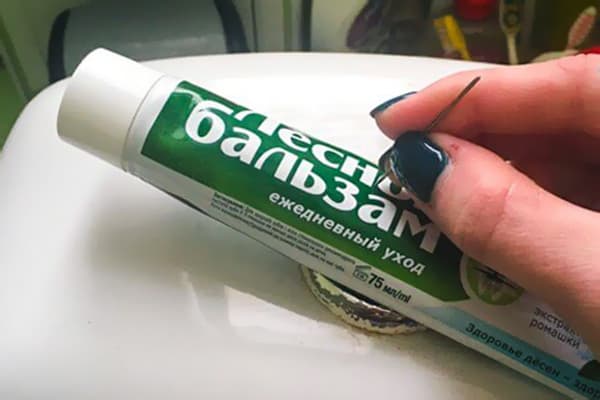
Before use, the tube is pierced several times with a thick needle, without removing the cap. Through these small holes, a tiny amount of toothpaste is supposed to be released into the water with every flush.
Note: Toothpaste in metal tubes is not suitable, as rust could contaminate the water.
Once prepared, the lid of the cistern is opened and the perforated toothpaste tube is placed inside.
Does It Really Work?
Taking a closer look at this method reveals several practical problems. In reality, the toothpaste is often flushed out very poorly through the tiny holes. Larger openings might help, but they would also cause the tube to empty much faster. In addition, toothpaste consistency varies greatly between brands, making even dosing almost impossible.
Another issue is that toothpaste does not dissolve well in water. For truly scented flush water, it would need to foam—something that simply does not happen inside a toilet tank.
There is also no real cleaning effect. Just as teeth do not get clean without a toothbrush, a toilet cannot be cleaned by toothpaste alone. A proper toilet cleaner remains essential.
Furthermore, the tube takes up space in the cistern and displaces water. This can reduce the flushing volume, making it less effective at actually cleaning the bowl.
There are also practical inconveniences. Once the tube is empty, it can be awkward to remove from the tank. Without a string or tool, this quickly becomes an unpleasant task.
Finally, there is the cost factor. Specialized toilet cleaning tabs are inexpensive, effective, and often last two weeks or more. Cheap toothpaste costs about the same but offers little more than a faint scent—without any real cleaning power.
Conclusion
If you have an unused tube of toothpaste lying around because you dislike the flavor or effect, it can serve as a temporary toilet deodorizer. As a long-term solution, however, this life hack is not convincing.
Purpose-made products are easier to use, often cheaper, and far more effective. And anyone with a modern, built-in toilet cistern will likely have little desire to experiment with this questionable trick in the first place.
