
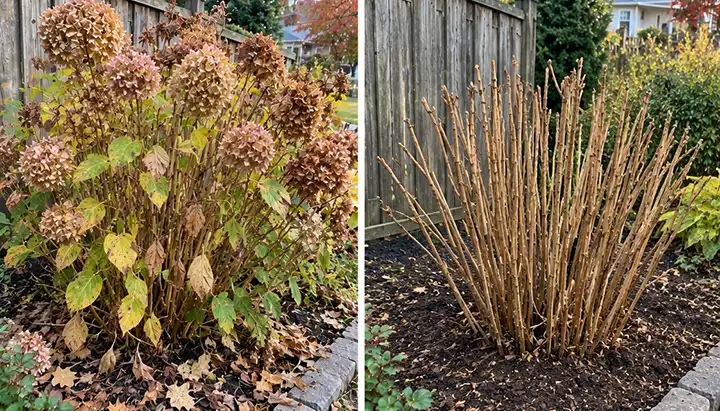
Hydrangeas rank among the most elegant flowering shrubs in the garden, with their large colorful flower clusters brightening the summer season. However, as autumn arrives and the blooms fade, many gardeners believe their work is done until spring.
Yet, it is during this period that the most crucial maintenance for hydrangeas begins.
What you do in September, October, and November will play a decisive role in how well your hydrangeas withstand the winter, how they look in spring, and the number of flowers they will produce the following summer.
Some hydrangea varieties form their flower buds several months before blooming, while others develop flowers on new spring growth. Understanding this distinction is essential: a pruning mistake in autumn can wipe out the entire season’s flowering.
The good news is that hydrangeas generally do not require complex autumn maintenance. A few simple, well-timed actions are enough to protect the roots, preserve the developing flower buds, and prepare vigorous growth.
Here are 10 essential actions to take this autumn so your hydrangeas arrive in full health and bloom abundantly next season.
1. Identify Your Type of Hydrangea Before Starting
The first step in autumn is to precisely identify the species of hydrangea you are cultivating.
Each type of hydrangea forms its flower buds at different times, which determines how to prune and protect the plant.
Some bloom on old wood — that is, on stems formed during the previous season.
Others bloom on new wood, meaning stems developed the same year.
Some modern varieties can even flower on both types of wood.
Main Types of Hydrangeas
Hydrangea | Botanical Name | Flowering Habit
- Bigleaf Hydrangea • Hydrangea macrophylla • Usually old wood, sometimes rebloom
- Mountain Hydrangea • Hydrangea serrata • Usually old wood, sometimes rebloom
- Oakleaf Hydrangea • Hydrangea quercifolia • Old wood
- Climbing Hydrangea • Hydrangea anomala subsp. petiolaris • Old wood
- Panicle Hydrangea • Hydrangea paniculata • New wood
- Smooth Hydrangea • Hydrangea arborescens • New wood
Why This Distinction Is Crucial
Bigleaf, mountain, and oakleaf hydrangeas often have their flower buds for the next year already formed in autumn. Pruning them at this time therefore destroys future flowers.
In contrast, panicle and smooth hydrangeas bloom on new spring growth and can tolerate later pruning, usually in late winter or early spring.
The golden rule: never prune a hydrangea heavily before knowing on which type of wood it blooms.
2. Avoid Heavy Pruning in Autumn
A common mistake in autumn is to severely cut back hydrangeas as soon as the flowers fade, thinking it tidies up the garden smartly.
However, severe autumn pruning is disastrous, especially for species blooming on old wood.
Hydrangeas Not to Prune in Autumn
- Bigleaf Hydrangea
- Mountain Hydrangea
- Oakleaf Hydrangea
- Climbing Hydrangea
These plants often already bear the buds that will produce next summer’s flowers.
Cutting these stems too early means losing a large part of the coming bloom.
What About Panicle and Smooth Hydrangeas?
Since they bloom on new wood, they are less sensitive to bud loss through late pruning.
Nonetheless, heavy pruning is more effective and less risky at the end of winter or early spring, so the plant is not disturbed during its winter preparation.
What Can Be Removed in Autumn?
It is possible to carefully remove:
- Broken branches
- Clearly dead wood
- Diseased material
- Stems posing an immediate hazard
Use clean, sharp pruning tools and avoid unnecessary cuts.
If you are unsure of your variety, leave the stems intact until spring.
3. Continue Watering During Dry Autumn Periods
Lower temperatures do not mean hydrangeas no longer need water.
They have significant moisture needs, especially during their growth period.
In autumn, plants still draw from the soil so their tissues mature and prepare for winter.
A soil that is too dry before the first frosts can cause additional stress to the plant.
How Much Water Do Hydrangeas Need?
The amount depends on rainfall, soil type, temperature, and plant size.
During a dry autumn, plan for about 2.5 cm of water per week for a well-established hydrangea, including precipitation, as long as the ground is not frozen.
Newly planted hydrangeas often require more regular attention.
Watering Properly
Water slowly around the root zone rather than near the main stems, aiming to moisten the soil deeply.
Avoid leaving the soil permanently waterlogged: hydrangeas prefer fresh but well-draining soil.
When to Stop Watering?
Monitor soil moisture until the first frosts arrive.
Once the plant is dormant and the soil is frozen, regular watering is no longer necessary.
For hydrangeas in pots, light watering may remain useful during frost-free periods, depending on where they are stored.
4. Apply a Protective Layer of Mulch
Mulching is a simple and particularly beneficial operation in autumn.
A layer of organic mulch regulates soil temperature, retains moisture, and protects shallow roots from sudden temperature fluctuations.
It also limits weed growth while gradually improving soil structure as it decomposes.
Best Mulching Materials
- Shredded leaves
- Pine bark
- Composted wood chips
- Composted leaf mold
- Well-decomposed compost
- Shredded hardwood mulch
Recommended Thickness
Spread between 5 and 7.5 cm of mulch around the root zone.
Ideally, extend it to the driplines projected on the ground, without bringing it into direct contact with the stems.
Avoid piling mulch against the base of stems to prevent rot.
The Importance of Proper Placement
Mulch placed too tightly around the stems traps moisture and promotes rot.
A broad, even layer is far preferable to a thick mound at the base.
In cold regions, applying mulch once the soil starts to cool can reduce repeated freeze-thaw cycles.
5. Protect Flower Buds from Severe Cold
Winter protection is especially crucial for hydrangeas blooming on old wood.
They can withstand freezing temperatures well, but their flower buds, sensitive to cold, may be damaged.
Thus, a hydrangea might produce beautiful leaves in spring but fail to flower if its buds were destroyed over winter.
Which Hydrangeas Need the Most Protection?
Bigleaf hydrangeas are the most vulnerable in cold climates.
Mountain hydrangeas are somewhat hardier depending on the variety.
Oakleaf hydrangeas can also suffer bud damage during harsh winters.
Panicle and smooth hydrangeas, which bloom on new wood, usually require less protection.
How to Protect Sensitive Hydrangeas?
In the coldest regions, install a light and airy shelter around the plant using:
- Wooden stakes
- Wire mesh or simple frame
- Dry dead leaves or clean straw
- Breathable burlap fabric
Be careful not to bend or crush branches when setting up the protection.
Once the plant is dormant and cold has set in, complete the protective covering around stems with insulating material if necessary.
Avoid packing moist material directly against the buds.
Tips for Successful Winter Protection
- Do not wrap hydrangeas in waterproof plastic.
- Avoid trapping excess moisture.
- Ensure the protective structure is stable.
- Remove protection gradually after severe frosts.
- Plan to protect sensitive buds from late spring frosts.
In mild climates, this kind of protection is rarely needed.
6. Stop Fertilizing as Winter Approaches
In autumn, you should not encourage the growth of tender new shoots that cold could damage.
Nitrogen-rich fertilizers stimulate the formation of new stems and leaves.
Growth that occurs too late in the season risks not maturing before freezing temperatures, making it vulnerable.
Should Hydrangeas Be Fertilized in October?
In most temperate climates, fertilizing should be finished by early autumn.
If your hydrangeas are healthy, there is no need to add fertilizer at this time.
The plant is entering dormancy rather than an active growth phase.
What About Compost?
A thin layer of mature compost around the roots benefits soil structure in the long term.
However, avoid inputs that aim to stimulate immediate growth in autumn.
When to Resume Fertilization?
Spring is the best time, as growth resumes.
Apply a suitable fertilizer based on soil condition and manufacturer recommendations.
More fertilizer does not necessarily mean more flowers.
Excess nitrogen favors foliage over blooming.
7. Decide Whether to Keep or Remove Dried Flowers
Hydrangea flower clusters often remain decorative well after their initial fading.
Pink, blue, or white flowers can take on shades of green, beige, burgundy, or brown.
These dried blooms add texture and structure to the autumn and winter garden.
Many gardeners cut them immediately, but it is not necessary to remove all faded flowers.
Why Keep Dried Inflorescences?
- For winter aesthetic interest
- To create dried floral arrangements
- For a natural, authentic look
- To keep a visual record of the past season’s growth
Do They Protect the Buds?
Dried flowers do not guarantee frost protection, but avoiding early pruning reduces the risk of damaging nearby forming buds.
When Can You Remove Them?
For hydrangeas on old wood, wait until spring if you are uncertain where the buds lie.
For panicle and smooth hydrangeas, dried flowers can be removed during late winter or early spring pruning.
In areas where heavy snow can break branches, carefully remove the largest flower heads to lighten fragile stems.
Make minimal cuts.
8. Clean Fallen Leaves and Watch for Diseases
Autumn cleaning is important if your hydrangeas suffered from leaf spots, fungal diseases, or other issues during summer.
Some pathogenic fungi can survive in contaminated plant debris.
Leaving heavily infected leaves at the base of shrubs promotes their recurrence.
What Should Be Removed?
- Fallen leaves with severe infection
- Decayed flower parts
- Severely diseased plant debris
- Broken or diseased branches
It is not necessary to remove all fallen leaves systematically, especially if they are healthy.
Healthy leaves can be used as mulch.
Common Diseases to Monitor
Alternaria leaf spot (Cercospora leaf spots): small brown or purple spots on leaves.
Downy mildew: white powdery deposits on leaves.
Botrytis (gray mold): affects flowers and tissues during cool, humid periods.
Prevention Is Better Than Cure
- Improve air circulation around plants
- Avoid overhead watering
- Remove contaminated debris
- Keep mulch away from stems
- Avoid plant overcrowding
Do not routinely treat with fungicides.
Proper identification and preventive vigilance are more effective than treating each spot as an emergency.
9. Protect Potted Hydrangeas Before the First Hard Frosts
Hydrangeas grown in pots are more fragile against cold than those planted in the ground.
In garden beds, surrounding soil insulates the roots.
In pots, roots are exposed on all sides, the substrate freezes faster, and undergoes large temperature fluctuations.
What to Do for Potted Hydrangeas?
In cold zones, move them to a sheltered location before prolonged hard frosts.
Options for storage include:
- Unheated garage
- Protected shelter
- Cold frame
- Sheltered zone against a wall
The place should remain cool for dormancy but prevent severe root freezing.
Can You Leave Pots Outside?
Yes, in mild climates or with proper protection.
Large containers provide better insulation than small pots.
You can also group pots in a sheltered area and insulate containers with appropriate materials.
Avoid wrapping plants in airtight plastic.
Remember Winter Watering
Even at rest, potted plants can dry out.
Check substrate moisture regularly and water lightly during frost-free periods without saturating the roots.
10. Plan for Protection Against Late Spring Frosts
Protecting future blooms does not end with winter’s close.
Late spring frosts are a major cause of flower loss in hydrangeas on old wood.
A plant can survive winter with healthy buds, start growth during a warm spell, but then be hit by a frost as buds open in spring.
These young buds may be damaged even if the entire shrub survives.
How to Reduce Damage from Late Spring Frosts?
In frost-prone areas:
- Always keep frost cloths handy.
- Frequently check local weather forecasts.
- Do not remove winter protection too early.
- Protect vulnerable plants during unexpected cold nights.
- Remove temporary protection as temperatures rise.
Why Is This Precaution Essential?
Hydrangeas flowering on old wood do not quickly form replacement buds if frosts damage them. They risk a flowerless season.
Some remontant varieties can bloom later on new growth, but this ability varies.
Planning this protection in autumn prevents many spring disappointments.
Practical Summary of Autumn Care for Your Hydrangeas
| Action | Why It Matters |
|---|---|
| Identify the variety | Avoid improper pruning |
| Do not heavily prune in autumn | Preserve buds on old wood |
| Water during dry spells | Reduce water stress before winter |
| Apply organic mulch | Protect roots and retain moisture |
| Protect fragile buds | Reduce winter damage |
| Stop late fertilization | Avoid tender vulnerable growth |
| Leave healthy dried flowers | Prevent unnecessary cuts |
| Clean diseased debris | Limit recurring diseases |
| Protect potted hydrangeas | Shield roots from frost |
| Prepare for late spring frost protection | Preserve buds in spring |
When to Start Preparing Your Hydrangeas for Winter?
The timing depends on your regional climate.
Early Autumn: September
…
