
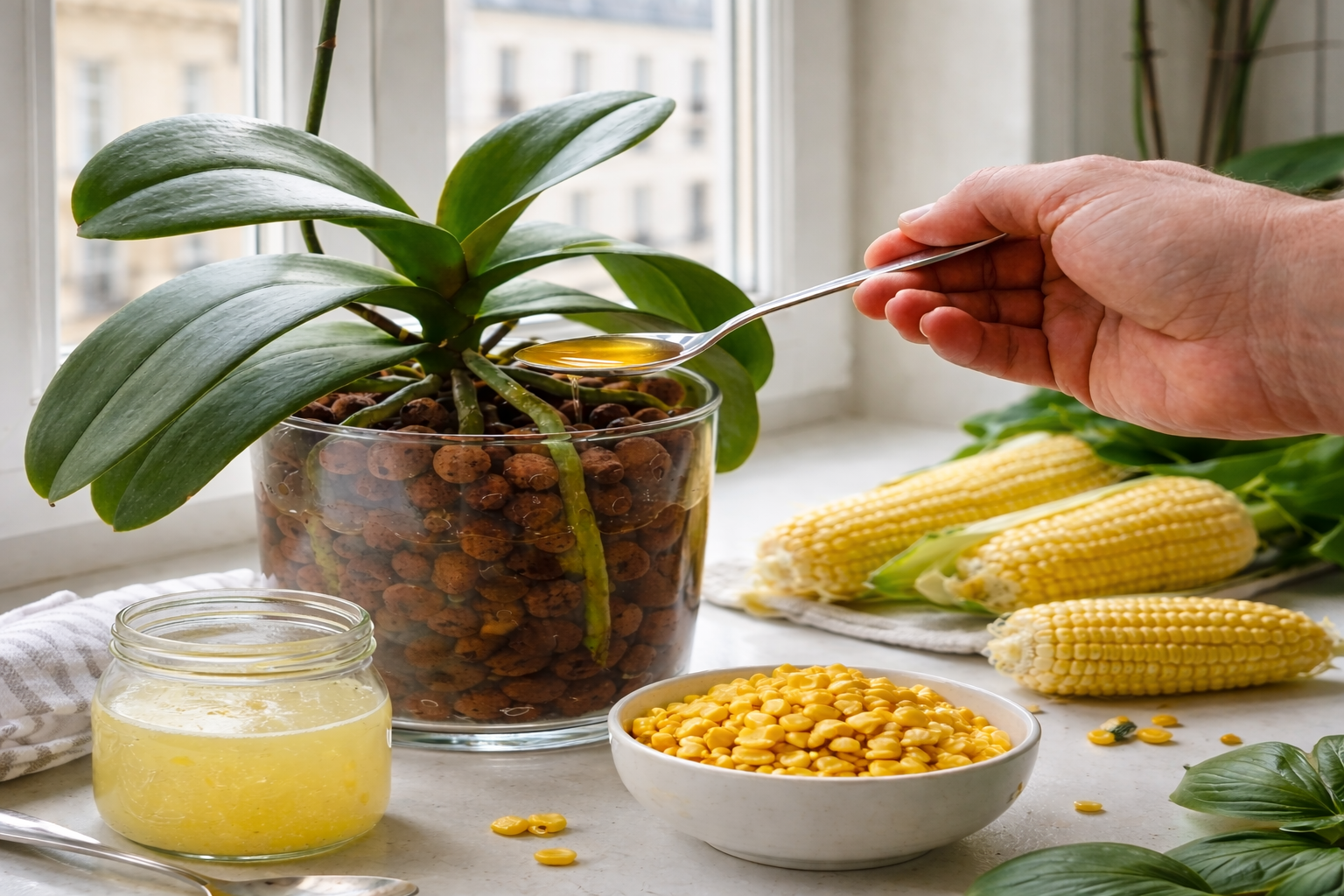
Your Phalaenopsis orchid has lost all its flowers and now looks lifeless on the windowsill? Before giving up on it, know that an unexpected natural fertilizer may help wake up its roots and put the plant back on track.
When a Flowerless Orchid Is Not Dead
An orchid that has dropped all its blooms often looks like it is finished. Bare stems, an unremarkable pot pushed aside, and many plants end up in the trash even though they are still very much alive. As long as the roots remain firm and green or silvery, the orchid is usually just resting.
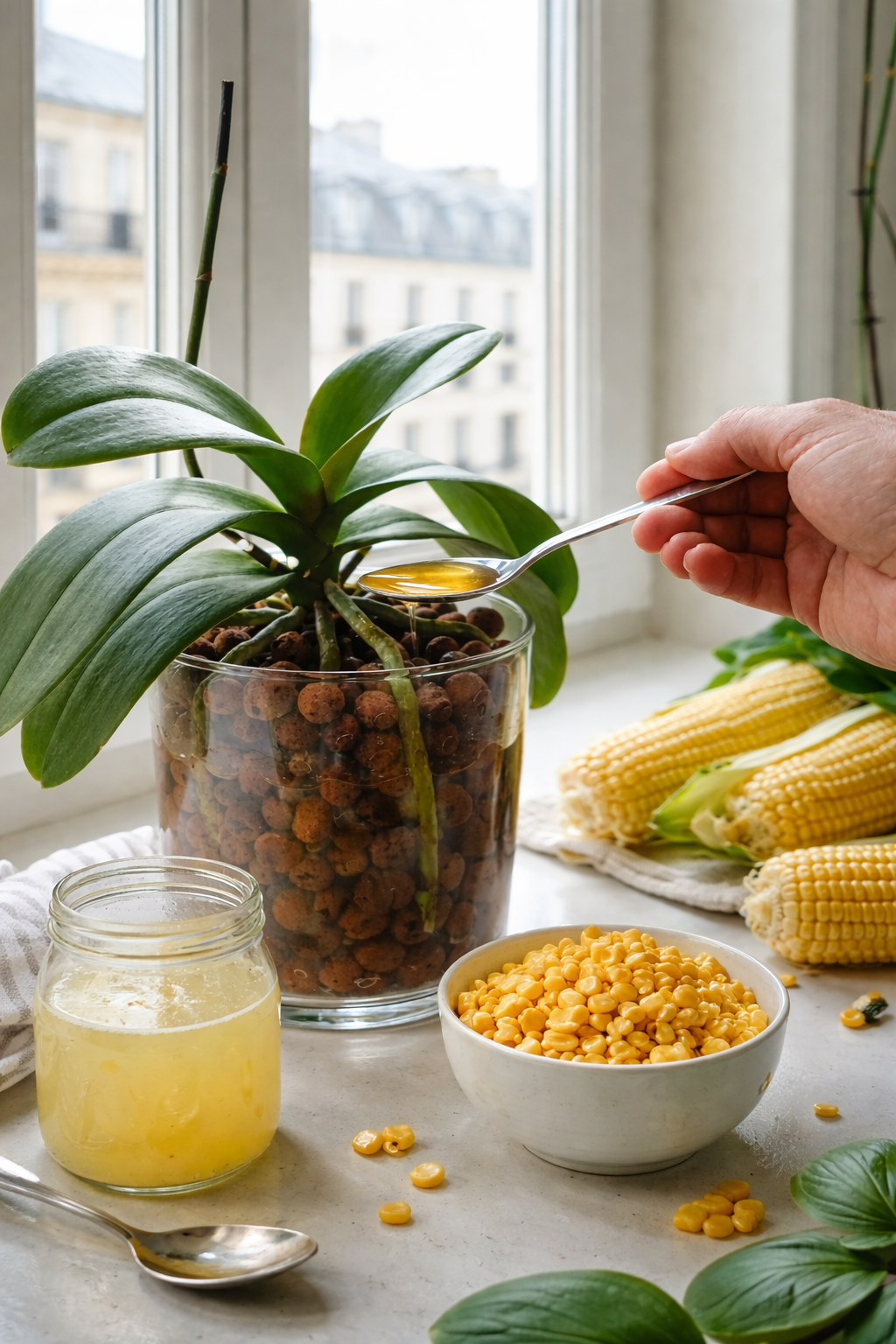
What many people do not realize is that a single, everyday kitchen ingredient can help speed up its recovery. A gentle homemade orchid fertilizer made from boiled corn, applied carefully with a spoon to the roots, can stimulate growth—provided the plant also receives the right light, humidity, and temperature.
Preparing Your Phalaenopsis Before Applying the Corn Mixture
Start by checking whether your Phalaenopsis orchid can still be revived. Healthy signs include firm roots that are green or silver-gray and leaves that remain flexible, even if slightly soft. These indicate a dormant phase rather than a dead plant.
However, if the roots are brown, mushy, or smell rotten, do not apply any fertilizer yet. In that case, repotting and drying the plant are essential first steps.

Placement is just as important. In heated living spaces, orchids placed near radiators are exposed to very dry air—often below 40% humidity. Specialists from the National Museum of Natural History recommend humidity levels between 50% and 70% for Phalaenopsis orchids.
To recreate these conditions, place the pot near a bright window without direct sunlight, ideally filtered through a sheer curtain. Set the pot on a wide tray filled with clay pebbles or stones and a shallow layer of water that never touches the bottom of the pot. As the water evaporates, it creates a comfortable humid microclimate.
Why Boiled Corn Works as a Natural Root Booster
Boiled corn contains starches, fibers, and antioxidants that feed beneficial micro-organisms in the growing medium, including certain mycorrhizal fungi that live in symbiosis with orchid roots.
This effect is similar to that of rice water, recommended by orchid specialist Mark Curran of Heavenly Orchids. Rice water provides small amounts of nitrogen, phosphorus, magnesium, and potassium, along with starches that support root activity.
When supplied gently, corn-based nutrients encourage stronger root development and better resistance to disease—especially if the plant also experiences a mild temperature difference of 4 to 8°C between day and night. Ideally, daytime temperatures should range from 18 to 22°C, with nights around 12 to 15°C for several weeks.
How to Apply Boiled Corn Safely Without Harming Your Orchid
The preparation is simple. Blend 100 grams of boiled corn with 1 liter of lukewarm water, then strain the mixture carefully to remove all solids. Store it in the refrigerator and use it within 24 to 48 hours. Discard it immediately if you notice any sour smell or unusual residue.
For a standard pot, pour 1 to 2 teaspoons of this liquid onto slightly moist substrate, directly over the roots, once every three to four weeks during the growing season. All other watering should be done with plain water, using a quick soaking method every 10 to 15 days, and never allowing water to remain in the saucer.
You may also use a diluted version as a foliar spray, mixing one part of the corn liquid with three parts water. Lightly mist the leaves in the morning, no more than once every two to three weeks, and avoid spraying flowers.
To keep this method beneficial rather than risky, do not combine it with other homemade fertilizers. Watch for warning signs such as sticky residue on the substrate surface, persistent fermentation odors around the pot, or leaf spots appearing after spraying.
