
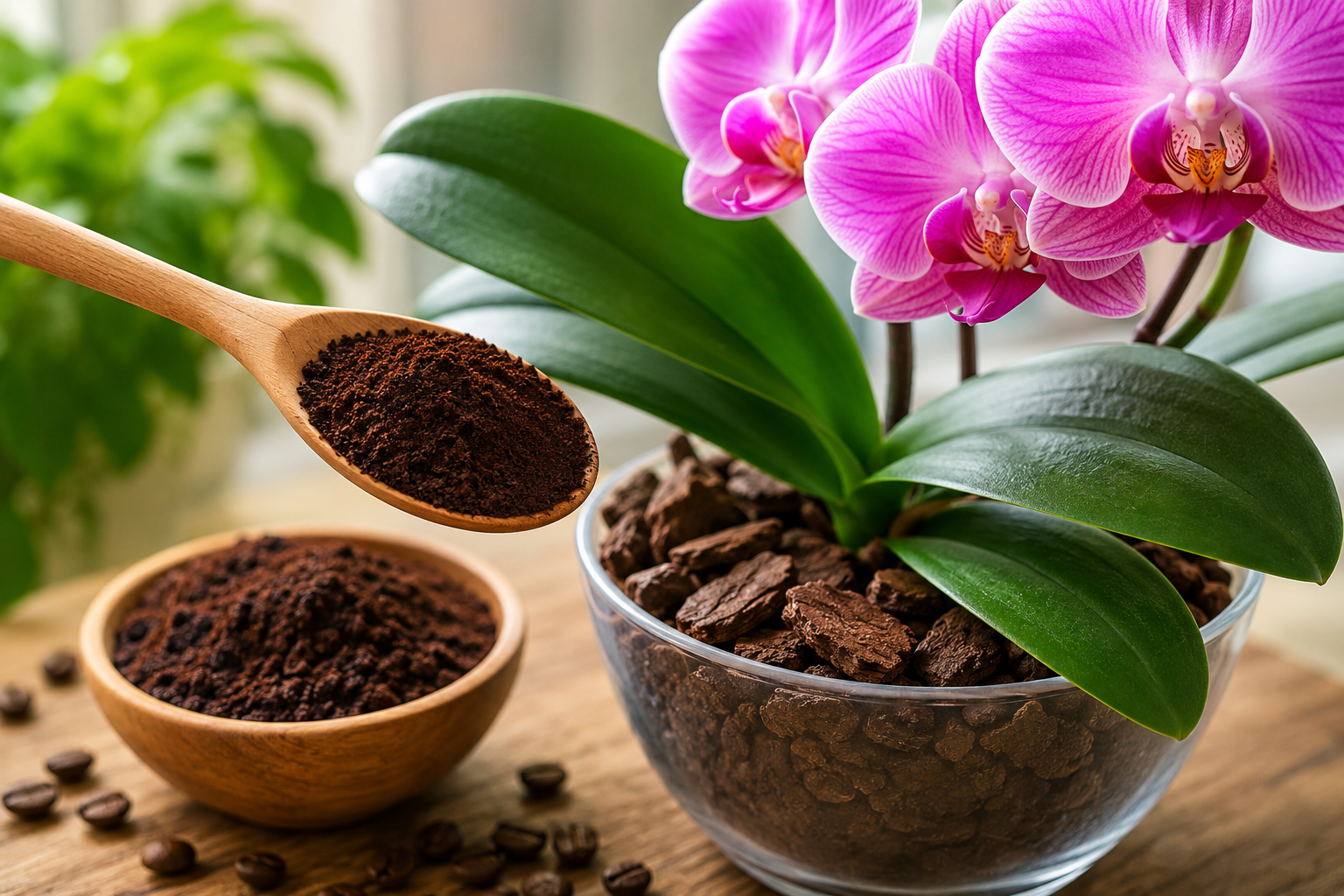
Orchids have a reputation for being beautiful but sometimes difficult to grow. One week they’re covered with elegant blooms, and the next they seem to stop growing altogether. If you’ve ever searched for simple, inexpensive ways to support your orchid’s health, you’ve probably come across the idea of using coffee grounds.
One particular tip has become popular among home gardeners: applying just one teaspoon of used coffee grounds once a month. It’s an easy routine that many plant enthusiasts enjoy trying because it recycles a common kitchen waste product instead of throwing it away.
But can this simple habit really make a difference? The answer is more balanced than many online claims suggest. Used correctly and in moderation, coffee grounds may provide a small nutritional boost and organic matter for some orchids. However, they are not a miracle treatment, and healthy growth always depends on many factors working together.
In this guide, you’ll learn exactly how to prepare and apply coffee grounds, when to use them, common mistakes to avoid, and how to care for your orchid beyond this single ingredient.
What Are Coffee Grounds?
Coffee grounds are the leftover particles that remain after brewing coffee. Instead of discarding them, many gardeners reuse them in compost piles or around certain plants because they contain small amounts of nutrients and organic material.

Used coffee grounds may contain modest amounts of:
- Nitrogen
- Potassium
- Phosphorus
- Magnesium
- Trace minerals
These nutrients are released gradually as the organic material breaks down. However, coffee grounds should never be considered a complete fertilizer, especially for orchids, which have unique nutritional needs.
Why Do Gardeners Use Coffee Grounds?
Gardeners appreciate coffee grounds for several practical reasons. They’re free, easy to obtain, and help reduce household waste. When used appropriately, they may also contribute small amounts of organic matter to the growing medium.
- They recycle kitchen waste.
- They contribute small amounts of nutrients.
- They add organic material that slowly decomposes.
- They may support microbial activity when composted.
- They are inexpensive and readily available.
It’s important to remember that orchids naturally grow differently from most houseplants. Many species grow attached to tree bark rather than in traditional soil, which means they require excellent drainage and airflow around their roots.
Can Coffee Grounds Help Orchids?
Some orchid growers report positive experiences after occasionally using a very small quantity of dried, used coffee grounds. Others notice little or no difference. Scientific research does not support coffee grounds as a replacement for balanced orchid fertilizer, but careful use may provide a minor supplement.
The outcome depends on many variables, including:
- The orchid species.
- The overall health of the plant.
- The type of potting mix.
- Light exposure.
- Watering practices.
- Humidity levels.
- Temperature.
- Air circulation.
Because every growing environment is different, results vary from one home to another. No single ingredient can guarantee better flowering or faster growth.
How to Prepare Coffee Grounds
What You’ll Need
- Used coffee grounds
- A plate or tray
- An airtight container
Step 1: Save Used Coffee Grounds
Only use coffee grounds that have already been brewed. Fresh coffee grounds are much stronger and are generally not recommended for this purpose.
Step 2: Dry Them Completely
Spread the used grounds in a thin layer on a plate or tray. Allow them to dry thoroughly before storing or using them. Dry grounds are much less likely to develop mold.
Step 3: Store Properly
Keep the dried grounds in a sealed container until you’re ready to use them.
How to Apply One Teaspoon to Your Orchid
- Water your orchid normally so the growing medium is slightly moist.
- Measure exactly one level teaspoon of dry, used coffee grounds.
- Lightly sprinkle the grounds over the surface of the orchid bark.
- Keep the grounds away from the crown, leaves, and stems.
- Avoid burying large amounts inside the potting mix.
- Water lightly after application if needed.
Applying only a small amount helps minimize excess moisture retention and maintains airflow around the roots, which orchids need to stay healthy.
How Often Should You Apply It?
A conservative schedule works best.
- Use one teaspoon once every month during periods of active growth.
- Reduce or skip applications while the orchid is dormant.
- If you notice mold, unpleasant odors, or declining plant health, discontinue use.
Coffee grounds should always be viewed as an occasional supplement rather than a regular feeding program.
Benefits of Using Coffee Grounds
- Recycles kitchen waste.
- Provides small amounts of nutrients.
- Adds organic matter.
- Simple and inexpensive.
- Easy for beginner gardeners to try.
Limitations You Should Know
Although coffee grounds are popular, they also have limitations.
- They are not a complete fertilizer.
- Too much can reduce airflow around orchid roots.
- They cannot fix poor lighting or watering problems.
- Some orchids may not respond positively.
- Results vary depending on growing conditions.
Common Mistakes to Avoid
Using Fresh Coffee Grounds
Always use brewed, used coffee grounds rather than fresh grounds.
Applying Too Much
More is not better. Excessive amounts may retain moisture and interfere with the well-drained conditions orchids prefer.
Using Damp Grounds
Damp grounds can encourage mold growth. Allow them to dry completely before use.
Placing Grounds Against the Crown
Keep coffee grounds away from the crown and leaves to reduce the risk of excess moisture around sensitive plant tissue.
Ignoring Basic Orchid Care
No household ingredient can replace proper watering, lighting, humidity, and fertilization.
Extra Orchid Care Tips
Healthy orchids depend on consistent care rather than any single treatment.
- Provide bright, indirect sunlight.
- Use a high-quality orchid bark mix with excellent drainage.
- Water only when the growing medium begins to dry.
- Never allow the pot to sit in standing water.
- Maintain moderate humidity with good air circulation.
- Feed regularly with a balanced orchid fertilizer according to the manufacturer’s instructions.
- Repot every one to two years as the bark naturally decomposes.
- Inspect leaves and roots regularly for pests and disease.
Frequently Asked Questions
Can all orchids receive coffee grounds?
Different orchid species have different requirements. If you decide to try coffee grounds, begin with a very small amount and monitor your plant carefully.
Should I use fresh or used coffee grounds?
Only used coffee grounds should be considered. Fresh grounds are more concentrated and are generally not recommended.
Can coffee grounds replace orchid fertilizer?
No. They contain limited nutrients and should only be used as a small supplement alongside a balanced orchid fertilizer.
How quickly will I see results?
There is no guaranteed timeline. Some gardeners notice gradual improvements over several months, while others see little change. Growth depends on many environmental factors.
What should I do if mold develops?
Remove the coffee grounds, improve airflow, and avoid using damp grounds in the future.
Can I use coffee grounds every week?
Weekly applications are generally unnecessary. A small monthly application is a more cautious approach for orchids.
Conclusion
Adding one teaspoon of used coffee grounds once a month is a simple gardening practice that many orchid enthusiasts enjoy experimenting with. While it may contribute small amounts of organic matter and nutrients, it is not a substitute for proper orchid care or a balanced fertilizer.
The best results come from combining careful watering, bright indirect light, suitable humidity, excellent drainage, and regular feeding with an orchid-specific fertilizer. If you choose to use coffee grounds, apply them sparingly, observe how your orchid responds, and adjust your routine if necessary.
Key Takeaways
- Use only used, dry coffee grounds.
- Apply one level teaspoon once per month during active growth.
- Keep the grounds away from the crown and leaves.
- Do not replace balanced orchid fertilizer with coffee grounds.
- Healthy orchids depend on proper light, watering, humidity, airflow, and suitable growing media.
- Results vary based on plant health and growing conditions, so monitor your orchid and adjust your care routine as needed.
