
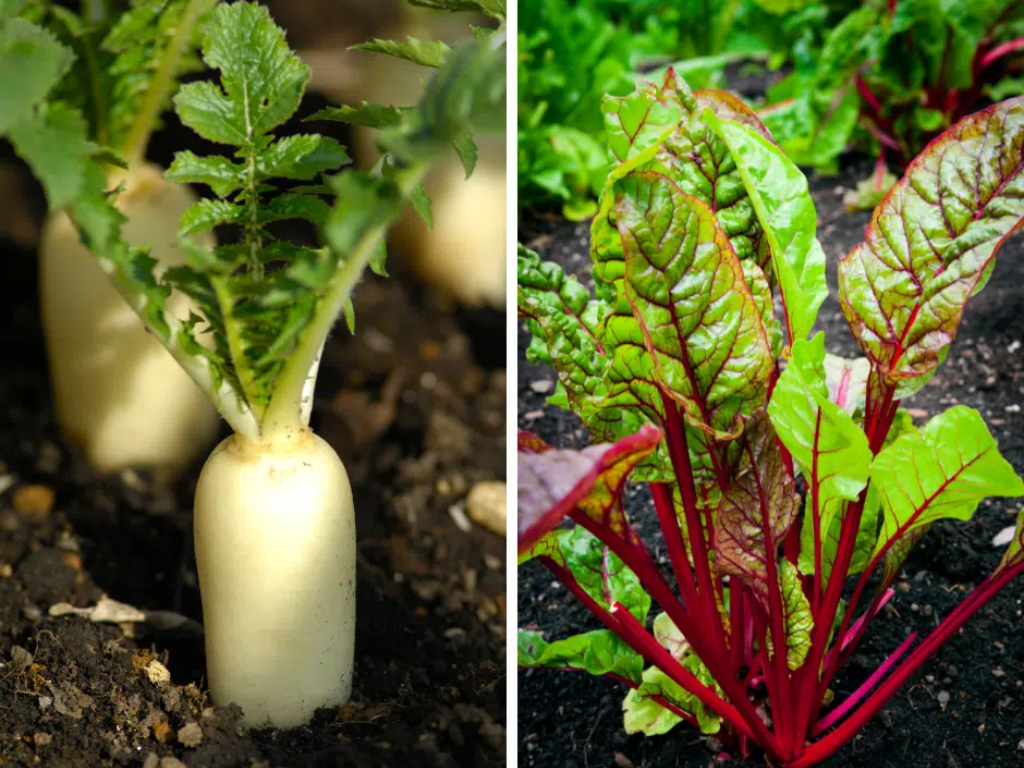
Do you think August is too late to plant vegetables? Think again. The end of summer offers a second chance to grow a bountiful harvest—provided you choose the right varieties to plant.
With gradually cooling temperatures and soil still warm from the summer heat, many fast-growing and cold-tolerant crops thrive perfectly when sown in August.
Whether you want to extend your harvest season, rejuvenate tired plots, or establish a new bed for autumn, now is the ideal time to act.
Why Planting in August Is Perfect for Autumn Harvests
Planting in August may seem late, but this period offers several distinct advantages:
Warm soil: The accumulated heat promotes faster seed germination.

Fewer pests: Attacks from aphids, cabbage worms, and other pests decline toward the end of summer.
Cooler growing conditions: Many leafy greens and root vegetables prefer autumn’s cool temperatures to develop better.
Extended harvests: With proper frost protection, some crops can be harvested well into late autumn or even early winter.
Focus on fast-growing vegetables, plants suited for cool seasons, and varieties specifically bred for the “autumn season” or “overwintering.”
1. Lettuce (Lactuca sativa)
Lettuce is one of the best choices to sow in August since it prefers cooler temperatures and grows quickly—some varieties can be harvested in as little as 30 days.
Recommended autumn varieties:
Buttercrunch
Romaine (“Parris Island Cos”)
Cut-and-come-again lettuces like “Red Sails” or “Salad Bowl”
Growing tips:
Plant in partial shade to reduce heat stress.
Use protective covers to prevent early frost damage.
Resow every two weeks for a continuous harvest.
2. Radishes (Raphanus sativus)
Radishes are among the fastest-growing vegetables, ready to harvest in just 21 days. They are excellent for filling small gaps or intercropping with slower-growing plants.
Recommended autumn varieties:
Cherry Belle
French Breakfast
Daikon (which takes a little longer but is perfect for autumn)
Growing tips:
Sow directly into well-tilled soil.
Water regularly to ensure sweet flavor.
Harvest quickly before roots become woody.
3. Spinach (Spinacia oleracea)
Spinach thrives in cool climates, and its flavor sweetens after a light frost. This nutrient-rich green germinates quickly in August’s warmth.
Autumn-suitable varieties:
Bloomsdale
Space
Tyee (a cold-tolerant hybrid)
Growing tips:
Sow directly every 10–14 days.
Mulch to retain moisture.
Protect with covers in colder areas to extend harvests.
4. Kale (Brassica oleracea var. acephala)
Kale is extremely cold-hardy and can often survive winter with minimal protection. August sowing ensures tender leaves before harsh cold arrives.
Recommended autumn varieties:
Dwarf Siberian
Lacinato (Dinosaur kale)
Red Russian
Growing tips:
Start indoors in warm climates and transplant when the temperature drops.
Harvest outer leaves to maintain productivity.
The flavor improves after frost exposure.
5. Carrots (Daucus carota)
Carrots need time to mature, so choose short-cycle varieties for August sowing. Autumn-grown carrots are often sweeter than spring harvests.
Recommended autumn varieties:
Napoli
Mokum
Scarlet Nantes
Growing tips:
Sow directly into loose, stone-free soil.
Thin seedlings to ensure regular root development.
Water deeply and consistently to prevent cracking.
6. Beets (Beta vulgaris)
Beets are versatile crops offering both tasty greens and fleshy roots. Beets sown in August are tender with an intense flavor.
Ideal autumn varieties:
Detroit Dark Red
Chioggia
Golden Beet
Growing tips:
Soak seeds to improve germination.
Thin seedlings to 7-10 cm apart.
Harvest baby beets after about 40 days or let them mature for larger roots.
7. Bush Beans (Phaseolus vulgaris)
In temperate warm regions, it is still possible to sow bush beans in early August for a final harvest before frost. Choose fast-maturing varieties.
Autumn-appropriate varieties:
Provider
Contender
Tendergreen
Growing tips:
Sow in full direct sunlight.
Harvest frequently to stimulate pod production.
Protect from early frost with covers or cloches.
8. Turnips (Brassica rapa)
Often underestimated, turnips are perfectly suited for autumn gardens. They grow quickly and produce both flavorful roots and nutritious greens.
Recommended autumn varieties:
Purple Top White Globe
Hakurei (a sweet turnip ideal for salads)
Tokyo Cross
Growing tips:
Sow in rows and thin seedlings early.
Keep soil moist to avoid bitterness.
Harvest before severe frosts for better flavor.
9. Arugula (Eruca vesicaria)
Arugula adapts well to cool climates and matures in just 25 to 30 days, making it one of the fastest leafy vegetables for autumn.
Recommended varieties:
Astro
Roquette
Dragon’s Tongue
Growing tips:
Sow every 2 to 3 weeks directly.
Prefer cooler temperatures and avoid intense heat.
Harvest young leaves for a mild flavor or let them grow for a spicier taste.
10. Swiss Chard (Beta vulgaris subsp. cicla)
Swiss chard is a colorful, nutrient-rich vegetable that tolerates both heat and cold. August sowing promotes vigorous growth in autumn.
Ideal autumn varieties:
Bright Lights
Fordhook Giant
Ruby Red
Growing tips:
Space plants 15 to 30 cm apart.
Harvest outer leaves regularly for continued production.
It tolerates light frost and can remain in place in mild climates.
11. Bok Choy (Brassica rapa subsp. chinensis)
Also known as pak choi, this Asian vegetable grows quickly and is perfect for August sowing. It prefers cool temperatures and can be harvested young or mature.
Recommended autumn varieties:
Joi Choi
Mei Qing Choi
Shanghai Green
Growing tips:
Sow in partial shade if temperatures remain high.
Harvest small plants after 30 days or wait 45–50 days for full maturity.
Keep soil moist for tender stems.
12. Mustard Greens (Brassica juncea)
Mustard leaves, both spicy and tender, grow quickly and perform best in cool climates. Their flavor intensifies with age but softens in low temperatures.
Autumn varieties:
Southern Giant Curled
Mizuna
Red Giant
Growing tips for success:
Sow densely for baby leaves, then thin to allow remaining plants to mature.
Harvest leaves early for a milder flavor.
Protect from frost to extend the season.
13. Kohlrabi (Brassica oleracea var. gongylodes)
This brassica thrives in cool climates, producing a crisp, juicy bulb above ground and tolerating light frosts.
Autumn-friendly varieties:
Early White Vienna
Purple Vienna
Kossak (a larger variety)
Growing tips:
Sow directly or transplant after 4–6 weeks.
Harvest bulbs when 5–8 cm in diameter.
Maintain consistent moisture to prevent tough bulbs.
14. Broccoli Raab (Brassica rapa subsp. ruvo)
Also called rapini, this vegetable is not a true broccoli but grows quickly, providing edible leaves and small flowers.
Recommended varieties:
Spring Raab
Sessantina Grossa
Zamboni
Growing tips:
Sow directly or transplant young plants.
Harvest before the flowers open.
Cut entire plants or regularly pick side shoots.
15. Heading Cabbage (Brassica oleracea var. capitata)
Heading cabbage requires a longer growing season, but early or dwarf varieties adapt well to August sowing. It is excellent for storage or fermentation.
Recommended autumn varieties:
Golden Acre
Copenhagen Market
Fast Vantage
Growing tips:
Start seeds indoors then transplant after 3 to 4 weeks.
Use covers to protect against cabbage worms.
Harvest before severe frost or mulch heavily to prolong growth.
Additional Tips to Ensure a Beautiful Autumn Harvest
1. Know Your Frost Dates
Find out your average first frost date each year. Choose vegetables that mature at least two weeks before this date, or use frost protections such as covers, cold frames, or tunnels.
2. Use Protective Covers
Floating row covers protect against both cold and pests. Lightweight versions suit August sun, while heavier covers extend the season further into autumn.
3. Improve Soil Fertility
After summer crops, enrich your soil with compost or organic matter. Autumn vegetables thrive in fertile, well-drained, and nutrient-balanced soil.
4. Maintain Regular Watering
Late summer can still be dry. Ensure soil stays moist, especially during seed germination and for shallow-rooted crops. Mulching helps retain moisture and cool the soil.
5. Take Advantage of Succession Sowing
Utilize fast-growing vegetables by sowing every 10 to 14 days. This way, your harvest continues right up to the first frost.
August is not the end of the gardening season—it’s a new beginning. By planting these quick-maturing and cool-adapted vegetables, you’ll enjoy a plentiful and delicious harvest well into late autumn and beyond.
With soil still warm, fewer pests, and less competition in the garden, late summer sowing might just become your new favorite strategy.
