
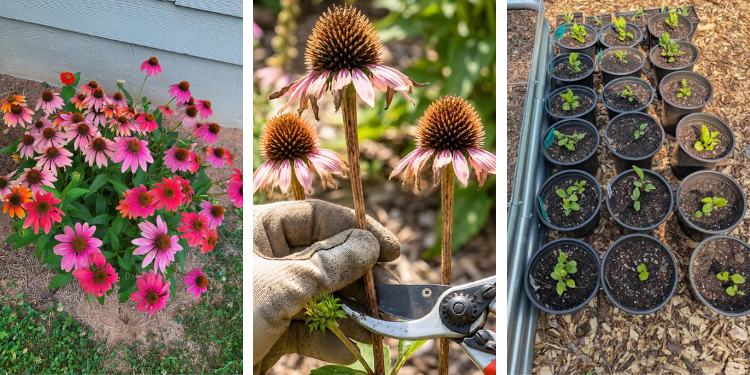
Coneflowers, known as echinaceas, are hardy perennial plants celebrated for their vibrant petals resembling daisies and their prominent central cones. They thrive in heat and require minimal care to survive, yet August marks a pivotal period. This transitional month determines whether your plants will merely endure or burst forth with spectacular blooms in the coming season.
At late summer, echinaceas shift priorities. The main flowering phase fades as daylight shortens, prompting the plant to allocate its remaining energy toward seed maturation, root crown development, or the formation of underground lateral buds for the next year.
Understanding how to care for echinaceas in August is crucial—not only for a healthy garden in the present moment but also to ensure a more abundant and generous bloom in the spring and summer ahead.
1. Thoughtful Pruning: Adjusting Care from Early to Late August
Removing spent flowers, a practice known as “deadheading,” is the most effective way to manage the plant’s energy reserves at summer’s end. However, your pruning approach should evolve as the month progresses.
Early to Mid-August: Prune to Encourage a Second Wave of Late Blooms
If your coneflowers display faded flowers with drooping petals alongside emerging side buds, continue removing the spent blooms.

By cutting off dried flower heads, you prevent the plant from expending energy on seed production. This allows the plant to focus its resources on opening lateral buds, enabling a second wave of summer flowering.
Where to prune: Follow the flower stem down to a fork where healthy leaves or a visible side bud are present. Make a clean cut about 6 millimeters above this point using sharp pruning shears. Avoid leaving bare stems, often called “coat hangers,” as these can rot and attract pests.
Late August: Stop Deadheading to Protect Roots and Wildlife
From the last week of August onward, cease removing faded flowers and allow the remaining blooms to transform into seeds.
Permitting the plant to set seed signals a shift away from leafy and floral growth toward strengthening the crown and roots in preparation for winter.
Ecological benefit: The dried seed heads of coneflowers become an essential food source during autumn and winter for native birds such as the goldfinch. Additionally, their rigid, dark cones add texture and visual interest to the garden during the cold season.
2. Managing Soil Moisture and Encouraging Deep Watering
August’s heat combined with inconsistent rainfall quickly dries the soil’s upper layer. Although mature echinaceas tolerate drought well, prolonged water stress during August inhibits crown development and reduces the formation of floral primordia (flower buds in formation) for the following year.
Watering Tips:
Deep, infrequent watering: Instead of light daily watering that quickly evaporates, give your echinaceas a generous and deep watering (about 2.5 to 3.5 centimeters of water) once a week during dry spells.
Water at the base: Apply water directly to the root zone on the soil using drip hoses, porous tubing, or a watering can with a long spout. Avoid wetting the foliage, which encourages fungal diseases in August’s warm and humid air.
Refresh mulch: Maintain a 5 to 6-centimeter layer of organic mulch (such as shredded bark, leaf compost, or clean straw) around the plant base. However, leave a 2 to 3-centimeter space between mulch and the central green crown to prevent rot and disease.
3. Golden Rule: Avoid Nitrogen-Rich Fertilizers in August
A common mistake at summer’s end is applying high-nitrogen fertilizers in hopes of promoting late growth.
In reality, excessive nitrogen during this period encourages soft, leafy shoots that prematurely consume carbohydrate reserves intended for root development.
Worse still, these fragile new shoots are not built to withstand early autumn frosts, exposing plants to rot and collar diseases through the winter months.
What to prioritize instead:
Compost application: Choose a light dressing of 1 to 1.5 centimeters of well-matured compost or worm castings spread around the roots near the drip line. Such natural fertilizer releases trace elements slowly without triggering excessive leaf growth.
Potassium and phosphorus (optional): If a soil test reveals deficiencies, a light end-of-summer application of bone meal or natural phosphate will support root growth without encouraging surplus foliage.
4. Monitoring Late Summer Diseases and Sanitary Measures
The combination of high humidity and lingering heat in August creates ideal conditions for fungal diseases. Early detection and swift intervention help maintain plant vitality before winter.
Disease / Problem
Visual Symptoms
Intervention in August
Powdery Mildew
A white or grayish, powdery coating covers the upper surfaces of the leaves.
Remove the most affected lower leaves. Improve air circulation by reducing weeds and thinning dense plantings nearby.
Cercospora Leaf Spot
Small reddish-purple spots appear on leaves, later turning brown or black at the center.
Immediately remove infected leaves. Collect all fallen leaves beneath the plant to prevent spores from surviving in the soil.
Aster Yellows
Flower heads become deformed and greenish with weak growth; leaves yellow and become bushy. (Transmitted by leafhoppers and caused by a phytoplasma.)
Important: This disease is incurable. Infected plants must be uprooted and destroyed (do not compost) to protect neighboring perennials.
5. Dividing Clumps: Choosing the Right Timing, Spring or Autumn
Over time, echinacea clumps become crowded and woody in their centers. When overcrowding occurs, typically every 3 to 4 years, internal stems compete for light and nutrients, resulting in smaller flowers and weaker stems.
While August is ideal for identifying and marking overly dense clumps, the actual division must follow a precise schedule:
Avoid summer division: Never divide or transplant echinaceas during August’s intense heat. High temperatures and strong sun cause rapid dehydration, leading to root shock and significant decline.
Best time to divide: In mild southern climates (zones 7 to 9), wait until early autumn (late September to October), at least 6 to 8 weeks before the first harsh frost. In colder northern zones (3 to 6), prioritize spring division as soon as the first green shoots appear at soil level.
Summary of August Care for Your Coneflowers
Taking a mindful approach in August balances immediate garden aesthetics with the long-term health of your plants.
Strategically remove spent flowers: prune early faded blooms to stimulate a second flowering, then allow the last flowers to mature in late August to nourish wildlife and stimulate root growth.
Water deeply: provide approximately 2.5 centimeters of water weekly at the base during dry periods.
Avoid nitrogen-rich fertilizers: protect root reserves and reduce the risk of tender shoots vulnerable to frost damage.
Maintain good hygiene: remove mildew- or leaf spot-affected foliage and clear decomposing plant debris from the soil.
Identify clumps needing division: mark congested plants for future thinning in autumn or spring.
Following these end-of-summer care tips offers your echinaceas optimal conditions to strengthen their root systems for winter and prepare for larger, more vigorous, and abundant blooms next spring.
A successful garden does more than beautify your surroundings: it becomes a place of renewed joy through the passing seasons.
