
Safety and Medical Disclaimer: The information contained in this article is provided for educational and informational purposes only. We disclaim any responsibility for how you use these plants, recipes, or remedies. This does not constitute medical advice. Always consult a healthcare professional, doctor, or dermatologist before treating severe rashes, allergic reactions, or unknown skin conditions. In the event of a severe allergic reaction to poison ivy, such as difficulty breathing or facial swelling, seek immediate emergency medical assistance.
Whenever you spend time outdoors—whether gardening, hiking, or clearing brush—you likely know the fear of encountering poison ivy. The resulting itchy, blistering rash can last for weeks. Yet, nature often grows the remedy right next to the trouble. This is true of jewelweed, a common wild plant known for its remarkable skin-soothing properties.
Jewelweed (Impatiens capensis), also called “touch-me-not spotted,” is a wild plant surprisingly effective for relieving skin irritations. For centuries, its succulent, water-filled stems have been used to soothe the intense itching caused by poisonous plants and insect bites. Best of all, it’s very easy to find and prepare at home. Here’s everything you need to know about the healing properties of jewelweed and how to use it safely.
How to Identify Common Jewelweed
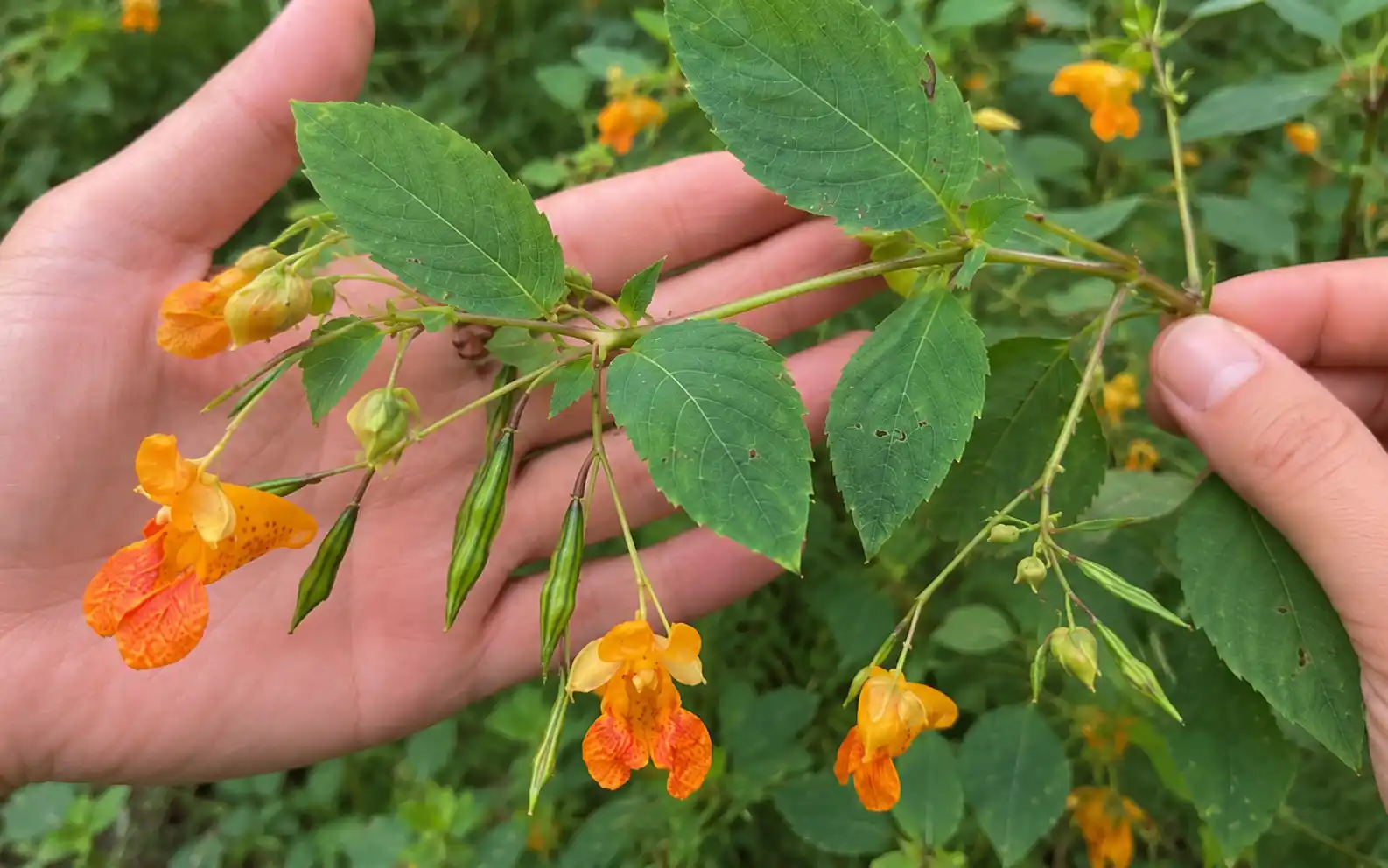
Before use, it is essential to correctly identify this plant. Jewelweed grows in moist, shaded environments like along streams, in swamps, or damp wooded areas. It often shares habitat with poison ivy.
Look for these key characteristics:
- Stems: The stems are light green, smooth, slightly translucent, and hollow, with a watery appearance reminiscent of a succulent plant. When broken, a clear, watery sap immediately seeps out.
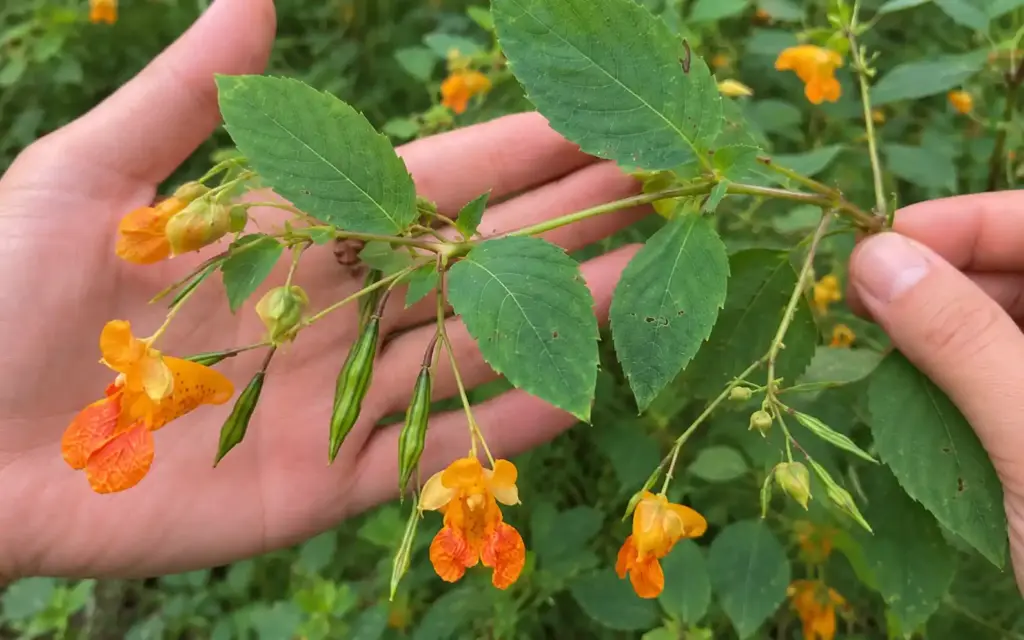
- Flowers: From mid-summer to early fall, the plant produces small bright orange flowers shaped like trumpets or horns of plenty, often spotted with reddish-brown speckles.
- Leaves: The leaves are soft, thin, and oval with slightly toothed edges. When held underwater, they take on a shiny silver sheen, which is why jewelweed is also called “herb jewel.”
- Seed Pods: By late summer, small green seed capsules grow. When mature, a simple touch causes them to burst, scattering seeds in all directions, hence the nickname “touch-me-not.”
The Benefits of Jewelweed
Why is this simple plant so effective? Poison ivy, poison oak, and poison sumac trigger rashes through an invisible, sticky oil called urushiol. When this toxic oil contacts the skin, the immune system reacts strongly, causing severe itching and blisters.
Jewelweed works in two specific ways:
- Natural Soaps: The sap inside the stems is rich in saponins, which are natural cleansing agents. If you rub the crushed plant on your skin immediately after contact with poison ivy, these natural soaps break down and physically remove the toxic oil before it can bind to your skin.
- Anti-Inflammatory Compounds: Jewelweed contains a compound called lawsone, which acts as a natural antihistamine and anti-inflammatory. For an existing rash, applying its juice reduces swelling, cools heated skin, and soothes relentless itching.
These properties are not limited to treating poison ivy. Jewelweed is also very effective against:
- Mosquito and wasp stings
- Nettle burns
- Skin irritations from shaving or minor abrasions
- General skin irritation and mild hives
Harvesting Jewelweed
Harvesting is simple but requires some precautions:
- Check the Environment: Jewelweed often grows alongside poison ivy. Carefully inspect the ground before stepping into any bushes to avoid accidentally stepping on poison ivy.
- Choose the Fleshier Parts: The highest concentration of healing sap is found in the thick, low-lying stems.
- Break, Don’t Pull: Pinch or break the stems at a node. Since the roots are shallow, pulling too hard risks uprooting the entire plant.
Home Remedies Using Jewelweed
Jewelweed is most effective when used fresh, just harvested. However, you can preserve it for winter through several simple preparations:
1. Quick Field Poultice (Fresh Poultice)
The fastest and most effective method right after contact with poison ivy:
- Break off a thick, juicy fresh jewelweed stem.
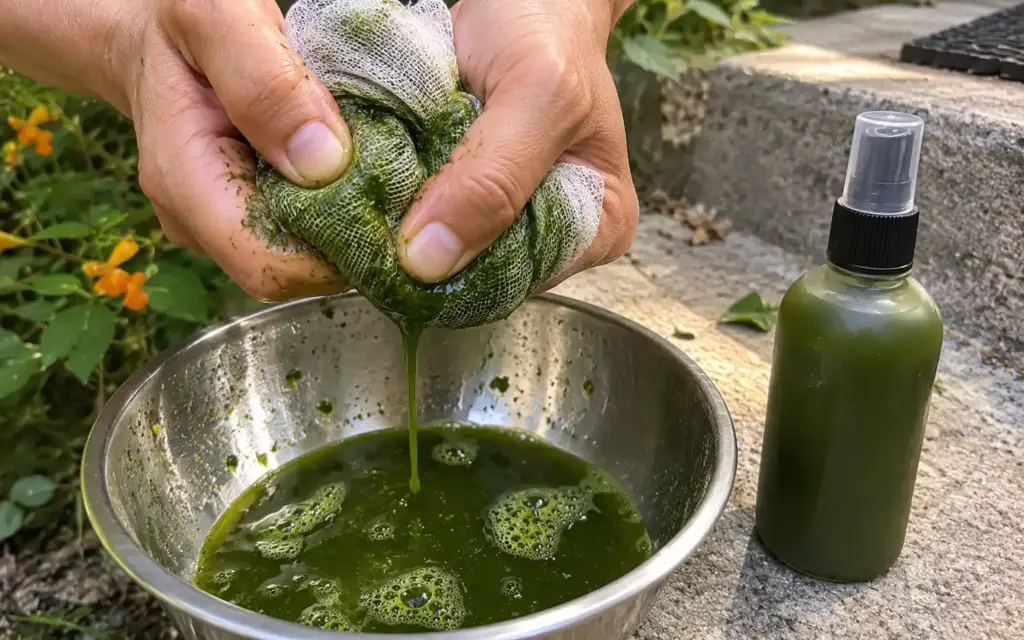
- Crush the stem between your hands or with a clean stone until you get a wet, dripping paste.
- Rub this paste directly on the irritated skin, applying it thoroughly.
- Allow the sap to dry on the skin.
2. Jewelweed Ice Cubes
Because jewelweed contains much water, it deteriorates quickly after harvesting. Freezing is the best way to preserve its properties for months.
- Gather a large handful of fresh stems and leaves.
- Cut them into small pieces with a knife or scissors.
- Place them in a blender, adding just enough water to operate the blades.
- Blend until you get a thick, green smoothie.
- Pour the mixture into ice cube trays and freeze.
- For bites or poison ivy itchiness, apply a green ice cube directly to the skin. The cold reduces swelling while the juice relieves itching.
3. Jewelweed and Witch Hazel Spray
An excellent liquid spray to keep refrigerated, ideal for insect bites:
- Cut enough fresh stems and leaves to fill a glass jar halfway.
- Cover the plant material completely with liquid witch hazel, available at pharmacies.
- Seal the jar and place it in the refrigerator for two weeks, gently shaking it every few days.
- After two weeks, strain the liquid through a coffee filter or paper towel to remove solids.
- Pour the clear liquid into a small spray bottle. Spray on irritated skin as needed. Store refrigerated.
4. Jewelweed-Infused Oil
To prepare a topical ointment, you can infuse the plant in a vegetable oil. Warning: since the plant contains much water, it must first be wilted to prevent mold formation in the oil.
- Harvest the jewelweed and spread it flat on a dry towel indoors for 24 to 48 hours until it loses its crisp texture and wilts.
- Chop the wilted plant and place it in a heat-resistant glass jar.
- Cover it completely with a carrier oil such as olive or sweet almond oil.
- Place the jar in a pan of simmering water to make a double boiler over low heat.
- Gently warm it for 2 to 3 hours without boiling.
- Remove from heat, let cool, then strain through a fine cloth to remove solid residues.
- Apply the slightly green-tinted oil to irritated skin to soothe it.
Important Safety Principles for Home Use
Although jewelweed is gentle and safe for the skin, keep these precautions in mind:
- External Use Only: This plant is meant for topical application only and should never be ingested. Raw jewelweed contains calcium oxalate crystals that can cause severe stomach cramps and digestive issues. Never drink jewelweed teas or infusions.
- Watch for Spoilage: Fresh jewelweed spoils very quickly. Aqueous preparations like teas or sprays will mold within days at room temperature. Always store these preparations in the refrigerator or freeze them.
- Patch Test Before Use: Everyone’s skin reacts differently. Test a small drop of juice on the inside of your wrist and wait 20 minutes to ensure no allergic reaction occurs before applying it widely.
By learning to recognize these bright orange flowers and watery stems, you can turn an unpleasant encounter with poison ivy into a minor inconvenience. Armed with this knowledge, you’ll confidently use one of the best natural homemade remedies available.
