
Warning: The information presented in this article is solely for educational and informational purposes. Homemade alcoholic beverage production involves fermentation processes that must be conducted carefully and under hygienic conditions. We disclaim any responsibility for the results of your brewing attempts, any health effects, or legal compliance in your area. Always consume alcohol in moderation. If you have health concerns or doubts related to alcohol or ginger consumption, consult a qualified health professional before drinking this beverage.
Ginger wine is a traditional, comforting, and spicy drink cherished for generations. Unlike grape wines, which derive their flavor from the natural sugars and juice of crushed fruit, ginger wine is made by fermenting a potent infusion of fresh ginger root, sugar, and yeast. The result is a lively, piquant beverage with deep aromas warmly enhanced by ginger’s natural sharpness.
Making your own ginger wine at home is a rewarding experience. It requires patience and strict hygiene, but the steps are accessible. This guide will lead you through the benefits of ginger, the necessary equipment, and the detailed process to brew your own wine from scratch.
The Benefits of Ginger: Why Consume It?
Ginger root has been used worldwide for centuries, both in cooking and for its recognized medicinal properties. When transformed into wine, many of its essential qualities remain in the final drink.
- Digestive Support: Ginger is renowned for its ability to soothe the stomach. It is commonly used to relieve bloating, indigestion, and gastric discomfort.
- Anti-Nausea Effect: Many people turn to ginger to calm nausea, whether due to motion sickness or a sensitive stomach.
- Comforting Warmth: Ginger naturally provides warmth. A small glass of ginger wine gives a pleasant warming sensation in the chest and abdomen, making it an ideal drink during colder months.
- Rich in Antioxidants: Fresh ginger contains gingerol, a compound with antioxidant properties that helps protect body cells against daily oxidative stress.
- Immune System Boost: Thanks to its natural virtues, many people consume ginger-based beverages to support their immune system during cold and flu seasons.
How to Choose Your Ingredients
To achieve the best flavor, it is essential to start with quality ingredients. Here is what you need to know about each indispensable component for your wine.
- Fresh Ginger Root: Always select fresh, firm ginger. Avoid soft, wrinkled roots or those showing mold signs. The fresher the ginger, the more aromatic and lively your wine will be.
- Sugar: Granulated white sugar is standard and provides a clean, clear ginger flavor. Brown sugar can be used but will darken the wine and add a light note reminiscent of molasses.
- Raisins: Ginger lacks natural body and tannins. Chopped raisins are added to feed the yeast and give the wine a richer, more pleasant texture on the palate.
- Lemons: Ginger wine requires acidity to balance the high sugar content. Fresh lemon juice provides this balance along with a bright citrus touch.
- Wine Yeast: Do not use baker’s yeast. Purchase yeast specifically for white wine or champagne at a brewing supply store. These yeasts are designed to tolerate alcohol and will ensure better flavor quality.
The Necessary Equipment
Hygiene is the golden rule in any homemade brewing. Any contamination by wild bacteria can seriously compromise your preparation. Ensure all your equipment is thoroughly cleaned and sanitized with a food-safe disinfectant before starting.
- Large Cooking Pot: A container large enough to hold at least 5 liters of water, used for boiling the ginger.
- Primary Fermentation Bucket: A large food-grade plastic bucket with a tight-fitting lid where the initial vigorous fermentation takes place.
- Glass Demijohn: A glass jug of about 4.5 to 5 liters with a narrow neck for slower secondary fermentation.
- Airlock and Stopper: A small plastic device inserted on the demijohn neck that allows carbon dioxide to escape while preventing air and insects from entering.
- Siphoning Hose: A food-safe hose to transfer the liquid from the bucket to the jug without stirring up sediment.
- Glass Bottles and Stoppers: For storing the finished wine. Bottles with mechanical stoppers can facilitate bottling.
Homemade Ginger Wine Recipe
This recipe yields about 4.5 liters (a standard gallon) of ginger wine.
Ingredients:
- 500 grams of fresh ginger root
- 1.5 kilograms of white sugar
- 250 grams of raisins
- 3 large lemons
- 4.5 liters of water
- 1 packet of white wine yeast
- 1 teaspoon of yeast nutrient (optional but highly recommended)
Step 1: Prepare the Base
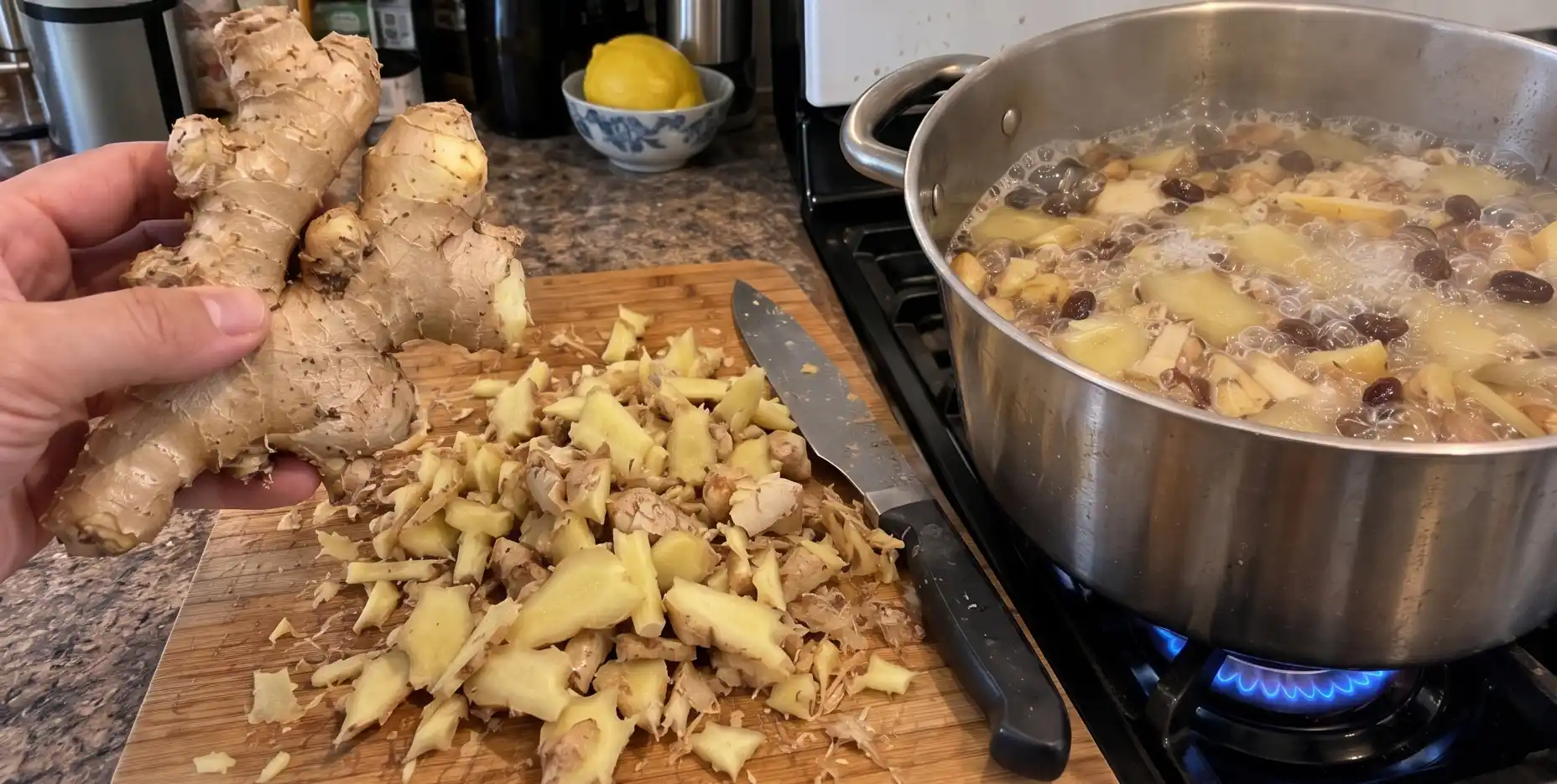
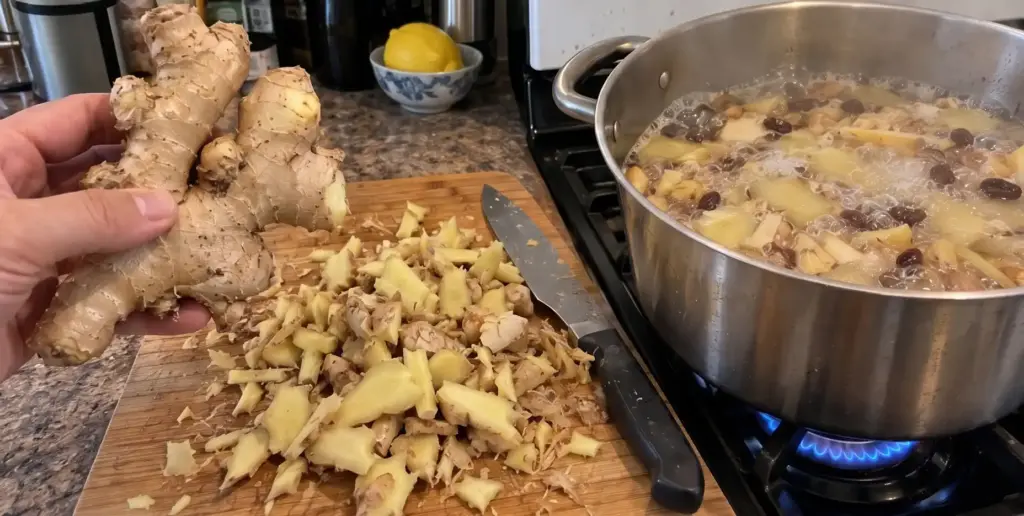
Rinse the ginger thoroughly without peeling it, scrubbing to remove any dirt. Cut it into small pieces or crush it with a rolling pin. Coarsely chop the raisins to release their sugars. Grate the lemon zest carefully, avoiding the bitter white pith, then juice the lemons and keep the juice refrigerated.
Step 2: Boiling
Place the ginger, lemon zest, and raisins into the large pot. Add about 3 liters of water. Bring to a vigorous boil, then reduce to a gentle simmer for 30 to 45 minutes to extract all the potent flavors from the ginger.
Step 3: Dissolving the Sugar
Turn off the heat after cooking. Slowly add the sugar while stirring constantly with a sanitized spoon until fully dissolved.
Step 4: Cooling and Transferring
Pour the hot mixture, solids included, into the sanitized primary fermentation bucket. Add the remaining cold water to bring down the temperature. Wait until the liquid reaches room temperature (between 20°C and 24°C). Never add yeast while the mixture is still hot, as it would kill the yeast.
Step 5: Inoculate the Yeast
Once cooled, add the reserved lemon juice. Sprinkle the yeast and nutrient evenly over the surface. Cover the bucket with a clean cloth or loosely place the lid. Keep it in a warm, dark place.
Step 6: Primary Fermentation
Let the bucket rest for 24 hours. You will see bubbling on the surface indicating yeast activity. Stir gently with a sterilized spoon once daily for 5 to 7 days.
Step 7: Transfer to Secondary Fermentation
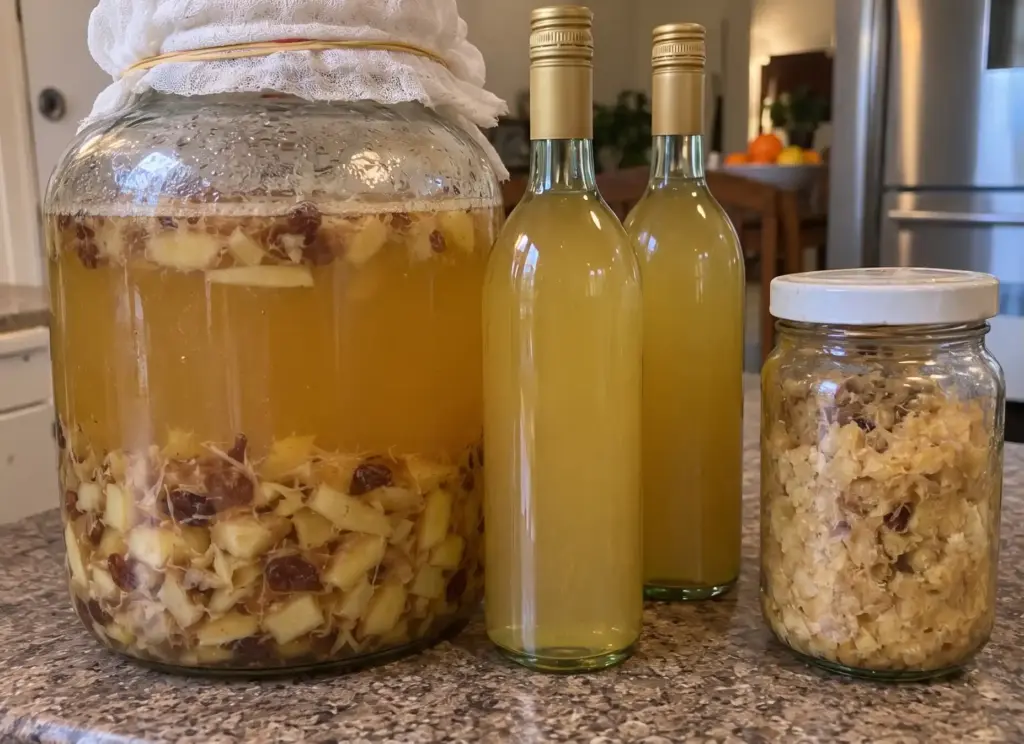
After about a week, when bubbling slows down, it is time to separate the liquid from the solid residues. Use the siphoning hose to carefully transfer the liquid into the sanitized demijohn, leaving sediment behind in the bucket. Then fit the stopper and airlock, making sure to fill the airlock partially with water.
Step 8: Patience Is Key
Store the demijohn in a cool, dark place. You will notice gentle bubbling in the airlock that will gradually slow. Allow fermentation to continue for at least two to three months, so the yeast settles at the bottom and the liquid clears.
Step 9: Bottling
When the wine becomes clear and no bubbles have emerged from the airlock for several weeks, fermentation is complete. Siphon the clear wine into clean bottles, taking care not to disturb the sediment. Seal tightly with corks or stoppers.
Step 10: Aging
Ginger wine is drinkable immediately after bottling but will taste very sharp and potent. To reveal its full complexity, age the bottles in a cool, dark place for at least six months or up to a year. Aging will soften the sharp edges and meld the ginger’s heat into a balanced, sweet, and warm flavor.
Troubleshooting Common Issues
- No bubbles in the airlock: Check that the stopper fits tightly and is airtight. If nothing moves after 48 hours, the temperature may be too low, or the yeast was added too soon while the mixture was still hot.
- Cloudy wine: Ginger wine can remain cloudy due to pectin from the lemons. This is harmless but less visually appealing. You can use pectic enzyme, available at brewing supply stores, to prevent this in future batches.
- Wine too dry or harsh: If the yeast has consumed all the sugar, the wine will be very dry and alcoholic. To sweeten, you can stabilize the wine with appropriate chemical agents and add simple syrup before bottling to taste.
How to Enjoy Your Ginger Wine
After maturation, your homemade ginger wine lends itself to various pleasures.
- Straight: Serve at room temperature in a small glass for a warming drink during winter evenings.
- On Ice: Pour over a large ice cube for a spicy and refreshing summer refreshment.
- Whisky Mac: Mix equal parts of your ginger wine with quality Scotch whisky for a traditional, robust cocktail.
- With Mixers: Dilute with sparkling water, soda, or even ginger ale for a lighter, thirst-quenching aperitif.
- In Cooking: A splash of ginger wine enhances stir-fry sauces or flavors marinades for chicken or pork.
Making ginger wine requires only a few simple ingredients and the patience to watch nature at work. By following these steps and maintaining cleanliness of your equipment, you will be able to store in your cellar a traditional, characterful drink wholly crafted by your own hands.
