
Hugelkultur Gardening: Build a Self-Watering, Long-Lasting Garden Bed
Hugelkultur, a German term meaning “hill culture,” is a highly effective gardening technique that transforms yard waste into a fertile, moisture-retaining raised bed. Instead of hauling away fallen branches, old logs, and leaves, you bury them beneath soil to create a living mound that feeds plants and conserves water naturally.
When built correctly, a hugelkultur bed can retain moisture for weeks without irrigation, steadily improve soil structure, and deliver abundant harvests with very little ongoing effort.
Why Hugelkultur Works So Well
At the heart of hugelkultur is buried wood, which acts like a natural underground sponge. As it decomposes, it absorbs rainwater, stores moisture deep within the mound, and slowly releases it to plant roots during dry periods. The decaying wood also creates air pockets that improve soil oxygen, encourages beneficial fungi and microbes, and gradually builds rich, dark soil. The result is a self-regulating system that becomes more productive every season.
How to Build a Hugelkultur Bed Step by Step
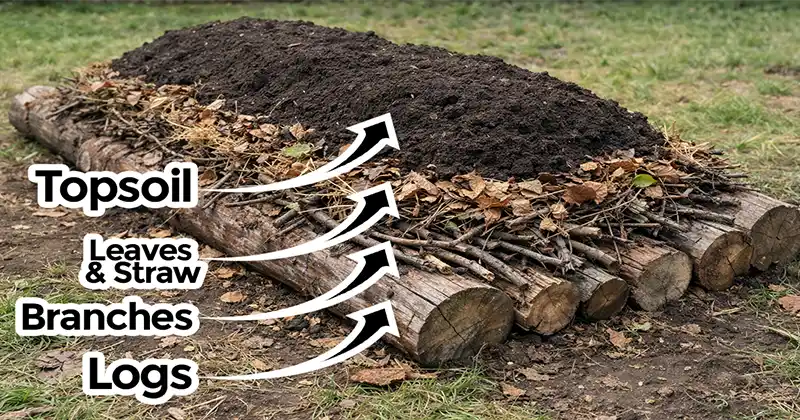
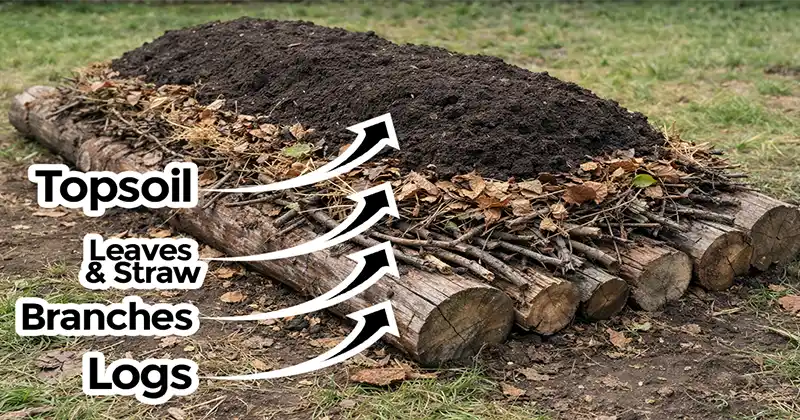
A hugelkultur mound is built in layers, starting with the largest materials at the bottom and finishing with fine soil on top.

Base Layer: Logs and Thick Branches
Begin with hardwood logs and thick branches whenever possible, such as oak, maple, beech, fruit trees, or other untreated wood. Avoid painted or chemically treated lumber, and do not use black walnut, which can inhibit plant growth. Slightly rotting wood is ideal because it absorbs water more quickly. This base layer should be about 20–40 cm (8–16 inches) thick.
Second Layer: Smaller Wood Material
On top of the logs, add thinner branches, twigs, bark, and wood chips. This layer fills gaps between larger pieces and creates a stable internal structure that allows air and water to move through the mound.
Third Layer: Soft Organic Matter
Next, add soft garden waste such as dry leaves, grass clippings, straw, old plant stems, or even shredded cardboard. These materials break down quickly, providing early nutrients while the wood beneath decomposes slowly over time.
Top Layer: Compost and Garden Soil
Finish the mound with a mix of compost and garden soil, about 15–20 cm (6–8 inches) deep. This is where plant roots establish themselves and where microbial life becomes most active. Water the mound thoroughly after construction to help settle the layers.
Ideal Shape and Dimensions
For best performance, orient the mound north to south so both sides receive even sunlight. A fresh hugelkultur bed is typically 90–120 cm (3–4 feet) high and 1.2–1.5 m (4–5 feet) wide, with gently sloping sides of about 45 degrees for stability. The length can be whatever fits your space. Expect the mound to settle by roughly 30 percent during the first year as materials compact and decompose.
How Hugelkultur Manages Water Naturally
Fresh wood buried inside the mound captures rainfall and stores it like a reservoir. Plant roots naturally grow downward toward this moisture source, while the outer soil surface may dry quickly. Inside the mound, however, conditions remain cool and damp. In many climates, mature hugelkultur beds require little to no supplemental watering and can reduce irrigation needs by 50–80 percent.
Best Crops by Year
Because the soil chemistry and structure change over time, different crops perform best at different stages.
Year One: Heavy Feeders
In the first year, heat-loving and nutrient-hungry plants thrive. Squash, pumpkins, zucchini, melons, and large cucumber varieties benefit from the warmth and nutrients released by fresh decomposition.
Year Two: Balanced Crops
As the mound stabilizes, crops such as tomatoes, cucumbers, beans, peppers, and corn perform very well. The soil is more balanced and consistently fertile at this stage.
Year Three and Beyond: Almost Anything
Once fully established, the mound behaves like premium garden soil. Leafy greens, herbs, root vegetables, strawberries, onions, and garlic all grow reliably in mature hugelkultur beds.
Extra Tips for Better Results
Choose the Right Location
Select a spot with full sun, ideally six to eight hours per day. Avoid low areas where water pools, and leave at least 50 cm (20 inches) of space from fences or structures.
Plant Densely
Hugelkultur beds support dense planting because roots can grow both vertically and horizontally, moisture is readily available, and nutrients are continuously released. Dense planting also shades the soil, reducing evaporation.
Mulch the Surface
Cover the surface with straw, dry leaves, or grass clippings. Mulch protects the soil from erosion, reduces moisture loss, and helps regulate temperature.
Expect Temporary Nitrogen Use
As fresh wood decomposes, it may temporarily tie up nitrogen. To offset this, add extra compost or manure to the top layer, plant nitrogen-fixing legumes such as beans or peas, or use an organic fertilizer if needed.
Longevity
A well-built hugelkultur mound can remain productive for many years. Beds built with softwood may last five to ten years, while hardwood-based mounds can continue producing for ten to twenty years or more.
Common Mistakes to Avoid
Do not use treated or painted wood, make slopes too steep, skip compost in the top layer, or plant root crops in the first year. Very small mounds also underperform compared to larger, well-built beds.
Why Many Gardeners Switch to Hugelkultur
Hugelkultur uses free materials, reduces watering, improves poor soil, raises planting areas for better drainage, produces heavy harvests, and requires very little maintenance after setup. With just one afternoon of building, you can create a self-watering garden system that delivers reliable harvests for years to come.
