
The Complete Guide to Pruning Trees and Shrubs
Pruning is one of the most important gardening practices for maintaining healthy, attractive trees and shrubs. More than simply cutting branches, effective pruning combines practical skill with an understanding of plant biology. When done correctly, it encourages vigorous growth, improves structure, enhances appearance, and reduces the risk of disease and damage.
Understanding Plant Growth and Bud Development
Successful pruning begins with understanding how plants grow and respond to cuts.
Apical Dominance
The terminal, or apex, bud typically controls the plant’s growth by suppressing nearby lateral buds. This phenomenon, known as apical dominance, influences the shape, size, and branching pattern of trees and shrubs. The strength of this dominance varies between plant species.
Branch Orientation and Growth Patterns
The angle of a branch significantly affects how it grows. Vertical branches maintain strong apical dominance, producing vigorous growth near the tip. Branches growing at angles between 45° and 60° develop more side shoots due to reduced dominance. Completely horizontal limbs lose apical dominance almost entirely, often resulting in vigorous water sprout formation.

How to Remove Heavy Branches Safely
Large branches require a careful approach to prevent bark tearing and unnecessary damage to the tree.
Step 1: Make an Undercut
Begin by cutting upward from the underside of the branch. This initial cut prevents the bark from ripping when the branch falls.
Step 2: Remove the Main Branch
Make a second cut from the top, a short distance beyond the undercut, allowing the branch to detach safely.
Step 3: Cut Near the Branch Collar
Finish by removing the remaining stub close to the branch collar. Avoid cutting into the collar itself, as this area contains specialized tissue that supports rapid healing.
When to Prune Different Plants
Trees and Shrubs
Most trees and shrubs benefit from pruning during late winter or early spring while dormant. Flowering shrubs should generally be pruned after blooming to avoid removing future flower buds.
Evergreens and Fruit Trees
Evergreens respond best to pruning in early spring. Fruit trees should be pruned regularly to create an open canopy that improves sunlight penetration, air circulation, and fruit production.
Roses
Prune roses in spring by cutting back to healthy wood just above an outward-facing bud. This encourages strong, well-shaped growth throughout the growing season.
Essential Pruning Techniques
Thinning
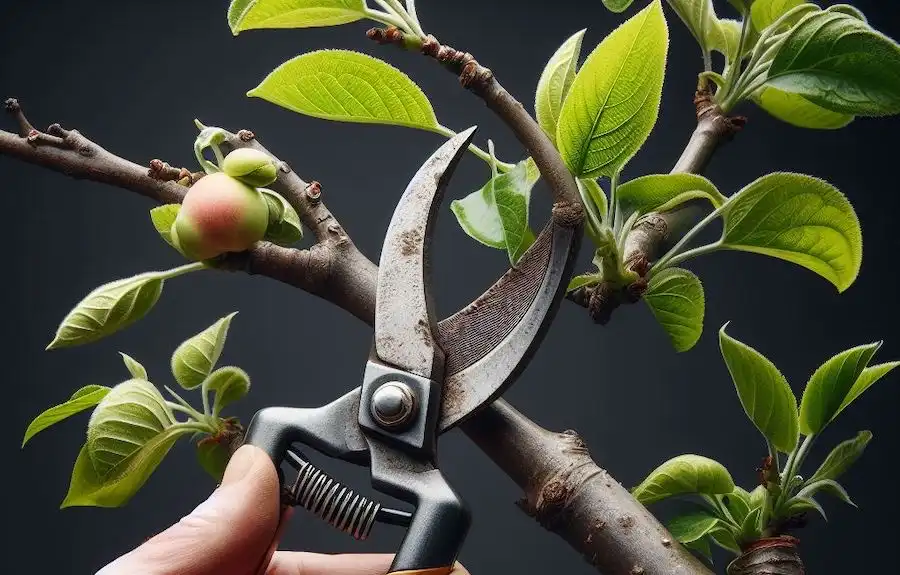
Thinning involves removing an entire shoot or branch back to its point of origin. This technique preserves the natural shape of the plant while promoting healthy growth at remaining shoot tips.
Removing Water Sprouts and Suckers
Water sprouts and root suckers consume valuable energy without contributing to the plant’s structure. Removing them helps direct resources toward productive growth.
Renewal Pruning
Older trees and shrubs often benefit from renewal pruning, which removes aging growth to encourage fresh shoots, improve airflow, and increase light penetration.
Correcting Weak Branch Angles
Branches that form narrow crotch angles are structurally weaker and more likely to split under stress. Removing these weak attachments improves the long-term stability of the plant.
Healing and Regrowth After Pruning
Natural Healing Process
When a branch is removed, healing begins in the cambium layer beneath the bark. Cuts made close to the branch collar heal more quickly because the tree can efficiently seal the wound.
Stimulating New Growth
Pruning often triggers new growth near the cut site. The more severe the pruning, the stronger the regrowth response tends to be, as the plant works to restore balance between its root system and canopy.
Conclusion
Pruning is both an art and a science. By understanding growth habits, choosing the right timing, and applying proper cutting techniques, gardeners can promote healthier plants, improve appearance, and prevent structural problems. Thoughtful pruning not only shapes trees and shrubs but also supports their long-term vitality and productivity.
