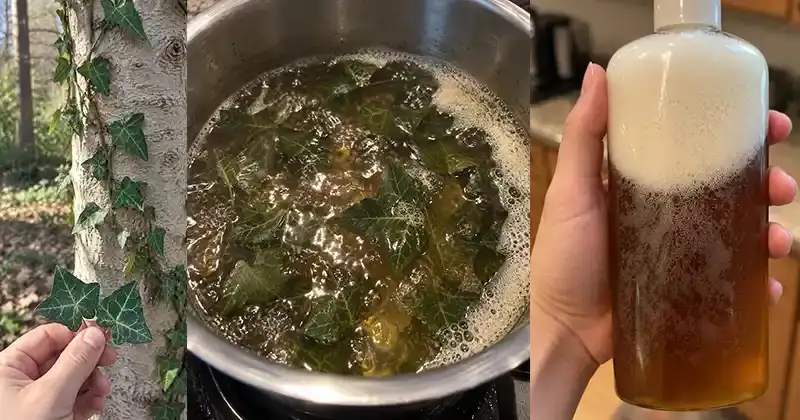
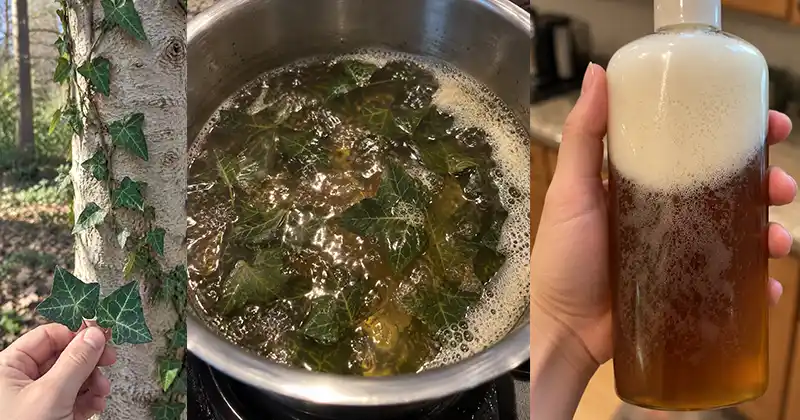
Common ivy, scientifically known as Hedera helix, is a plant widely found across many regions of the world. Although it is most renowned for climbing brick walls, fences, or tree trunks, it harbors a little-known secret: it can be transformed into natural homemade soap. The key lies in its leaves. They contain large amounts of natural compounds called saponins. When mixed with water, these saponins create a soapy foam capable of breaking down dirt and cleaning effectively.
The Benefits of Ivy-Based Soap
Making your own soap from common ivy offers numerous advantages:
Completely free ingredient: there is no need to purchase expensive ingredients. Simply gather the leaves from your garden or nearby areas.
A sustainable approach: ivy grows vigorously all year round. Harvesting its leaves causes no harm to the environment and does not threaten any rare plant species.
Eco-friendly: your homemade soap contains no synthetic chemicals, artificial fragrances, or microplastics, thus avoiding any pollution of water sources.
Easy to prepare: no complicated techniques or special equipment are required to extract the natural soap.
Helps reduce plastic waste: making your own liquid soap at home means you avoid buying single-use plastic bottles.
Essential Precautions
Before harvesting leaves and making this soap, it is crucial to follow some safety guidelines. Common ivy is a potent plant that must be handled with care.
Always wear gloves: fresh leaves contain compounds that can irritate sensitive skin and cause itching. Protect your hands with gardening or rubber gloves while picking and handling raw leaves.
Do not ingest: ivy is toxic if swallowed. The soap you obtain is strictly for external use only.
Keep out of reach of children and pets: store your soap in a clearly labeled bottle and away from children and animals.
Avoid the berries: the black berries that ivy sometimes bears are highly toxic. Use only the green leaves.
The Recipe to Prepare Your Ivy Soap
Making this natural cleaner is straightforward. It requires only a few minutes of active work followed by a long resting period.
Materials and ingredients needed:
60 to 100 fresh leaves of Hedera helix (common ivy)
1 liter of cold water (about 4 cups)
Protective gloves
A saucepan with a tightly fitting lid
A strainer, sieve, or clean cloth
A clean glass bottle or jar for storing the liquid
Steps to follow:
Harvest the leaves: wearing your gloves, pick young, bright green, waxy leaves growing upwards, as these contain the highest amount of saponins.
Rinse them: wash the leaves with clear water to remove dust, insects, or other impurities.
Tear them up: still wearing gloves, tear the leaves into pieces with your hands or cut them with scissors. This step is crucial to release the saponins into the water.
Boil: place the torn leaves in the saucepan, pour in the liter of water, then bring to a boil over high heat.
Simmer covered: as soon as the water boils, reduce the heat to low, cover the saucepan, and let it simmer gently for 15 to 20 minutes.
Long infusion: turn off the heat without removing the lid. Let the saucepan rest on the stove or a surface for the mixture to infuse for 24 hours. This time allows maximum extraction of the cleaning power from the leaves.
Filter and bottle: the next day, strain the dark liquid through a sieve or clean cloth into your glass bottle. Use the back of a spoon to press the wet leaves and extract all the soap.
Discard the leaves: throw the used leaves into your compost. Remember to label your bottle with the preparation date.
How to Use Your Natural Soap
This natural liquid is very versatile but is especially known as an excellent laundry detergent.
For laundry: pour about half a glass (120 ml) of your ivy soap directly into the drum of the washing machine or the detergent compartment. It works perfectly for lightly soiled clothes. For brighter whites, you can add a spoonful of baking soda or washing soda to enhance its effectiveness.
For hand washing: a small amount in a basin of water will suffice to gently clean delicate fabrics.
For dishwashing: this soap can also be used for everyday dishwashing. Add a generous amount to your sink water. It does not foam like commercial products but dissolves grease well. Be sure to rinse your dishes thoroughly with clear water afterward.
Storage and Shelf Life
Since this natural soap contains no artificial preservatives, its shelf life is limited. Store it in a cool, dark place such as a cellar or in the refrigerator. It will remain usable and effective for about three weeks. If an unpleasant odor develops, the soap has spoiled and should be discarded. To extend its preservation, you can also freeze the liquid in ice cube trays and only thaw the amount needed for each wash.
Making soap from common ivy is a simple and effective method to clean your home while respecting nature. By following these detailed instructions, you will transform this ordinary climbing plant into a useful, free, and completely natural household product.
