
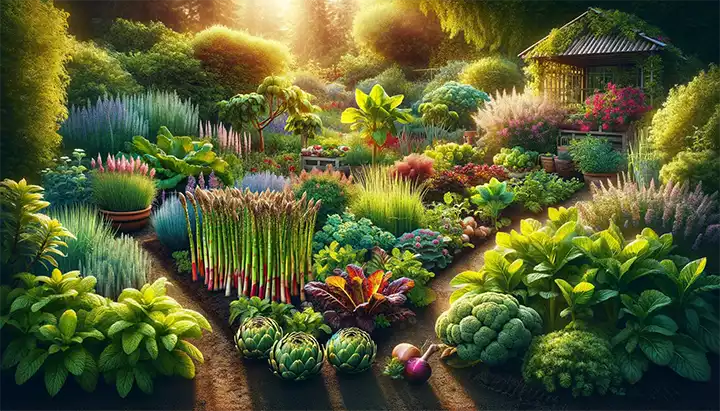
Dreaming of a bountiful vegetable garden that returns year after year without constant replanting is a goal shared by many gardeners. Edible perennial plants embody this ambition by offering a sustainable and low-maintenance way to grow your own food. Unlike annuals, these plants do not need to be renewed each season, making them ecological and efficient allies for your garden. This article presents ten perennial plants to cultivate, capable of providing both harvests and flavors year after year, along with practical advice for planting, care, and harvesting.
1. Asparagus (Asparagus officinalis)
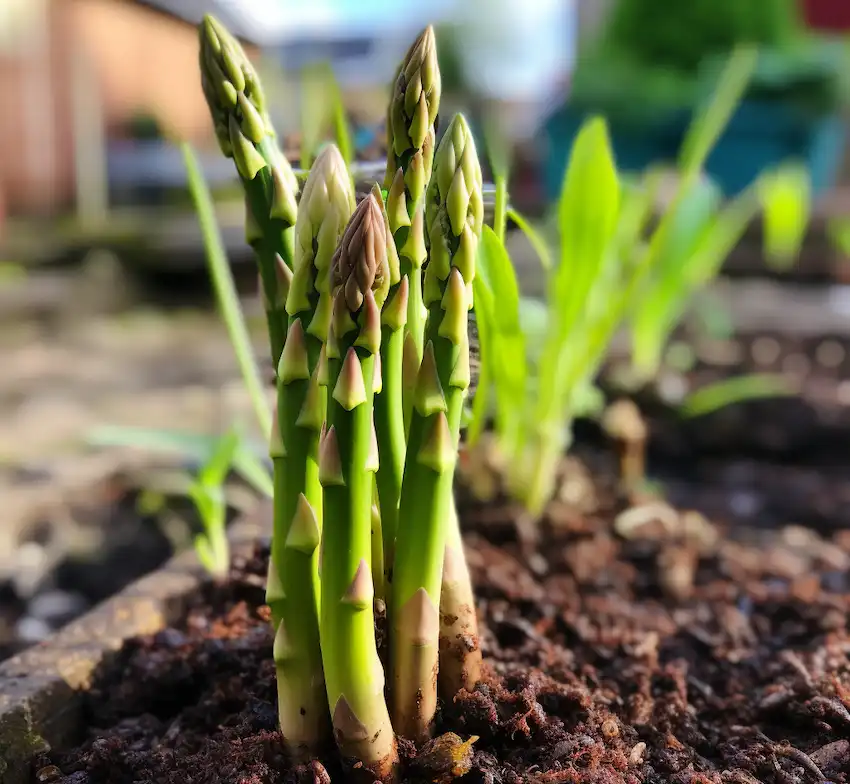
Characteristics: Thin shoots emerge as early as spring, followed by fine, feathery foliage that resembles ferns.
How to plant: Set asparagus crowns at the beginning of spring in well-drained soil. This plant prefers full sun exposure but can tolerate light shade.
Care tips: Water regularly and mulch to retain moisture. Allow the plants to establish for several years before harvesting abundantly.
2. Rhubarb (Rheum rhabarbarum)
Characteristics: Famous for its tart red stalks and large green leaves.
How to plant: Plant rhubarb crowns in early spring in fertile, well-drained soil, choosing a sunny or partially shaded spot.
Care tips: Water consistently during dry periods. Harvest stalks by twisting and pulling at the base, but be sure to leave at least two-thirds of the stalks on the plant to maintain its vigor.
3. Jerusalem Artichoke (Helianthus tuberosus)
Characteristics: Produces edible tubers and is adorned with large flowers resembling sunflowers.
How to plant: Plant tubers in early spring in well-drained soil. Full sun is ideal.
Care tips: Water regularly. Wait until the stems dry in fall before harvesting the tubers, preferably after a first frost for enhanced flavor.
4. Chives (Allium schoenoprasum)
Characteristics: A hardy herb with a mild onion flavor that produces edible flowers in late spring.
How to plant: Sow or plant in autumn or early spring. Chives thrive in full sun or partial shade in moist, well-drained soil.
Care tips: Water regularly and cut back clumps to ground level in winter. Divide the plants every 3 to 4 years to maintain vigor.
5. Mint (Mentha spp.)
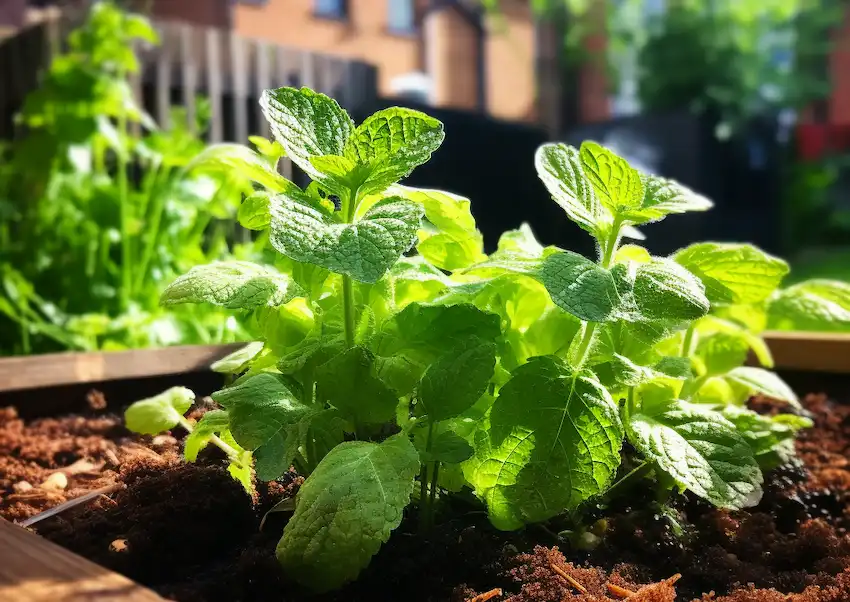
Characteristics: An aromatic plant known for its many culinary uses, which can spread vigorously.
How to plant: Plant in spring in a confined area or container, as mint can quickly take over space. It prefers light shade and moist, well-drained soil.
Care tips: Maintain regular moisture and prune before winter. Harvest leaves before flowering for optimal aroma.
6. Oregano (Origanum vulgare)
Characteristics: A robust herb offering a strong flavor, with small white flowers in summer.
How to plant: Place in well-drained soil under full sun exposure in spring or autumn.
Care tips: Water moderately to avoid overwatering. Harvest leaves as needed, preferably before flowering.
7. Sorrel (Rumex acetosa)
Characteristics: Green leaves with a lemony tart taste. Best harvested young to enjoy tenderness.
How to plant: Plant in early spring in moist, well-drained soil, in full sun or partial shade.
Care tips: Water regularly and remove flowers to encourage leaf growth. Harvest outer leaves so the center can continue to grow.
8. Kale (Brassica oleracea)
Characteristics: A nutrient-rich leafy vegetable whose flavor improves after frost.
How to plant: Plant in organic-rich, well-drained soil in full sun, though it tolerates partial shade.
Care tips: Water consistently and mulch to retain moisture. Pick outer leaves, leaving the central growth to continue producing.
9. Artichoke (Cynara cardunculus var. scolymus)
Characteristics: Renowned for its large edible flower buds, with a striking architectural appearance.
How to plant: Plant crowns or rooted offsets in spring in well-drained soil under full sun.
Care tips: Water deeply and regularly. Harvest buds when they are tight before they open.
10. Blueberries (Vaccinium spp.)
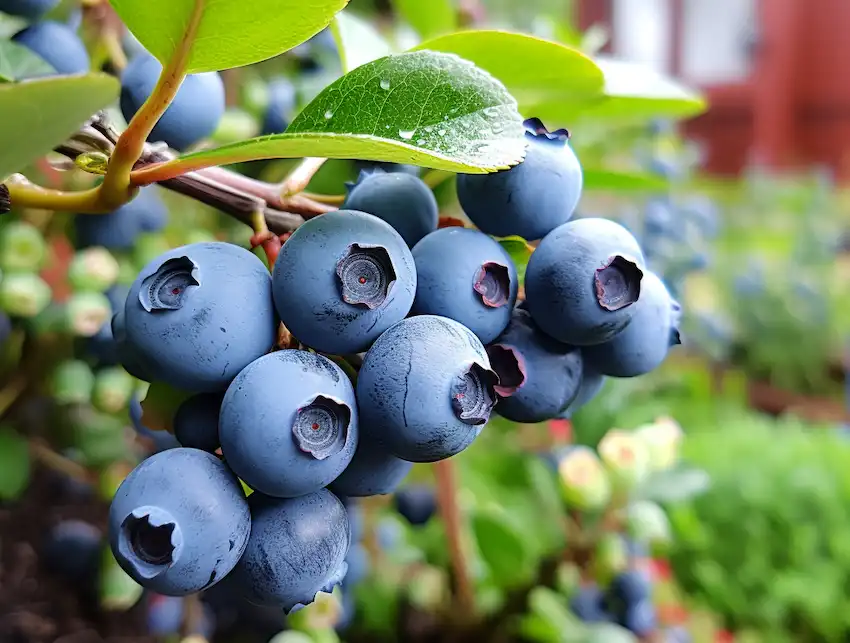
Characteristics: Produces sweet and nutritious berries. Requires acidic soil.
How to plant: Plant in early spring or autumn in a sunny spot with well-drained, preferably acidic soil.
Care tips: Water consistently and mulch with acidic materials such as pine needles. Prune bushes in late winter to encourage fruit production.
Incorporating these edible perennial plants into your vegetable garden is a wise choice for growing sustainably with minimal maintenance. These ten plants will offer a rich variety of flavors and textures, enriching both your meals and gardening experience. With some care and patience, you can enjoy the fruits of your labor from one season to the next, benefiting from the consistency and abundance that only perennials provide. Adopt these essential plants and watch your garden and table come alive with each return of the warm seasons.
