
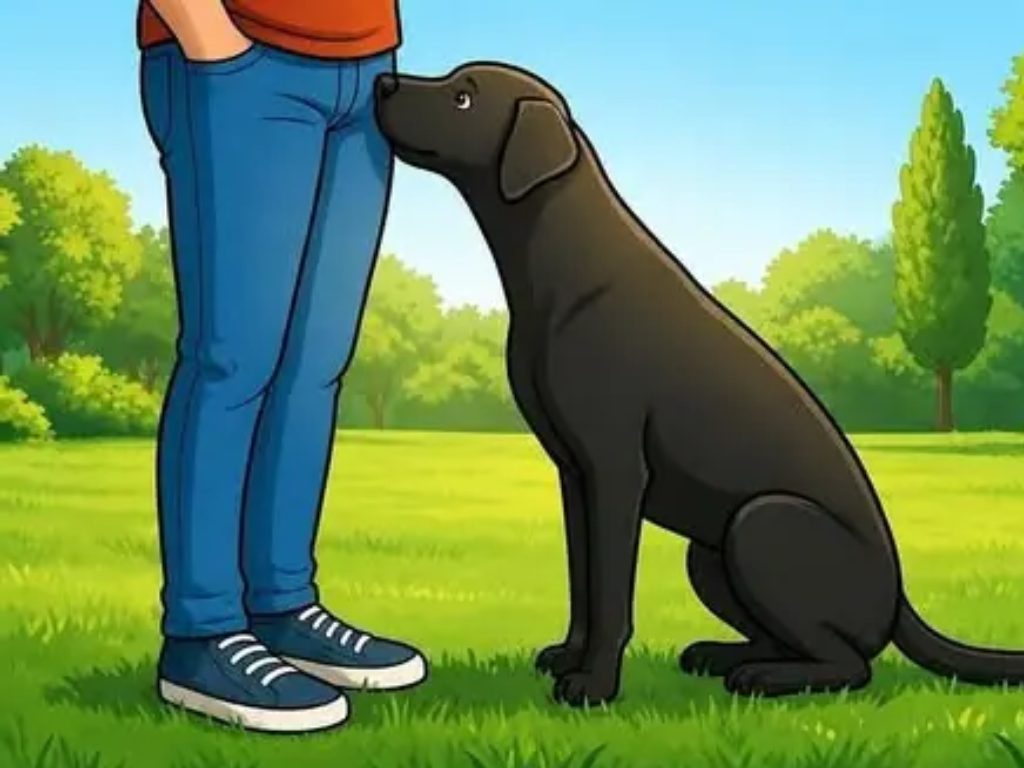
The Dog’s Nose: A True Superpower
It is well known that dogs possess an extraordinary sense of smell. However, the word “extraordinary” barely captures the reality. Their nose contains up to 300 million olfactory receptors, while humans have only about 6 million. Furthermore, the part of a dog’s brain dedicated to interpreting smells is proportionally forty times larger than ours.
In practical terms, this means that where we see just a simple patch of sidewalk, a dog detects a multitude of intertwined details: which animal passed by, at what time, in what emotional state, and what it has eaten. It’s as if the dog reads an entire newspaper in an instant. Fascinating, isn’t it?
Walks as a Genuine Social Network for Your Dog
When your companion sniffs intensely at a patch of grass, it is not out of boredom. He is connecting with his environment. He learns who has recently passed by, senses the mood of the neighborhood labrador, or detects the arrival of a new resident. For him, it’s a way of checking in and exploring his social world.
But his olfactory ability goes even further. Dogs can perceive human emotions through hormones emitted: stress, joy, anxiety. Your dog picks up on these signals well before you express them clearly. Some dogs can even detect blood sugar fluctuations or anticipate medical crises. This gift is not only touching; it can be life-saving.
Allowing Your Dog to Sniff Is Caring for His Balance
What many do not realize is that sniffing requires considerable mental effort for dogs. A 15-minute walk rich in scents to analyze can tire them as much as a 30-minute run. It truly is intense cognitive stimulation.

Moreover, sniffing also triggers the release of dopamine, the hormone associated with well-being. An anxious dog often calms down during these olfactory moments. It becomes his moment of relaxation, akin to our cup of tea after a busy day.
Suddenly pulling the leash to interrupt this ritual is like cutting off an important conversation. It’s both frustrating for him and counterproductive for you.
Embrace the “Olfactory Walk”: A New Way to Stroll
The concept is simple: during the walk, let your dog set the pace. It’s not about covering a specific distance or following a scheduled time. It’s just him, his nose, and the world around him.
Some essential tips:
– Vary the routes to continually offer fresh olfactory discoveries.
– Watch his signals closely: your dog will indicate when he is ready to move on.
– Avoid sudden yanks on the leash; instead, use gentle prompts like “let’s go.”
– Take the opportunity yourself to slow down, see your neighborhood differently, and reconnect with your surroundings.
This walk, slower yet incredibly richer, transforms the relationship between you and your dog. He feels understood, and you learn to better interpret his behavior. The bond between you develops naturally.
Allowing your dog to explore his olfactory world with calm and respect is simply respecting him.
