
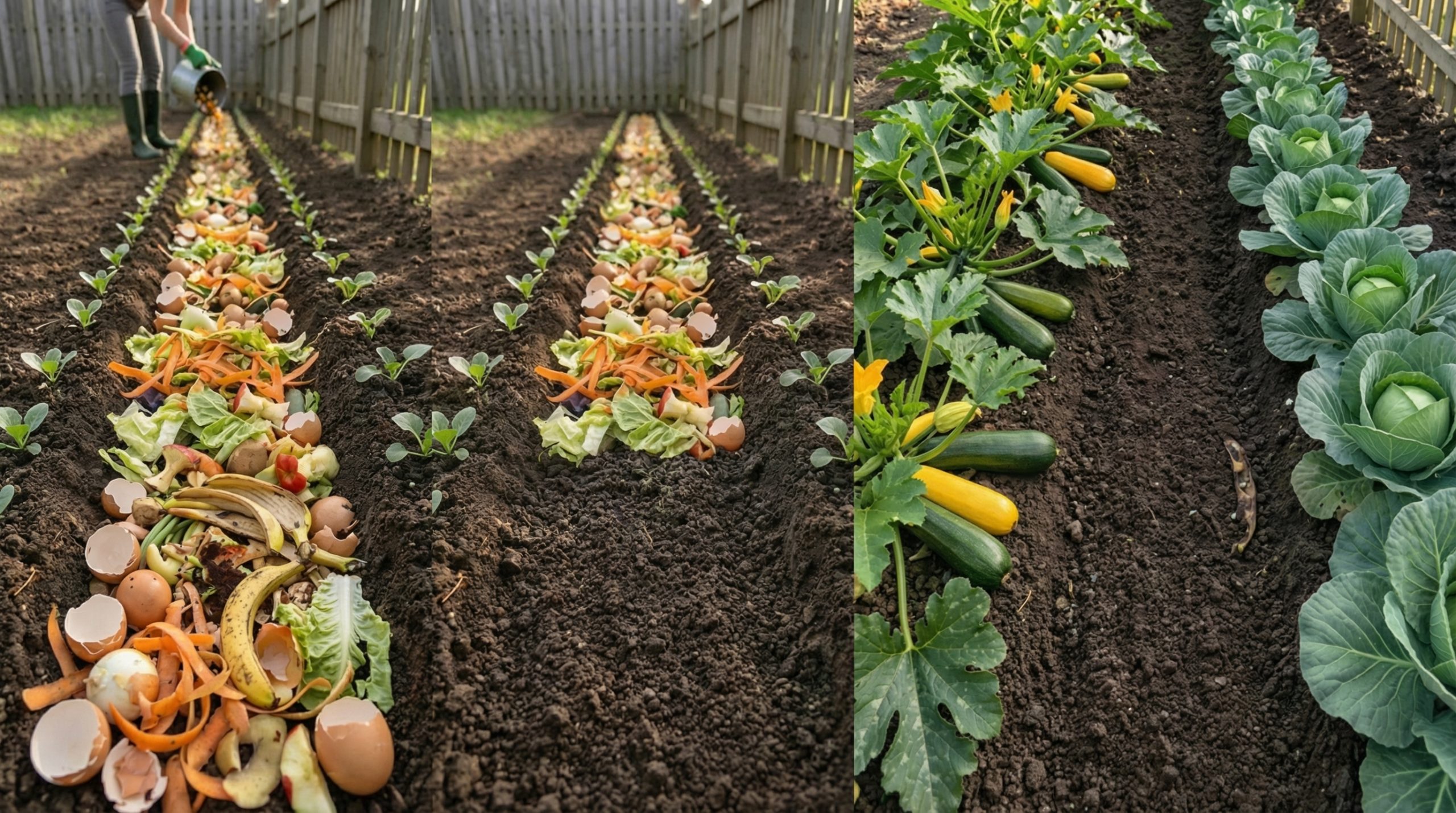
Trench composting is an easy and practical method for improving garden soil while reducing household organic waste. Instead of maintaining a compost pile or bin, organic scraps are buried directly in the ground. Over time, earthworms, beneficial microbes, fungi, and natural soil moisture break the material down into valuable nutrients.
This process enriches the soil, improves its structure, and gradually releases nutrients where plants need them most. Trench composting is especially appealing because it requires little effort. There is no need to turn a pile or monitor a compost bin, and when done correctly it produces minimal odor. For gardeners with limited space or those who prefer a discreet composting method, trench composting is an excellent option.

Why Gardeners Use Trench Composting
The primary goal of trench composting is to feed the soil directly. When organic matter decomposes underground, it improves soil texture, increases fertility, and encourages a thriving ecosystem of earthworms and microorganisms.
It also helps sandy soil retain moisture more effectively while loosening dense clay soils. In addition to improving soil health, this method reduces household waste and eliminates the need for visible compost heaps in the garden.

Many gardeners also appreciate the convenience. If maintaining a traditional compost pile feels like too much work, or if there is not enough dry material to balance kitchen scraps, trench composting offers a simpler alternative.
Materials You Can Compost in a Trench
Soft organic materials that decompose quickly work best for trench composting. Common examples include fruit and vegetable peels, coffee grounds, tea leaves, crushed eggshells, dead flowers, and leafy plant trimmings.
Soft green weeds without seeds, lettuce leaves, chopped garden waste, and fallen leaves are also excellent additions. Small amounts of plain shredded paper or cardboard can be included as long as they are not glossy or heavily printed.
Cutting or chopping scraps into smaller pieces helps speed up decomposition and reduces the risk of unpleasant smells or pests.

Materials to Avoid
Some materials should never be buried in trench compost. Meat, fish, bones, dairy products, oils, and greasy foods are likely to attract animals and produce strong odors as they break down.
Pet waste, diseased plants, invasive weeds, and weeds containing seeds should also be avoided. Thick woody stems or large branches decompose very slowly and are generally unsuitable unless they are finely shredded.
How to Create a Compost Trench
A typical compost trench should be about 8 to 12 inches deep. This depth helps conceal the scraps, reduce odors, and discourage animals from digging. The trench can be shaped as a straight row, circular pit, or narrow channel depending on your garden layout.
Place the organic material loosely at the bottom of the trench. Avoid packing the scraps too tightly, as dense layers can slow decomposition and create soggy areas. After adding the scraps, cover them with at least 6 to 8 inches of soil.
Gently firm the soil and add a small amount of water if the ground is very dry. Once buried, natural soil organisms begin the decomposition process.

How to Prevent Rats and Other Animals
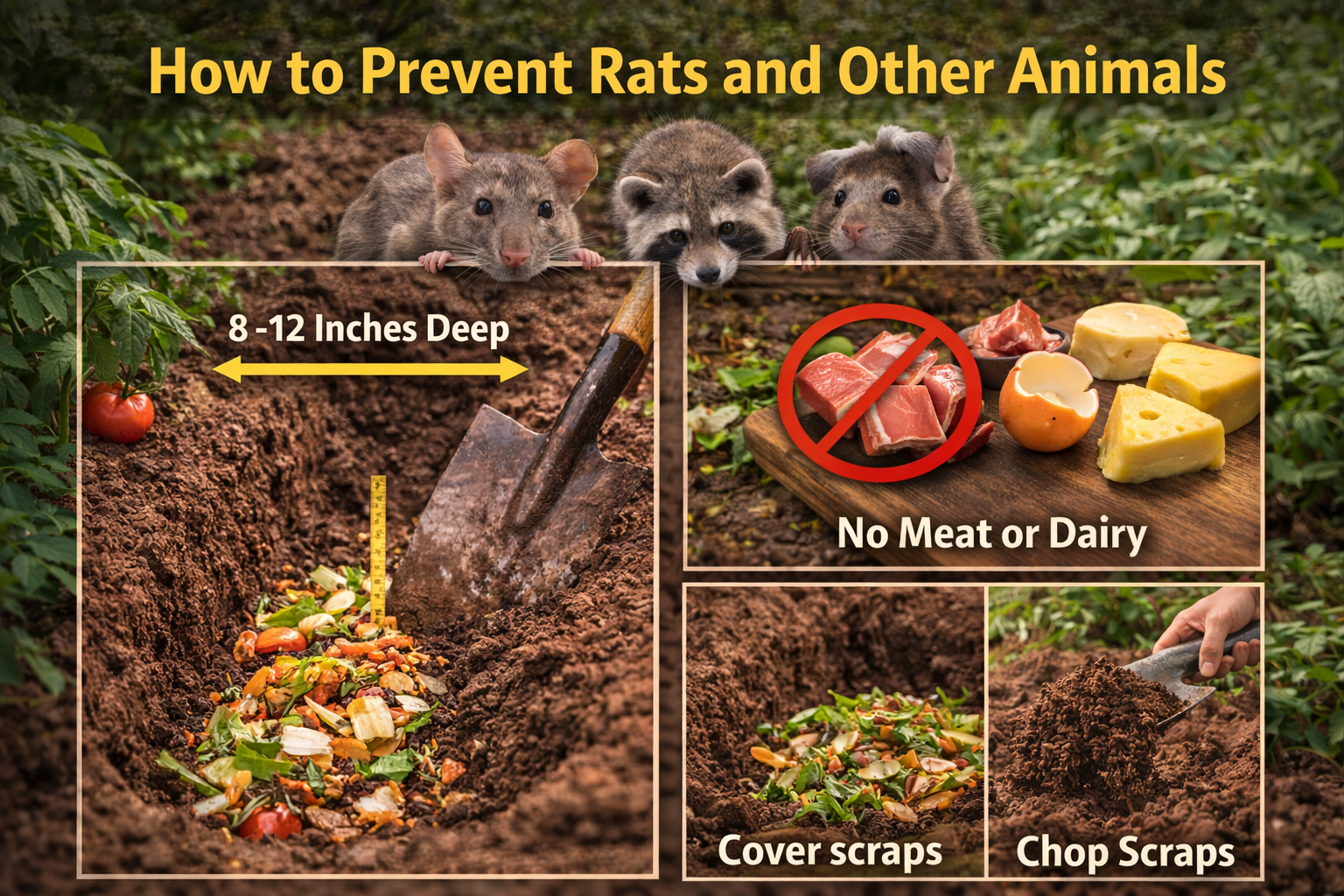
A successful trench composting system depends largely on proper materials and burial techniques. The first rule is to avoid burying meat, dairy, grease, or oily foods, which are the most likely to attract animals.
Always dig trenches deep enough. Shallow trenches make it easy for animals to detect and reach buried scraps. Keeping the trench between 8 and 12 inches deep significantly reduces this risk.
Scraps must also be fully covered with soil. Even small pieces near the surface can attract animals. Spreading organic material across several trenches instead of concentrating it in one spot can also reduce odors.
Chopping scraps into smaller pieces allows them to break down faster and limits the time they remain attractive to pests. In areas with persistent wildlife, adding a layer of dry leaves or extra soil over the trench can provide additional protection.
Best Times to Use Trench Composting
Trench composting can be done any time the soil is workable. Many gardeners use this method in the fall to prepare planting beds for spring crops. As the buried material decomposes over winter, it enriches the soil for the next growing season.
It can also be used during the growing season in empty spaces, between rows, or in areas that will be planted later. This approach is particularly useful for crops that require nutrient-rich soil, such as tomatoes, squash, cucumbers, corn, melons, and pumpkins.
When to Plant After Trench Composting
Freshly buried organic matter needs time to decompose before planting directly above it. During the early stages of decomposition, soil microbes temporarily use nitrogen, which can limit availability for young plants.
It is generally best to wait between 2 and 6 weeks before planting near or directly above a compost trench. In cooler conditions or when large amounts of coarse material are buried, waiting longer is recommended.
If immediate planting is necessary, place seeds or seedlings about 6 to 12 inches away from the trench. After decomposition has progressed, the enriched soil above the trench can become an ideal planting area.
Before planting, check that the soil surface is stable and crumbly. If the ground has settled, level it first, then plant normally and apply mulch to help retain moisture.

Common Trench Composting Mistakes
One of the most common mistakes is burying inappropriate materials such as meat or dairy products. Another frequent problem is digging trenches that are too shallow, which increases the chance of odors and animal disturbance.
Planting too soon after burying fresh scraps can also lead to poor plant growth. Overfilling trenches or adding large uncut scraps may cause the soil to sink later and slow the decomposition process.
Despite its simplicity, trench composting is one of the most effective composting techniques available to gardeners. When the right materials are buried at the proper depth and given enough time to break down, the soil becomes richer, looser, and more productive over time.
