
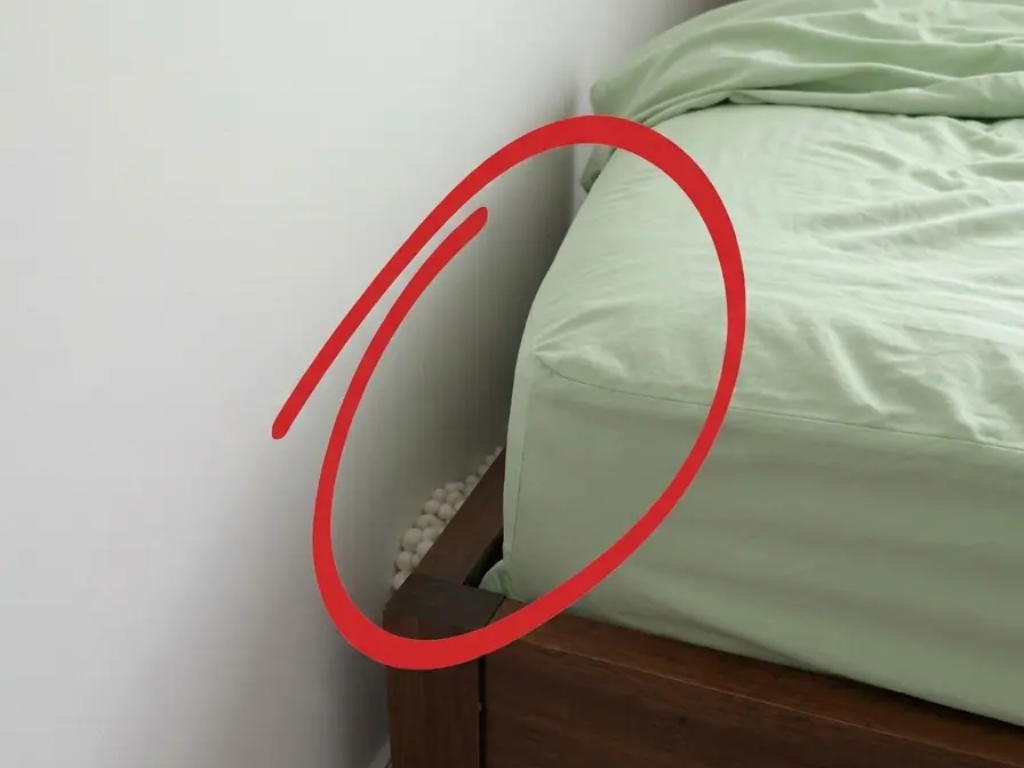
Those Mysterious White Spheres at the Foot of the Bed: An Immediate Instinctive Reaction
The first feeling that seizes us when we encounter these small white spheres, often found near the bed, is fear. It is an immediate, instinctive reaction to an unexpected element in an otherwise familiar environment. But once calm returns, curiosity takes over, and a compelling question arises: where do these spheres come from? Who placed them there?
The most commonly suggested answer by internet users points to lizard eggs, specifically those of a domestic gecko.
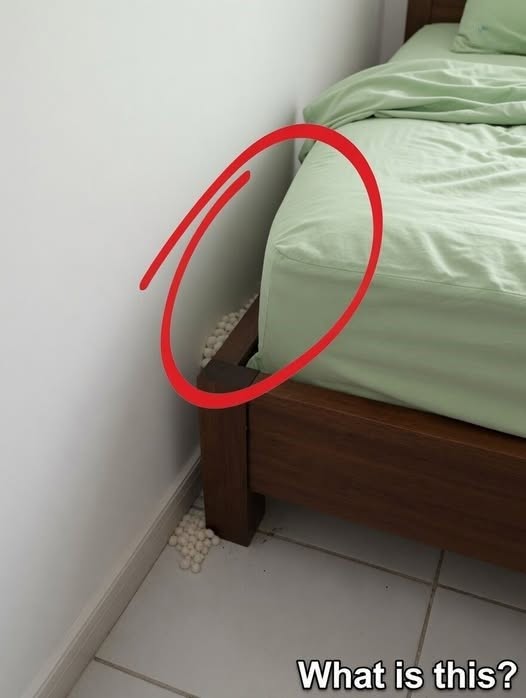
Why Would the Lizard Choose This Exact Spot, So Close to the Bed?
This phenomenon is hardly accidental. Domestic geckos are much more strategic creatures than we might think. When a female is searching for a place to lay her eggs, she selects a location that meets several crucial criteria: warmth, darkness, protection, and humidity.
The space between a wall and a bed perfectly fulfills all these conditions. The mattress retains the body heat of the sleepers, creating a gentle and stable temperature in the surrounding area. The spot, often rarely disturbed, remains enveloped in darkness. Additionally, the humidity level is slightly higher here compared to the rest of the room, which helps prevent the eggs from drying out.

Moreover, bedrooms often harbor insects, drawn by the light or the warmth of human occupants. For a gecko that feeds primarily on mosquitoes and other small flying insects, this becomes an abundant pantry within easy reach. Settling near the bed and laying eggs nearby is therefore a completely logical choice.

But Are These Spheres Really Lizard Eggs?
This is precisely where the nuance adds interest to the question. A female gecko normally lays one or two eggs at a time, not a multitude of perfectly identical spheres. Real eggs have a slightly calcified or leathery shell, are not perfectly spherical, and often stick to a surface.
If the small balls discovered are perfectly uniform, numerous, and resemble plastic or foam beads, the explanation is different and much more mundane: they are often polystyrene beads or microbeads coming from a torn pillow, cushion, or bag.
To dispel doubt, a simple test is sufficient: examine one closely. If the shell is slightly irregular, it is probably an egg. If the surface is smooth and synthetic, discard these beads and replace the affected pillow or cushion.

Should You Be Afraid of Having a Gecko at Home?
Not at all. Domestic geckos are completely harmless. They do not bite, do not transmit diseases, and are even valuable allies in eliminating mosquitoes and other small unwanted insects.
If you find small eggs stuck in a hidden corner, the best approach is to carefully relocate them outside and investigate potential entry points through which the lizard might have entered.
Ultimately, nature is often much closer to us than we imagine—sometimes just a few centimeters from our pillow.
