
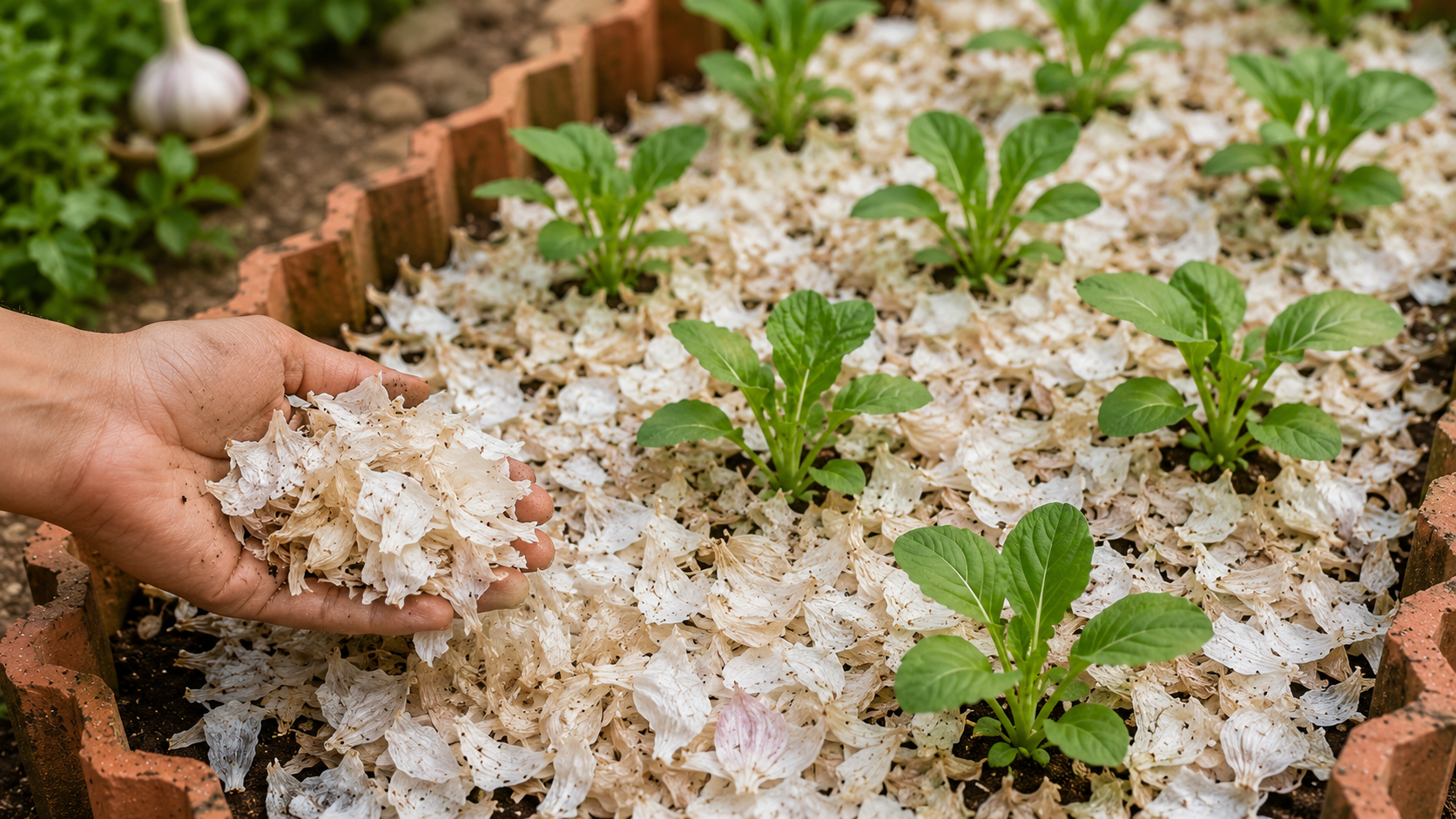
Every time we peel garlic in the kitchen, the papery skins usually go straight into the trash. But what if those dry garlic peels could actually help your garden grow healthier, greener, and stronger?
Most gardeners focus on compost, manure, or store-bought fertilizers while ignoring one surprisingly useful kitchen waste item: garlic skins. These lightweight peels can work as a natural mulch, help improve soil quality, retain moisture, and even contribute nutrients back into the earth as they break down.
If you’re looking for an easy, eco-friendly, and completely free gardening hack, garlic skins deserve a place in your garden.
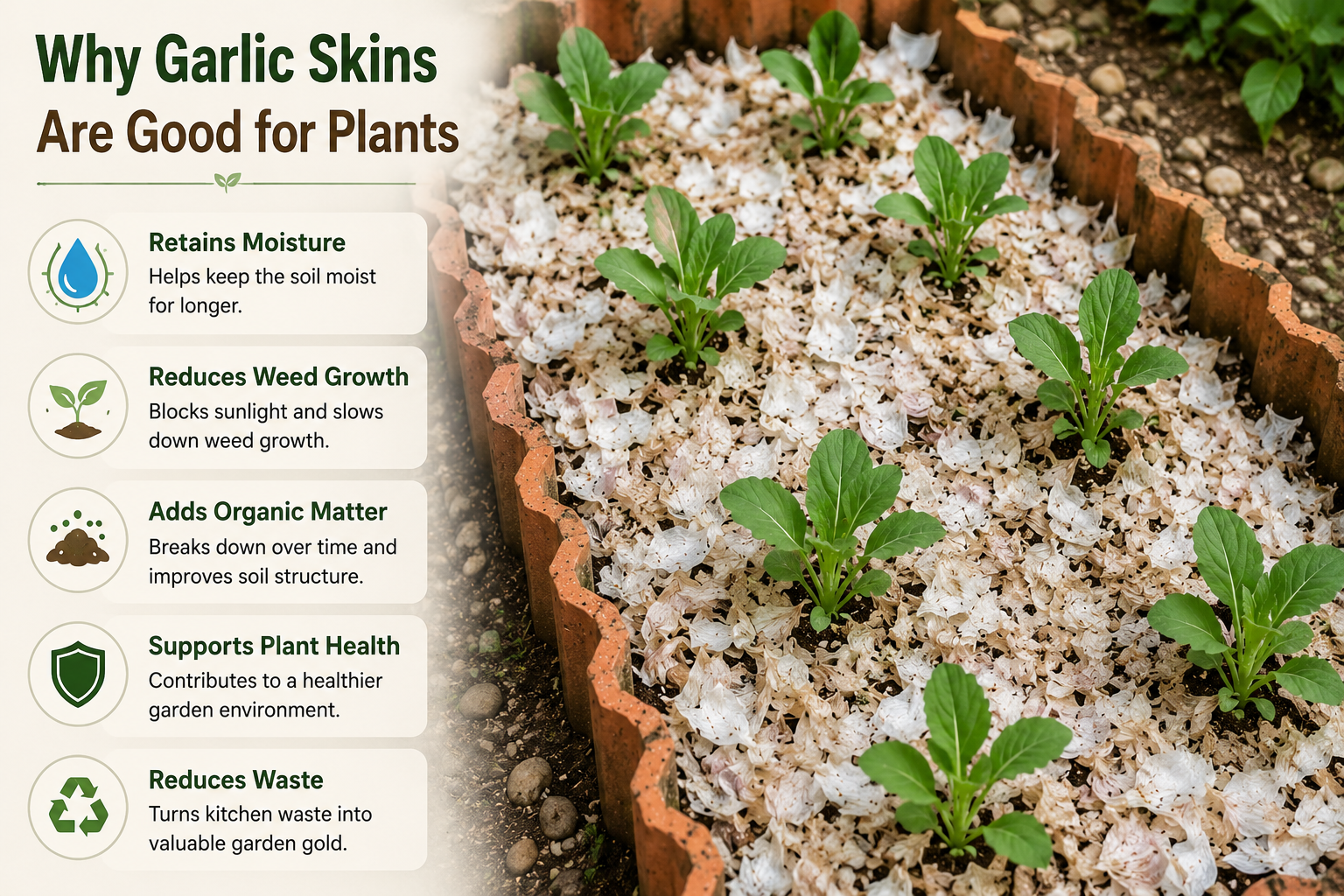
Why Garlic Skins Are Good for Plants
Garlic skins may look dry and useless, but they contain trace minerals and organic matter that slowly enrich the soil over time. As they decompose, they feed beneficial microorganisms and improve soil structure naturally.
Here’s what makes them useful:
1. Natural Moisture Retention
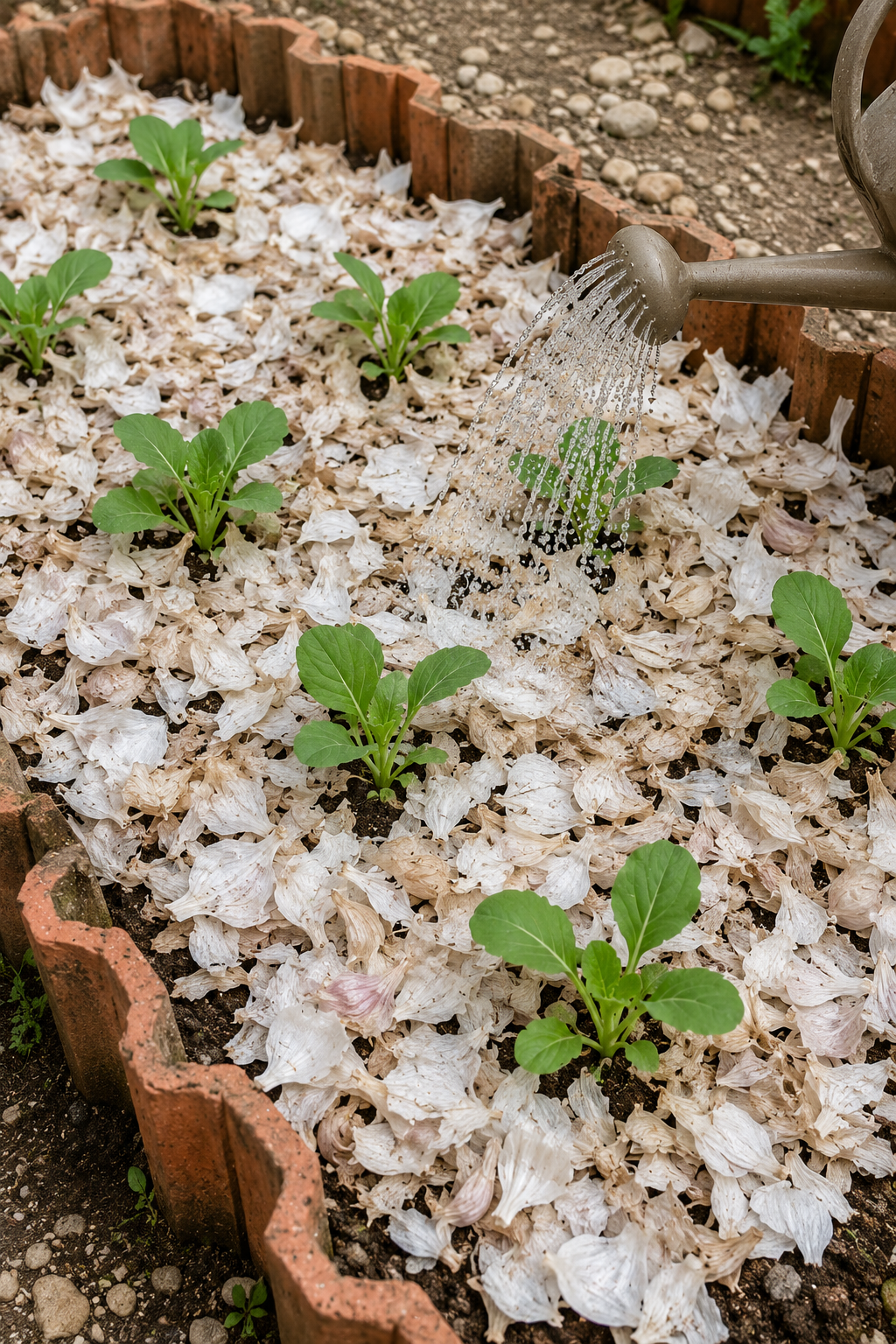
Garlic skins act like a protective blanket over the soil. They help reduce water evaporation, which means your plants stay hydrated longer — especially during hot weather.
2. Organic Mulch
Like straw or dry leaves, garlic skins create a thin mulch layer that protects the soil surface and helps regulate temperature around plant roots.
3. Reduces Weed Growth
A layer of garlic skins blocks sunlight from reaching weed seeds, slowing down unwanted weed growth naturally.
4. Adds Organic Matter to Soil
As the skins decompose, they enrich the soil with organic material that improves texture and microbial activity.
5. Reduces Kitchen Waste
Instead of throwing garlic peels away, you recycle them into something beneficial for your garden — a simple step toward sustainable living.
How to Use Garlic Skins in the Garden
Using garlic skins is incredibly simple.
Method 1: Use as Mulch
Spread a thin layer of dry garlic skins around your plants, vegetables, or seedlings.
Best for:
- Lettuce
- Bok choy
- Tomatoes
- Peppers
- Herbs
- Flower beds
Avoid piling them too thickly, as excessive moisture can lead to mold buildup.
Method 2: Mix Into Compost
Garlic skins are an excellent “brown” compost material. Add them to your compost pile along with vegetable scraps, dry leaves, and grass clippings.
They break down gradually and contribute valuable organic matter.
Method 3: Soil Booster for Seedlings
Crush the garlic skins lightly and mix small amounts into the top layer of garden soil before planting seedlings.
This helps improve soil texture while slowly feeding the soil ecosystem.
Do Garlic Skins Repel Pests?
Some gardeners believe garlic residue may help discourage certain pests because of garlic’s strong natural compounds. While garlic skins alone are not a miracle pesticide, they may contribute to a healthier garden environment when combined with other natural gardening practices.
However, the main benefit remains moisture retention and organic soil improvement.
Which Plants Benefit Most?
Garlic skin mulch works especially well for:
- Leafy greens
- Vegetable seedlings
- Raised beds
- Container gardens
- Herb gardens
Young plants benefit the most because the mulch helps maintain stable moisture levels around delicate roots.
Important Tips
To get the best results:
- Use dry garlic skins only
- Spread thinly around plants
- Avoid covering stems directly
- Combine with compost for even better soil health
- Store extra garlic skins in a dry container until needed
A Simple Gardening Hack That Costs Nothing
Gardening doesn’t always require expensive fertilizers or fancy products. Sometimes the best solutions are already in your kitchen.
Garlic skins may seem like waste, but in the garden they become a natural mulch, a soil helper, and an easy way to reduce waste while supporting healthier plants.
So next time you peel garlic, don’t throw the skins away — give them back to the soil and let your garden benefit from it. 🌱
