
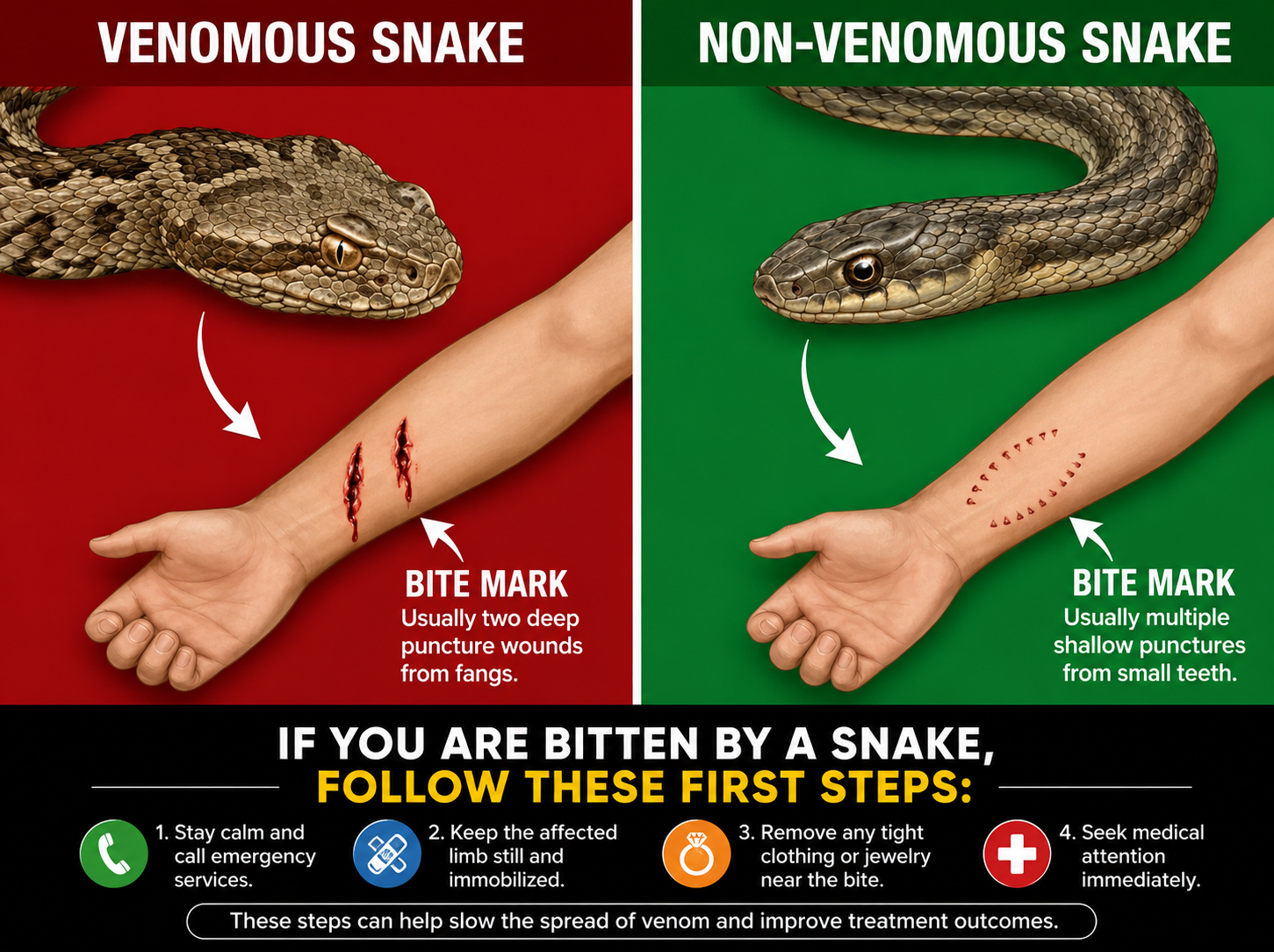
Whether during a walk in the heart of nature, while tending to a garden, or on a simple hike, encountering a snake can sometimes happen unexpectedly. In such situations, fear often sets in immediately, but adopting the right reactions is crucial to minimizing risks. Between common misconceptions, the gestures to avoid, and the essential actions to take quickly, knowing how to respond in the first few minutes after a bite can save lives. Although these incidents are rare in many countries, they always require rapid and thorough care while waiting for assistance from specialized medical teams.
Responding Without Delay After a Snake Bite
When a snake bite occurs, the first priority is to remain calm to avoid unnecessary acceleration of blood circulation. Increased stress can raise heart rate and facilitate quicker venom spread throughout the body. It is essential to promptly move the bitten person to a safe area, away from the risk zone, while limiting their movements as much as possible to prevent the poison from spreading. Emergency services must then be contacted without delay. Accurately noting the exact time of the bite is vital information for healthcare professionals who will manage the case. Even if the initial symptoms seem mild, the potential severity of the situation must never be underestimated. Finally, it is important to reassure the victim while waiting for medical teams to arrive, to prevent any additional panic.
Essential Actions to Take While Waiting for Help
While waiting for professional intervention, several simple yet critical measures must be followed to limit venom propagation. The bitten area should be strictly immobilized, ideally using a pressure bandage that compresses without cutting off blood circulation to the affected limb. Washing the wound or attempting to suck out the venom is strongly discouraged: these practices are not only ineffective but may worsen the condition. Physical exertion should also be avoided, as it could accelerate venom diffusion in the body and increase the risk of severe complications. In some cases, following medical advice, slightly elevating the injured limb without causing discomfort can be beneficial. Remaining calm and minimizing movement remain absolute priorities until specialized rescue teams take over.
How to Prevent Snake Bites in Daily Life?
The best defense against snake bites is prevention, especially in rural or natural environments. Whether in a garden, on a hiking trail, or in a poorly maintained area, it is highly recommended to wear covering clothes and sturdy closed shoes. Snakes prefer hidden places where they can easily conceal themselves, such as tall grass, woodpiles, or under stones. Regularly maintaining your outdoor space, trimming vegetation, and avoiding cluttered areas greatly contribute to reducing the risk of encounters with these reptiles. Moreover, raising awareness and disseminating information to the public play a key role in preventing accidents. Knowing how to recognize high-risk areas allows for the adoption of cautious behavior during outdoor outings.
What Signs Should Raise Alarm?
Even if some bites appear harmless initially, they must always be taken seriously and closely monitored. Symptoms can develop gradually, requiring careful vigilance in the hours following the incident. Noticeable swelling, intense pain, nausea, or weakness are signs that should prompt urgent medical consultation. In all such cases, rapid and appropriate care by emergency responders is essential to prevent severe complications. Health authorities stress that every bite must be evaluated by a healthcare professional. Prompt intervention significantly increases the chances of full recovery. Conversely, self-medication or improvised treatments are strongly discouraged as they can jeopardize the victim’s health.

By staying well informed and adopting the correct actions, it is possible to effectively manage the emergency while waiting for specialized rescue teams and ensuring the best possible care for the bitten person.
