
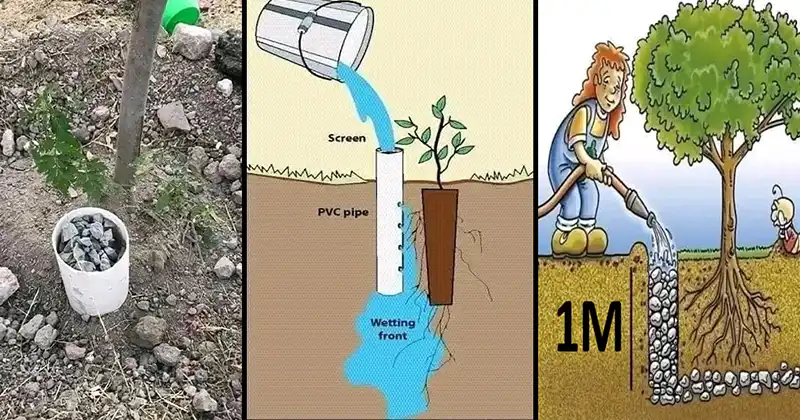
Proper watering is the foundation of a thriving garden. Whether you’re caring for delicate flowers or establishing a young tree, delivering water efficiently to the root zone makes all the difference. One smart, eco-friendly solution is a PVC pipe watering system. This simple technique channels water directly to the roots, reducing waste and encouraging deep, resilient growth.
In this guide, you’ll learn how to create an effective PVC watering system that works for both small plants and larger trees.
Materials Required
PVC Pipe: Choose a pipe size based on your plant. For smaller plants, a ½-inch to 1-inch diameter pipe is ideal. For larger trees, use a 2-inch or wider pipe.
Gravel or Small Stones: Helps distribute water evenly and prevents soil from clogging the pipe.
Saw: Used to cut the PVC pipe to the correct length.

Drill and Drill Bits: Needed to create evenly spaced holes for water release.
Geotextile Fabric (Optional): Helps prevent debris from entering and clogging the pipe.
Water Source: A hose or watering can.
Plants or Trees: Suitable for your garden or landscape project.
Step-by-Step Installation Guide
1. Measure and Cut the Pipe
Determine the depth of your plant’s root system. For small plants, a 12–18 inch pipe is usually sufficient. Larger trees may require a pipe between 2 and 3 feet long. Cut the PVC pipe to the desired length using a saw.
2. Drill Watering Holes
Drill evenly spaced holes along the length of the pipe. For small plants, 1/16 to 1/8 inch holes every 6–8 inches work well. Larger trees may require slightly bigger holes to allow more water flow.
3. Wrap with Geotextile Fabric (Optional)
If desired, wrap the lower portion of the pipe with geotextile fabric. This extra layer helps prevent soil and roots from clogging the holes over time.
4. Add Gravel Inside the Pipe
Fill the bottom section of the pipe with gravel or small stones up to just below the lowest drilled hole. This encourages even water distribution and prevents soil from entering the pipe.
5. Position the Pipe in the Ground
Dig a vertical hole next to your plant deep enough to accommodate the pipe. Place the pipe upright with the top slightly above ground level for easy access. Firmly pack soil around it to keep it stable.
6. Water Through the Pipe
Pour water directly into the pipe. The water will seep through the drilled holes and spread throughout the root zone, ensuring deep and efficient hydration.
Advantages of a PVC Root Watering System
Improved Water Efficiency
Water reaches the roots directly, minimizing evaporation and surface runoff.
Stronger, Healthier Growth
Deep watering encourages roots to grow downward, resulting in more stable and drought-resistant plants.
Low Maintenance
Once installed, the system requires minimal effort compared to frequent surface watering.
Versatile Application
This method works equally well for flower beds, shrubs, and newly planted trees.
Final Thoughts
A PVC pipe watering system is an affordable and practical way to support plant health while conserving water. With just a few materials and simple installation steps, you can create a long-lasting irrigation solution tailored to your garden’s needs. Implement this method today and give your plants the deep hydration they need to flourish.
