
Have you noticed those small white, fuzzy creatures on your plants? They are most likely mealybugs! These pests feed on the sap of your plants, which eventually weakens them and causes them to deteriorate quickly.
I personally faced this problem: after purchasing an infested plant, all my other houseplants became contaminated. It was an absolute nightmare!
To find an effective and natural solution, I consulted my grandfather, a seasoned former nurseryman. He shared several natural treatments that can help permanently eliminate these unwanted pests.
Within just a few days, all the mealybugs disappeared from my plants. So, here are 7 powerful and natural remedies to permanently eradicate mealybugs. Follow the guide:
What Are Mealybugs?
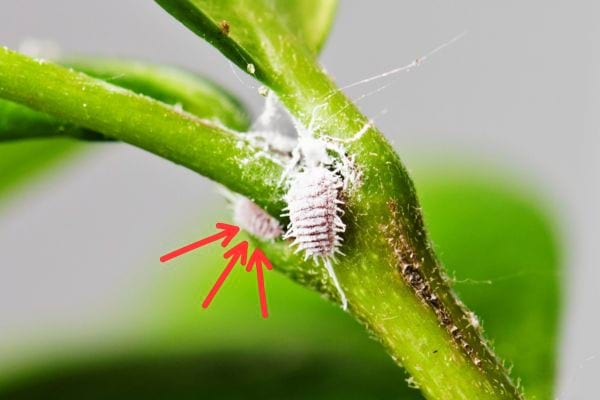

Mealybugs are small white insects, about 1 to 5 mm in length, with an oval-shaped body covered in a whitish fuzz, hence the name “mealy.”
They are piercing-sucking insects: they puncture plant tissues to suck sap. As a result, the plant gradually weakens.
Worse still, mealybugs secrete a sticky substance on the leaves that hinders photosynthesis.
The female lays hundreds of eggs very quickly, accelerating their proliferation. Meanwhile, the males are capable of flight, which facilitates the spread to neighboring plants.
Mealybugs particularly favor succulent plants, cacti, and orchids. Their removal can be challenging, but fortunately, several 100% natural treatments truly work.
I will now present them to you.
1. Water and Black Soap: a Simple and Effective First Solution
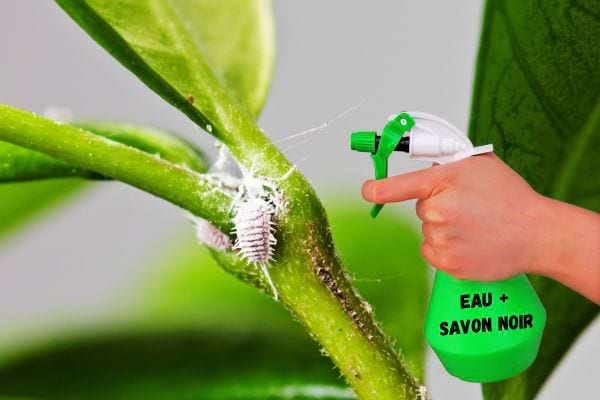
One of the most effective methods is to suffocate these pests. Black soap is perfectly suited for this due to its greasy and viscous texture.
To prepare this solution, pour a few drops of black soap into one liter of water.
Spray this mixture thoroughly on and under the infested leaves, then let it act for at least one hour.
Next, carefully rinse the leaves with a damp sponge or shower the plant.
Be cautious: mealybugs dislike moisture and often hide under leaves, so make sure to treat these areas thoroughly.
This method is ideal for outdoor plants such as laurels, hydrangeas, boxwoods, or tomatoes.
2. Water, Black Soap, and White Vinegar: a Slightly Acidic Blend Against Mealybugs
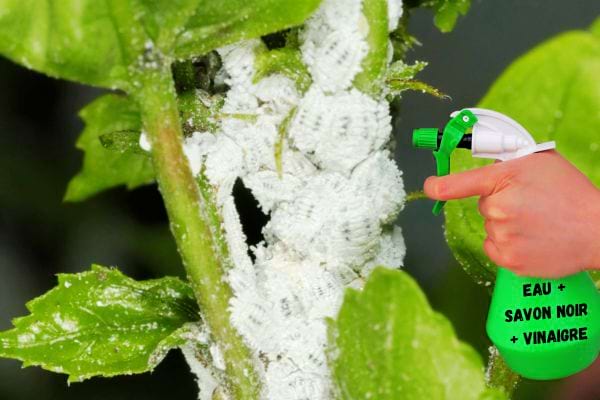
This trick adds a touch of acidity, which mealybugs strongly dislike.
Prepare the same mix as in the previous section, but add one teaspoon of white vinegar.
Spray the solution onto the infested parts and let it sit for about 30 minutes before rinsing the plant in the shower.
A word of caution: delicate plants do not tolerate vinegar’s acidity well, as it is also used as an herbicide. I personally damaged a small indoor palm by not rinsing it quickly enough, especially under bright sunlight that day.
3. Household Alcohol for a Precise and Targeted Treatment
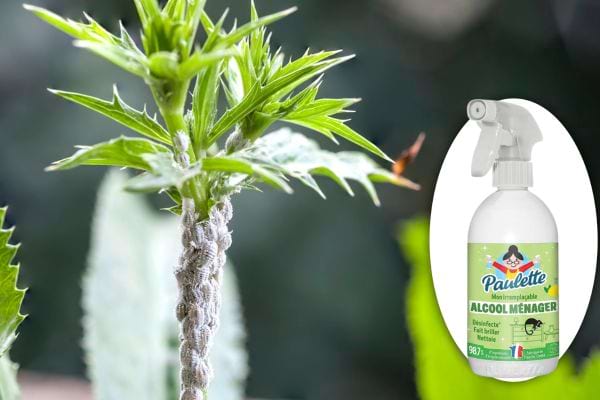
I particularly like this method for its simplicity and effectiveness.
Grab some cotton swabs and household alcohol.
Dab a cotton swab with a drop of alcohol, then apply it directly onto each mealybug.
This method requires more time but offers perfect precision, avoiding damage to the leaves. It’s ideal for fragile plants such as calatheas, alocasias, monsteras, or yuccas.
As always, rinsing with clear water after the treatment is recommended.
4. Nettle Manure: a Simple Natural Insecticide
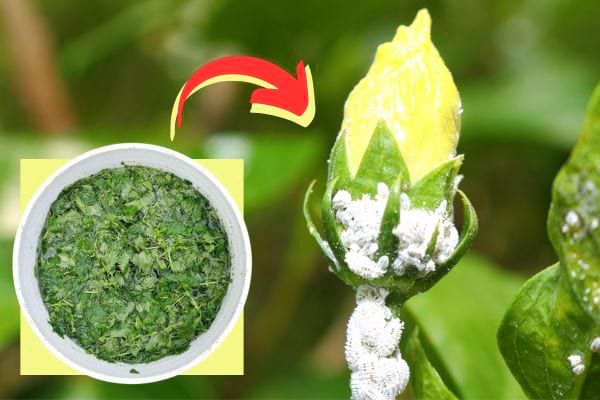
Nettle manure is the most effective and economical natural insecticide I know. It has been used for generations in vegetable gardens, and its properties are genuine.
It effectively combats mealybugs.
Spray this manure on your infested plant and let it work.
Be aware of its very strong odor, so treat plants outdoors!
It can be used both preventively and curatively and is particularly effective on cacti, bamboos, olive trees, palm trees, orange trees, lemon trees, and vines.
5. Neem Oil: a Sustainable Insecticidal Solution
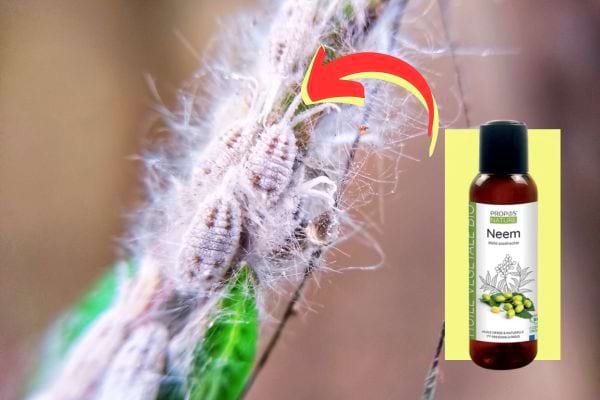
Neem oil is extracted from the fruits of the margosa tree.
This insecticidal oil emits a strong odor and, when in contact with mealybugs, paralyzes their digestive tract and prevents adult reproduction.
Thus, it is a durable and effective method to fight these pests.
You can use it pure or slightly diluted in a spray on the infested plants.
6. The Manual Method for a Gentle and Precise Treatment
Natural solutions are often very effective, but some can irritate or burn sensitive plants.
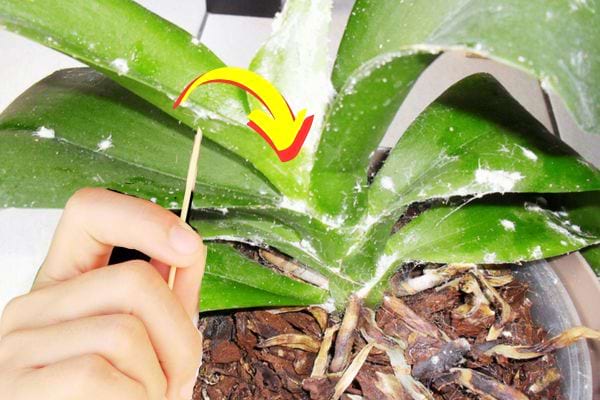
Personally, I often choose the manual method, especially for my orchids.
Armed with a toothpick, I pierce the largest mealybugs to eliminate them.
No mercy! Then, I manually dislodge the smaller ones and the eggs hidden in the crevices of leaves under a stream of water, allowing the pests to be flushed down the drain.
This method takes time, but it is gentle and highly effective in protecting fragile plants.
This is how I managed to rid all my orchids of a massive mealybug infestation.
7. Cut Off Heavily Infested Leaves and Branches
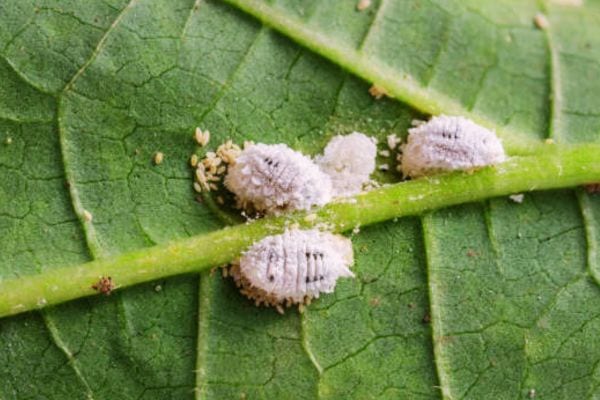
If a plant is severely invaded, do not hesitate to prune the most affected leaves or branches.
This is a radical solution but necessary to save the plant and prevent further spread.
Avoid adding these infected parts to your compost; instead, burn them to definitively stop the mealybugs’ reproductive cycle in your garden.
Essential Tips to Prevent and Combat Mealybugs
Based on my experience, here are 6 essential recommendations to effectively fight mealybugs:
Place your new plants in quarantine before introducing them to your other plants. This prevents spreading if they are infested. I learned this the hard way after losing several orchids at once.
The natural treatments presented here work as well curatively as preventively.
For prevention, apply them regularly, about every 10 days.
Do not forget to treat all parts of the plant, including the soil and nearby roots.
Beware of “miracle” mixtures found online. They might burn your plants. Stay away from harsh formulas combining multiple strong ingredients.
Spray water regularly on and under the leaves. Mealybugs hate moisture, and this helps you detect their presence quickly so you can act promptly.
