
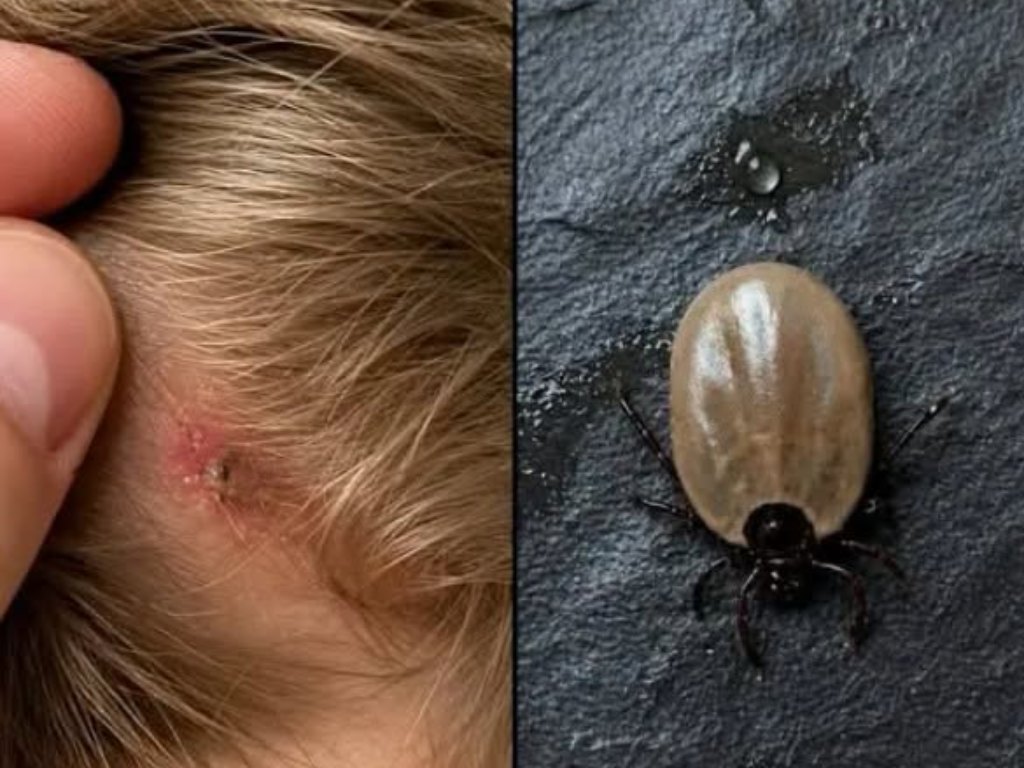
The Tick: A Discreet and Persistent Parasite That Easily Hides
Ticks primarily inhabit tall grasses, shrubs, and forests, but they can also be found in gardens. They take advantage of the passing of a human or an animal to latch quietly onto the skin. Their bite often goes almost unnoticed because it causes very little pain — this is precisely why we frequently realize the bite much later. Ticks can remain attached for several hours, sometimes even days, without being detected. They become even harder to spot under the dense hair of a child.
How to Remove a Tick Without Making Mistakes
This step often causes considerable worry, but it is actually something anyone can do. The only essential tool is a fine-tipped tick remover, which can be easily found in pharmacies for just a few euros. You must grab the tick as close to the skin as possible, then pull gently but firmly straight upward, without twisting or crushing the insect. It is crucial to avoid “old wives’ remedies” such as ether, oil, petroleum jelly, or trying to burn the tick. These methods risk causing the parasite to regurgitate, which significantly increases the likelihood of transmitting pathogens.
Once the tick is removed, you should carefully clean the area with water and soap or a mild antiseptic. Additionally, it is advisable to keep the tick in a small sealed bag in case a doctor needs to identify it. Finally, remember to wash your hands thoroughly after handling the tick.
Which Symptoms Should Raise Alarm in the Days Following a Bite?
A slight reddening around the bite site is normal. However, it is important to remain vigilant for two to three weeks afterward. Warning signs include fever, chills, unusual fatigue, muscle aches, swollen lymph nodes, or a skin rash that spreads forming a ring around the bite. This last symptom is particularly indicative of Lyme disease, a serious infection that can be treated effectively if diagnosed early.
If in doubt, do not hesitate to consult a doctor. If the child shows difficulty breathing, marked weakness, or severe headaches after a bite, it is imperative to go to the emergency room without delay.

Preventive Measures to Avoid Tick Bites
Prevention remains the best defense against bites. During outdoor outings, opt for covering clothing: long sleeves, pants, and closed shoes. Upon your return, carefully inspect the entire body of the child, including the scalp, behind the ears, under the arms, behind the knees, and around the ankles. Remember also to check pets, as they can bring ticks inside without your knowledge.
A simple moment of attention after each walk can often be enough to avoid many troubles.
