
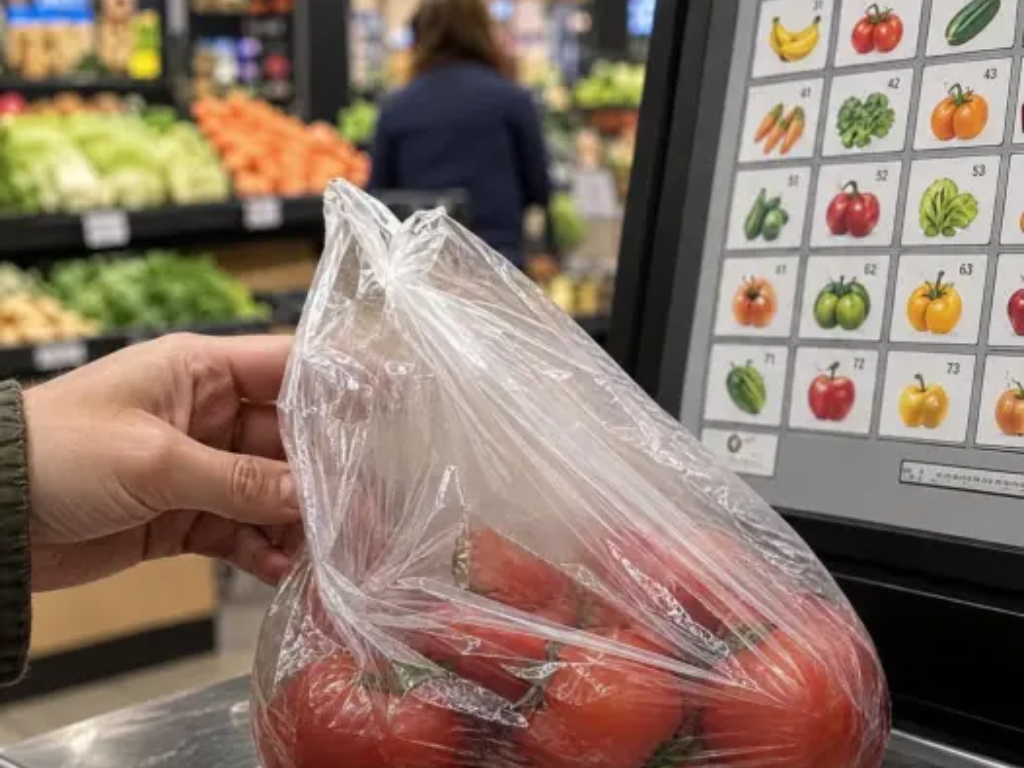
The Simple Mistake That Raises the Price
At the supermarket, everything happens quickly. You grab a few zucchinis, slip them into a plastic bag, place everything on the scale, select the right symbol… then stick the label without really paying attention, a gesture that has become almost automatic.
Yet sometimes, the bag slightly overflows. It can touch the metal edge, brush against the scanner, or lean against a fixed part of the scale. It is precisely at this moment that the outcome is determined.
The scale does not “see” your fruits as you do. It measures the pressure applied. If the bag is poorly positioned and presses against an element outside the weighing platform, the weight reading can be distorted—displaying a weight slightly higher than the actual one.
On one kilogram of potatoes, the difference seems negligible. But if this mistake repeats every week for your tomatoes, avocados, pears, or green beans, it can add up to a significant amount over the course of the year.

Cashiers’ Advice: Always Center Your Bag Properly
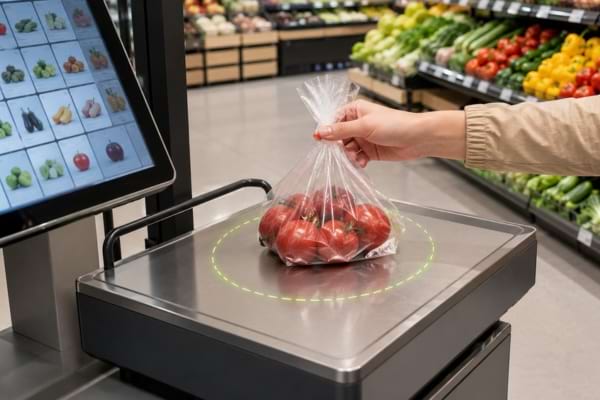
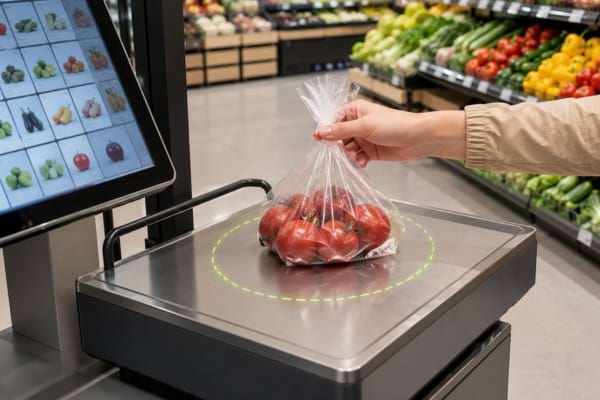
The good news is that adopting a very simple habit is enough. Always place your bag exactly in the center of the weighing platform. It should not touch the frame, the edges, or the scanner. The bag must rest solely on the surface designated for weighing—nothing else.
This habit quickly becomes second nature for cashiers, who handle hundreds of weighings every day. When a price seems unusual, they immediately know where the problem lies: often a bag that is too bulky, poorly placed, or rubbing against an edge.
Before printing your label, take a few seconds to check: – Is the bag well centered? – Do the fruits extend beyond the platform? – Is the plastic not stuck anywhere?
Just two seconds are enough to pay exactly what you owe.
The Inspection Sticker on the Scale: A Detail to Check
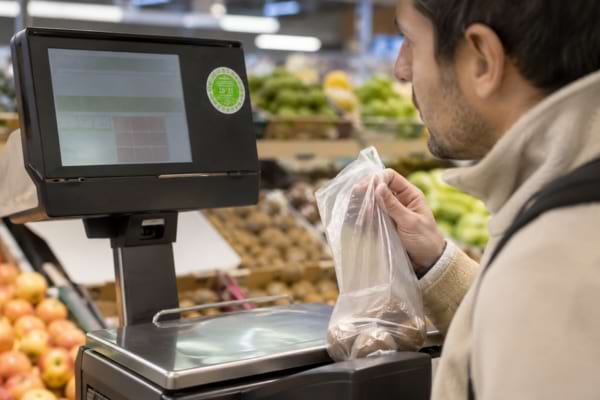
Another important habit: observe the inspection sticker placed on the scale. A green label means the device was checked recently and meets standards—a reassuring sign. Conversely, a red sticker or an expired date is a warning signal. In that case, it’s best to choose another scale or ask to be weighed directly at the checkout. You have every right to do so.
When the Displayed Price Seems Suspicious
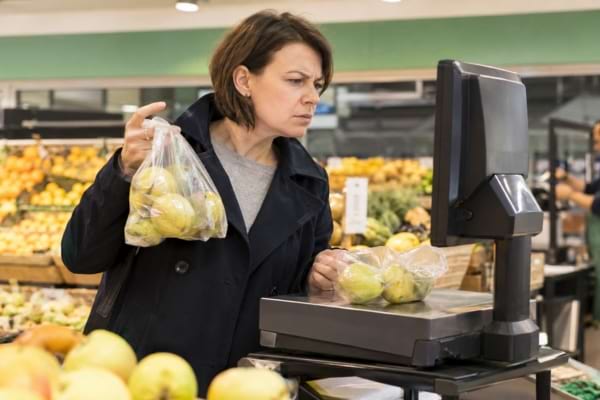
Trust your common sense. If three apples show a price that surprises you, don’t blindly stick the label. Remove the bag, reposition it correctly, then weigh again. Feel free to check on another scale. If the difference persists, report it to an employee: this isn’t causing trouble, it’s simply making sure you don’t pay more than what your purchases actually deserve.
With today’s grocery prices, every bit of saving really counts.
A properly placed bag on the scale is your wallet thanking you every time you check out.
