
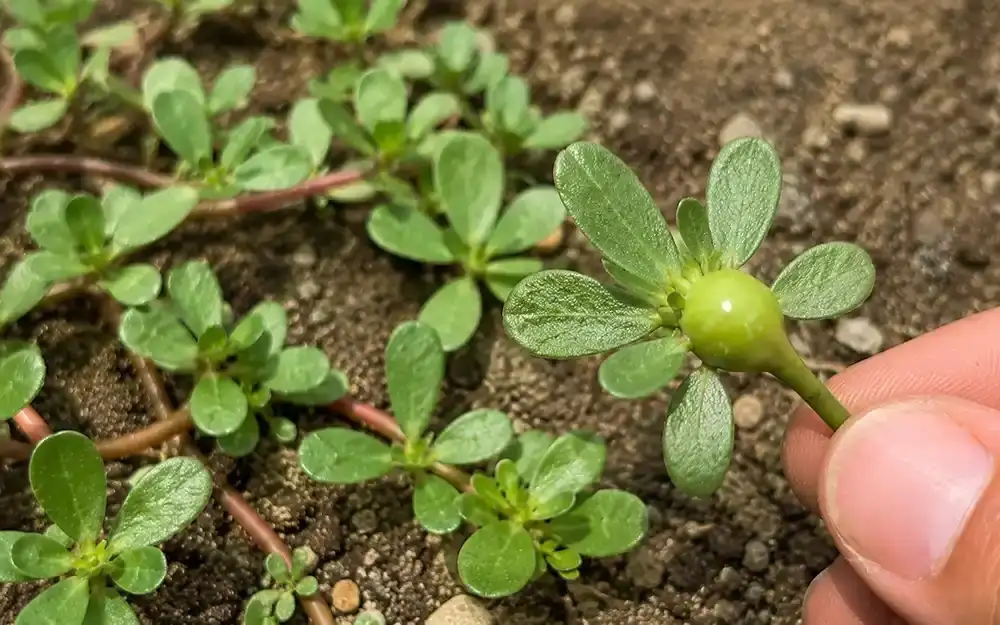
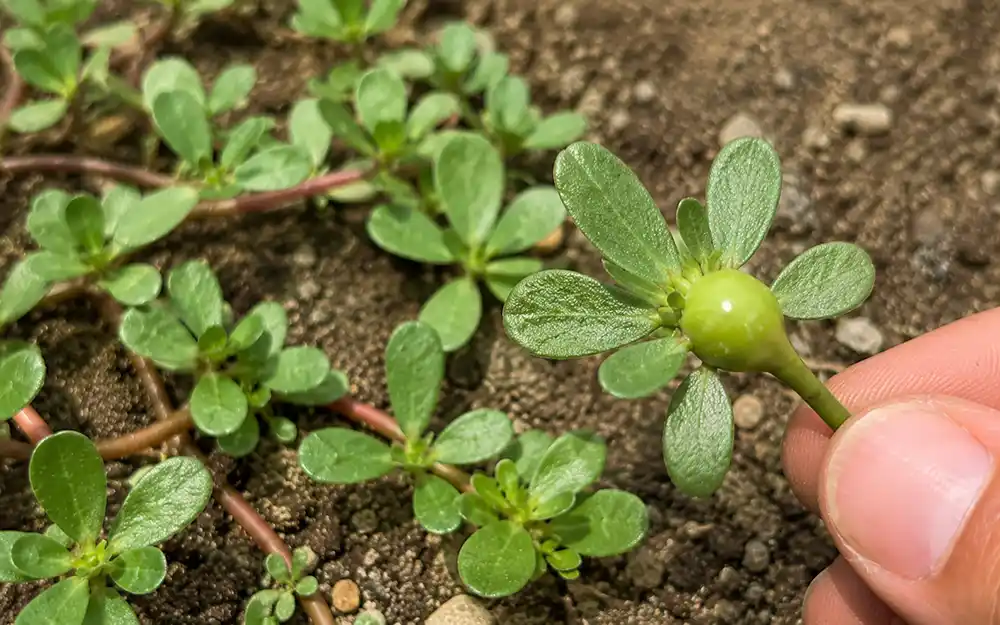
Purslane is an incredibly nutritious wild plant that naturally grows in many gardens, yards, and cultivated fields. Often mistakenly regarded as just another weed, it is actually packed with omega-3 fatty acids, vitamins, and essential minerals. It makes a fresh, healthy, and free ingredient perfect for enhancing homemade salads, soups, and stews. However, harvesting this wild plant requires some knowledge to avoid hidden risks. To fully enjoy purslane’s benefits, it is crucial to learn how to correctly identify it, recognize hidden pests, detect toxic look-alikes, and prepare the plant safely.
Suspicious Growths Housing Hidden Larvae
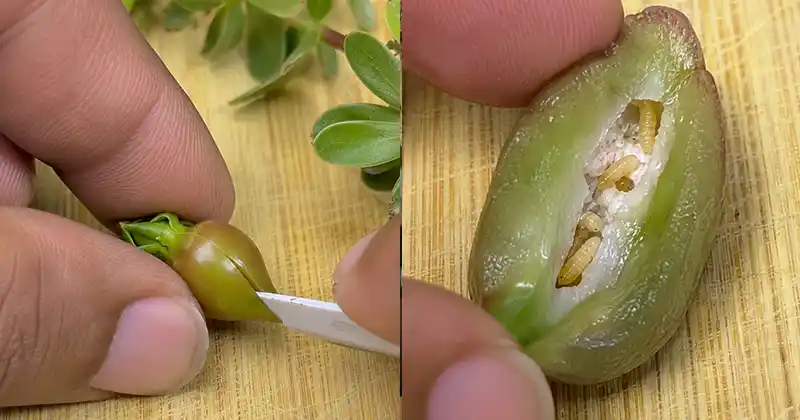
Among the surprises you might discover on purslane are strange swollen protuberances on the stems or leaves. These are galls — abnormal growths produced by the plant in response to specific insects, such as the purslane sawfly. The adult insect lays its eggs inside the plant tissues, and to protect these eggs, the plant creates a sort of abnormal fleshy pocket around them.
The risk: When cutting these swollen growths, it is common to find tiny white larvae — little worms — inside them. Accidentally ingesting these larvae can turn your meal into an unpleasant, even disgusting experience.
How to Avoid This: Carefully examine the stems before harvesting. Healthy purslane stems are smooth and fairly consistent in thickness. If you notice round, swollen, or unusual bumps, it’s best to cut away and discard that entire section of the plant. Only pick smooth stems and leaves without any deformities.
The Toxic Impostor: Hairy Spurge
Purslane often shares its habitat with a dangerous neighbor: the hairy spurge, also called spotted spurge. This toxic plant can cause health issues if consumed.
The risk: Hairy spurge grows low and forms mats similar to purslane, which can easily mislead an inexperienced forager. Ingesting it may cause abdominal pain, vomiting, and nausea. Additionally, its irritating milky sap can provoke skin irritation on contact.
How to Identify and Avoid It: The simplest test is to break a stem: if a white, milky liquid oozes out, it is hairy spurge and should be discarded immediately. Purslane, on the other hand, secretes a clear, almost watery sap. Furthermore, purslane leaves are thick, smooth, and fleshy, while spurge leaves are thin, flat, and sometimes marked with a dark central spot.
High Levels of Oxalic Acid
When picking healthy, clean purslane, keep in mind that it naturally contains a compound called oxalic acid.
The risk: Oxalic acid is common to several leafy vegetables like spinach and Swiss chard. Excessive consumption can promote kidney stone formation, especially in predisposed individuals. It can also impart a slightly acidic and sharp taste that some people find too strong.
Tips to Limit This Risk: Avoid eating large amounts of raw purslane every day. For frequent use, blanch or steam the leaves for a few minutes: this significantly reduces oxalic acid content. Drinking plenty of water while eating these raw greens also helps the body eliminate these compounds safely.
Contaminated Soil and Embedded Dirt
Purslane is a hardy plant that often grows in cracks of walkways, along roadsides, or in well-maintained lawns.
The risk: In these locations, the plants may be exposed to toxic herbicides, pesticides, motor oils, or animal droppings. Moreover, purslane’s spreading growth habit means it collects a lot of dust, sand, and soil splashed by rain.
How to Avoid This: Only harvest from areas free of chemicals, such as organic gardens or plots cultivated without pesticides. Avoid roadside edges altogether.
Checklist for Safe Preparation
To ensure your harvest is clean, safe, and ready to be cooked, here are some simple steps to follow:
Isolate and Inspect: Spread your harvest out on a well-lit table. Inspect each stem for galls or signs of insect contamination. Discard any swollen parts.
Check the Sap: Break a few stems at random to verify the sap is clear, confirming the absence of toxic spurge.
Remove the Base: Cut off the roots and the thickest, toughest stems. Keep only the young tender leaves and thin stems for consumption.
Deep Soak: Immerse the leaves in a large bowl of cold water. Stir vigorously to dislodge dirt, sand, and small insects. Let the impurities settle at the bottom, then gently lift the clean purslane out.
Purslane is an exceptional wild food that costs nothing to cultivate or forage. By spending just a few extra minutes spotting insect galls, checking the sap type, and thoroughly washing the leaves, you can safely enjoy this powerful plant in your daily culinary creations without unwelcome surprises.
