
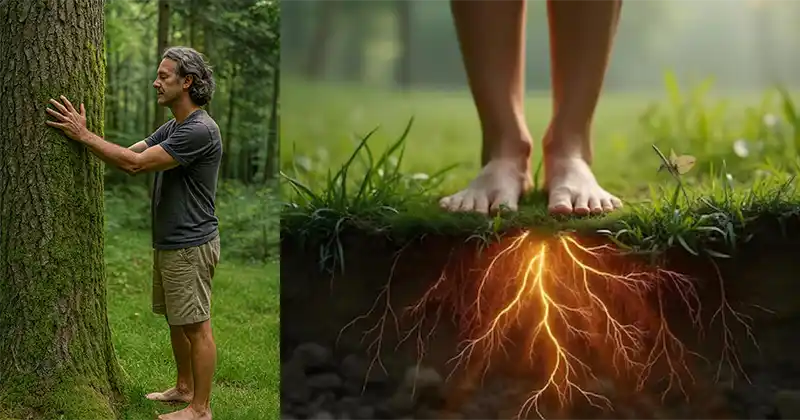
Reconnecting Through Tree Grounding
Modern routines often keep us indoors, overstimulated, and mentally exhausted. Over time, this distance from nature can leave us feeling tense, unfocused, and depleted. One gentle yet effective way to restore balance is tree grounding—a mindful practice that combines barefoot contact with the earth and intentional connection with a living tree. This simple ritual draws on the stabilizing qualities of the ground and the calming, regenerative presence of trees to support overall well-being.
How to Practice Tree Grounding
1. Choose a tree that feels right
Find a sturdy, healthy tree in a peaceful outdoor setting. Trees with deep roots—such as oak, pine, or cedar—are often favored, but your intuition matters most. Select one that naturally draws your attention.
2. Go barefoot
Remove your shoes and stand directly on the soil, grass, or earth near the tree’s base. This direct contact allows your body to reconnect with the ground beneath you.
3. Make physical contact
Place both hands on the trunk or gently wrap your arms around it. Whether you hug the tree or simply rest your palms against the bark, keep your touch relaxed and intentional.
4. Breathe with awareness
Slow your breathing. Inhale deeply through your nose, letting your chest and abdomen expand. Exhale slowly, releasing built-up tension and mental clutter.

5. Visualize the exchange
Picture stress, fatigue, or heavy emotions flowing down through your legs and feet into the earth. Imagine the tree’s roots absorbing and neutralizing this energy. Then visualize calm, revitalizing energy moving up through the trunk, into your hands, and settling in your chest.
6. Remain present
Stay connected for 15 to 30 minutes. As your body settles, you may notice a sense of calm, mental clarity, or gentle renewal.
Benefits of Grounding with Trees

Standing barefoot on the earth alone can be beneficial, but adding a tree deepens the experience by enhancing the feeling of stability, flow, and connection.
Physical Benefits
Eases muscle tension: Barefoot grounding combined with gentle leaning helps relax the body.
Encourages healthy circulation: Contact with natural surfaces stimulates nerve endings and blood flow.
Supports immune function: Time spent around trees has been linked to improved immune responses in forest-based studies.
Boosts vitality: Many people report feeling refreshed and energized afterward.
Improves sleep quality: The calming influence of nature can help regulate the nervous system and support deeper rest.
Mental and Emotional Benefits
Reduces stress and anxiety: Trees promote nervous system balance and help lower stress hormones.
Sharpens focus: Quiet time in nature clears mental clutter and enhances creativity.
Cultivates mindfulness: Physical connection with a tree anchors attention in the present moment.
Encourages emotional release: Visualizing the transfer of stress can feel soothing and restorative.
Strengthens connection: Being close to a living organism fosters a sense of belonging and inner peace.
The Role of Trees in Grounding Practices
Trees play a powerful role in grounding because of their natural structure and life cycle:
Roots reach deep into the earth, providing stability and anchoring energy.
Trunks serve as strong channels, symbolizing balance and flow.
Branches and leaves extend upward, interacting with sunlight, air, and sky.
By standing barefoot on the ground while touching a tree, you connect yourself to this living system—grounding your body while uplifting your awareness.
A Simple Path Back to Balance
Tree grounding is more than a relaxing outdoor habit; it is a way to realign with the rhythms of nature. The earth offers stability, while trees provide renewal and calm. Practiced regularly, this gentle ritual can ease tension, quiet the mind, improve sleep, and restore a sense of harmony between body and mind—all through a simple, intentional moment with nature.
