
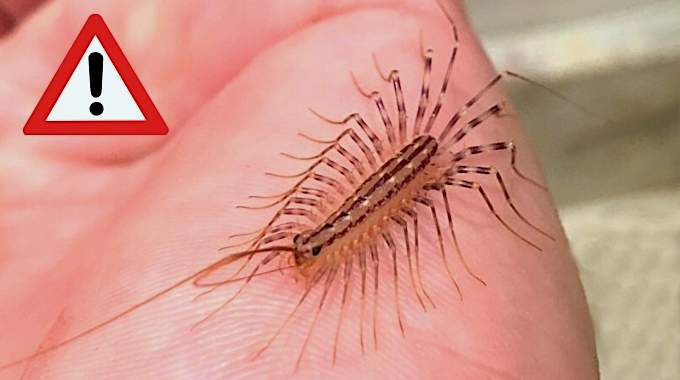
I really did not expect it, but the other night, when I entered my bathroom, I came face to face with a strange creature.
A slender centipede, equipped with extremely long legs, darted at an incredible speed under a piece of furniture. A shiver of fear ran through me!
At first, I thought it was a potentially dangerous insect… However, after doing some research, I discovered that it was a house centipede, scientifically known as Scutigera coleoptrata, which belongs to the myriapod family.
And, surprisingly, this little critter that we often feel like crushing is actually very useful inside our homes.
So, let’s explore whether the house centipede poses any danger and what you should do if you spot one in your home.

The House Centipede: What Exactly Is It?
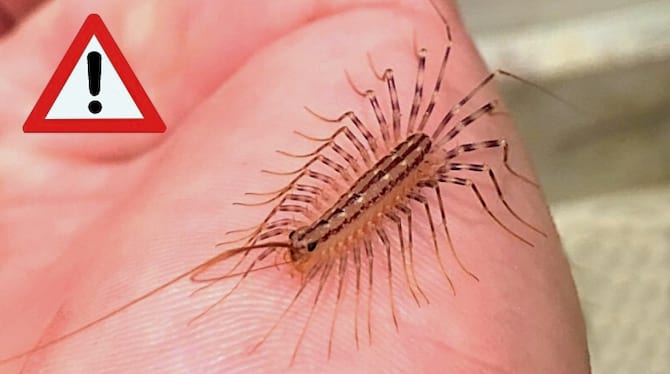
I can describe the house centipede (Scutigera coleoptrata) in great detail. As I mentioned, my recent encounter with it left a lasting impression! Its silhouette gave me a real shudder, making its appearance unforgettable.
Though it is commonly called a centipede, it actually has only 15 pairs of very long, slender legs. Despite this, it moves with astonishing speed. Its common name, “veloce,” which means fast, is no coincidence: catching it is nearly impossible.
It also has two very long antennae at the front and two long appendages at the rear. Most have a banded grayish-yellow segmented body with violet stripes, which extend onto their legs.
As if its eerie appearance weren’t enough, the house centipede surprisingly has a long lifespan for an arthropod, especially when living indoors, sheltered from cold and predators: it can live between 3 and 7 years!
Why You Should Never Kill a House Centipede
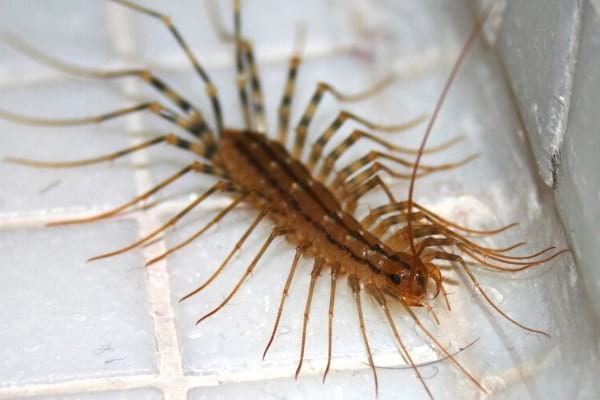
At the sight of a centipede, the first instinct is often to squish it with your shoe. But I strongly advise against doing this! First, a dying centipede carcass attracts small pests like cockroaches. More importantly, this centipede, like many other insects, is undeniably useful.
What may seem repulsive is actually a true ally in the natural cleaning of our homes. It acts like a natural insecticide, somewhat like a ladybug clearing aphids from plants.
Thus, it is beneficial to have a house centipede in your home to protect various rooms. In fact, many people are willing to pay well to obtain one!
What Does the House Centipede Eat?
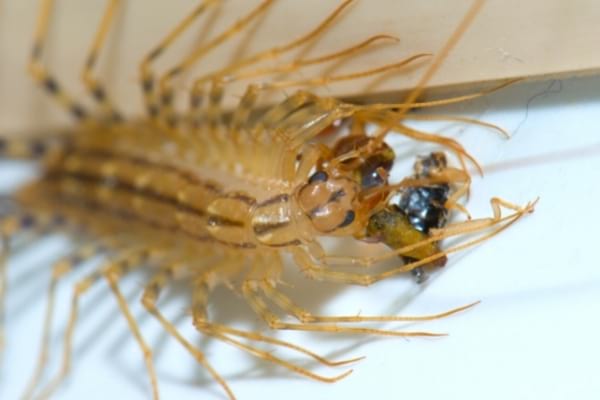
Understanding what this centipede eats reveals its usefulness. This little creature is known for eliminating the most annoying pests both in the house and in the garden. The house centipede readily feasts on cockroaches, moths, flies, bedbugs, and other unwanted “treats.”
It has a very particular attack technique: using its two front legs near the head, it grabs its prey to inject venom. Then, with its other legs, it wraps its victim like a lasso. This centipede leaps on its victim, encircles it with its many legs, and paralyzes it.
Therefore, the house centipede is a true natural predator that eliminates the insects you don’t want invading your home!
These centipedes are considered active hunters, always on the lookout for their next prey. They build no nests or webs, which makes them very discreet. Moreover, they do not attack your wood and are not vectors of serious diseases for humans.
Is the House Centipede Dangerous to Humans?
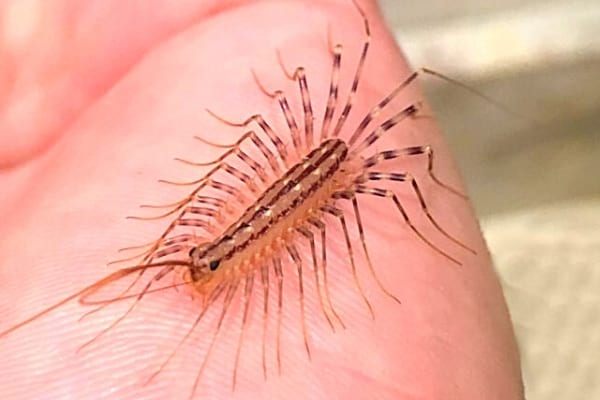
Although it surprises you when it dashes at high speed under a kitchen cabinet, the house centipede is not dangerous. It much prefers to use its venom against insects rather than against us.
However, even though harmless, it is best to avoid handling these animals. Their bite can be painful – I have experienced it myself! A bite causes a red, sensitive bump, but it is not serious. Only very sensitive individuals, like those allergic to bee stings, might have an allergic reaction requiring medical consultation.
Finally, there is no danger to pets like dogs or cats: the house centipede poses no threat to them.
How to Get Rid of House Centipedes?
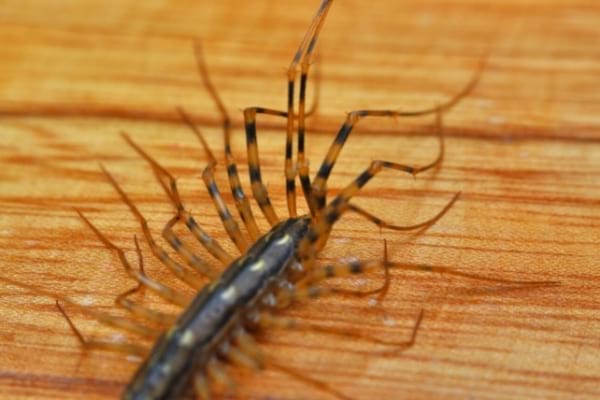
Although they play a beneficial role and are not dangerous, you may still want to get rid of them. To do this, it’s essential to understand what attracts them: simply their food.
Thus, the method to eliminate their presence is to eliminate their food source. You need to eradicate all the domestic pests they feed on. So make sure not to invite flies, spiders, mosquitoes, or other insects into your home.
The house centipede also greatly appreciates humidity and warmth. It likes places such as the bathroom, boiler room, or basement. Conversely, it hates overly dry environments. You see where I’m going with this? You need to combat humidity at home. Don’t hesitate to use a dehumidifier and ventilate your bathroom well. Run your ventilation system to prevent mold growth.
Remember to seal all cracks that provide access to the house: this way, these small creatures won’t find places to lay their eggs.
Preventing House Centipedes from Returning to Your Home
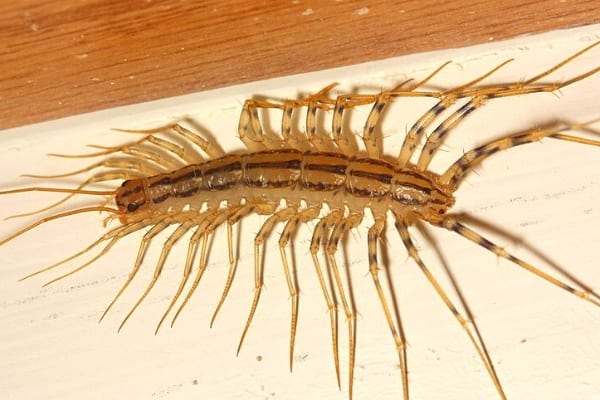
Once you have implemented precautions, you certainly don’t want to see this creature in your home again.
To keep these centipedes at bay, there is no need to resort to harsh chemical products.
Here are three simple tips I have personally tested and found very effective:
1. Diatomaceous Earth
This is one of the best natural repellents against crawling insects.
How to use it to repel the house centipede?
Purchase pure diatomaceous earth with no chemical additives.
Sprinkle it in usual passage areas: along baseboards, wall corners, behind furniture, around windows, and especially in humid locations such as the bathroom, toilets, or basement.
Let it act for at least 3 days.
Vacuum once a week to remove residues and reapply if necessary.
An extra tip: make an effective anti-centipede spray:
Mix 300 to 500 grams of diatomaceous earth with 1 liter of warm water.
Pour the mixture into a spray bottle.
Spray walls, along pipes, and in damp corners.
Once the water evaporates, the abrasive powder remains, dehydrating the centipede.
2. White Vinegar
White vinegar is an excellent natural repellent, disinfectant, and deodorizer.
Usage tips to repel the house centipede:
Mix equal parts white vinegar and water in a spray bottle.
Add 2 to 3 drops of lemon or eucalyptus essential oil, known for their repellent effects.
Spray the mixture on potential entry points (cracks, door bottoms, window frames) as well as in humid areas.
Repeat application every 2 to 3 days for a week, then once a week as prevention.
3. Baking Soda and Sugar
This method is particularly effective if cockroaches or ants infest your home, as these are the main food sources of the house centipede.
How to use:
Mix equal parts baking soda and powdered sugar, for example two tablespoons each.
Place small piles of this mixture in bottle caps or discreet corners.
Sugar attracts the insects, while baking soda acts as a poison, depriving the centipede of its food source.
