
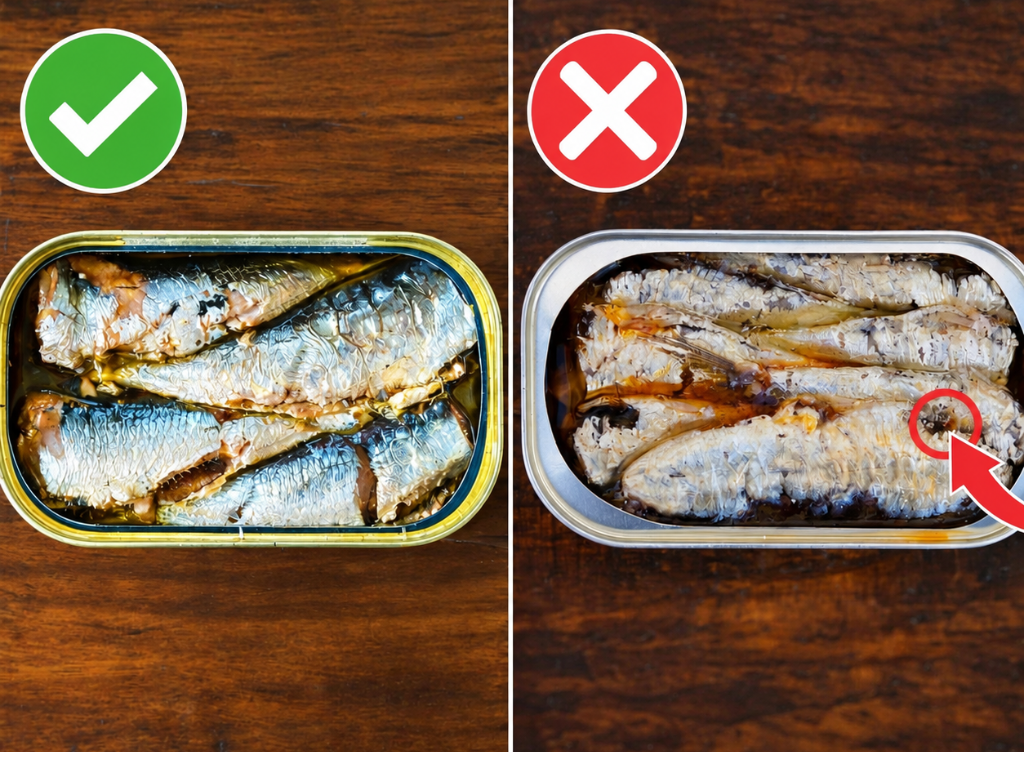
The Quality of Canned Sardines Varies Greatly
It is often assumed that all canned sardines automatically represent a healthy and nutritious product. However, the reality is quite different: the quality of canned sardines can vary significantly depending on the brand. Some are made from freshly caught fish that are processed very quickly, ensuring an optimal product. Others, on the contrary, undergo much less rigorous procedures, which negatively affect the final quality.
There are a few warning signs to watch out for: an overly metallic smell, flesh that is too soft or even crumbling completely, or a preservation liquid that appears cloudy or suspicious. These indicators often betray a lower-quality product, which inherently offers less nutritional value. Taking the time to carefully read the labels is therefore essential to avoid making the wrong choice.
The Liquid in the Can: Why It’s Better to Drain It
Few consumers consider this simple but crucial step: draining the sardines before eating them. Yet this basic action really changes the quality of what you consume. The preservation liquid often contains a significant amount of salt, residues from the sterilization process, and sometimes oils that have already started to oxidize.
Regularly ingesting this liquid can unknowingly increase your sodium intake, promoting water retention and putting additional strain on the cardiovascular system. However, simply draining the sardines carefully reduces these undesirable effects while maintaining the fish’s nutritional benefits.
Eating Sardines Daily: A Good or a Bad Choice?
After discovering all the benefits of sardines, it’s tempting to include them in your diet every day and in all forms. While this reasoning is understandable, it is not the best approach. Like any food, even those with undeniable qualities, moderation and variety remain essential. Canned sardines naturally contain more sodium than their fresh counterparts, and consuming them every day can gradually imbalance your diet.

For optimal balance, it is recommended to alternate protein sources by incorporating eggs, legumes, fresh fish, and lean meats. The key to a healthy diet lies in this essential variety.
The Choice of Preserving Oil: An Often Overlooked Criterion
This is a commonly ignored mistake: the type of oil in which sardines are preserved plays a fundamental role. Many cans contain sardines immersed in refined vegetable oils of poor quality, which are very high in omega-6 fatty acids and prone to degradation during high-temperature sterilization.
The result is that a food naturally rich in good fats is combined with lipids that may disrupt nutritional balance. The solution is to choose cans preserved in olive oil, by far the best option, or simply in water. This simple habit is easy to adopt during your next shopping trip.
The Interior Coating of Cans: A Little-Known but Crucial Point
Although often overlooked, the interior coating of cans deserves particular attention. It is typically made of a plastic that may contain bisphenol A (BPA) or similar substances. These compounds can migrate into the food, especially when exposed to heat.
Repeated and prolonged exposure to these substances is today linked to hormonal and metabolic disorders. To minimize these risks, prioritize brands that clearly state “BPA-free” on their packaging and diversify your diet by regularly including fresh fish.
In Conclusion: Adopt the Right Habits with Canned Sardines
Here are the main practices to adopt in order to fully enjoy sardines with peace of mind:
– Always drain the liquid from the can
– Prefer sardines preserved in olive oil or water
– Vary your protein sources throughout the week
– Carefully read the labels to choose BPA-free cans
– Pair sardines with raw vegetables or hearty salads to balance the meal
Sardines remain an excellent food, provided you select them carefully and consume them while following some simple precautions.
Ultimately, eating well often comes down to subtle details that make all the difference.
