
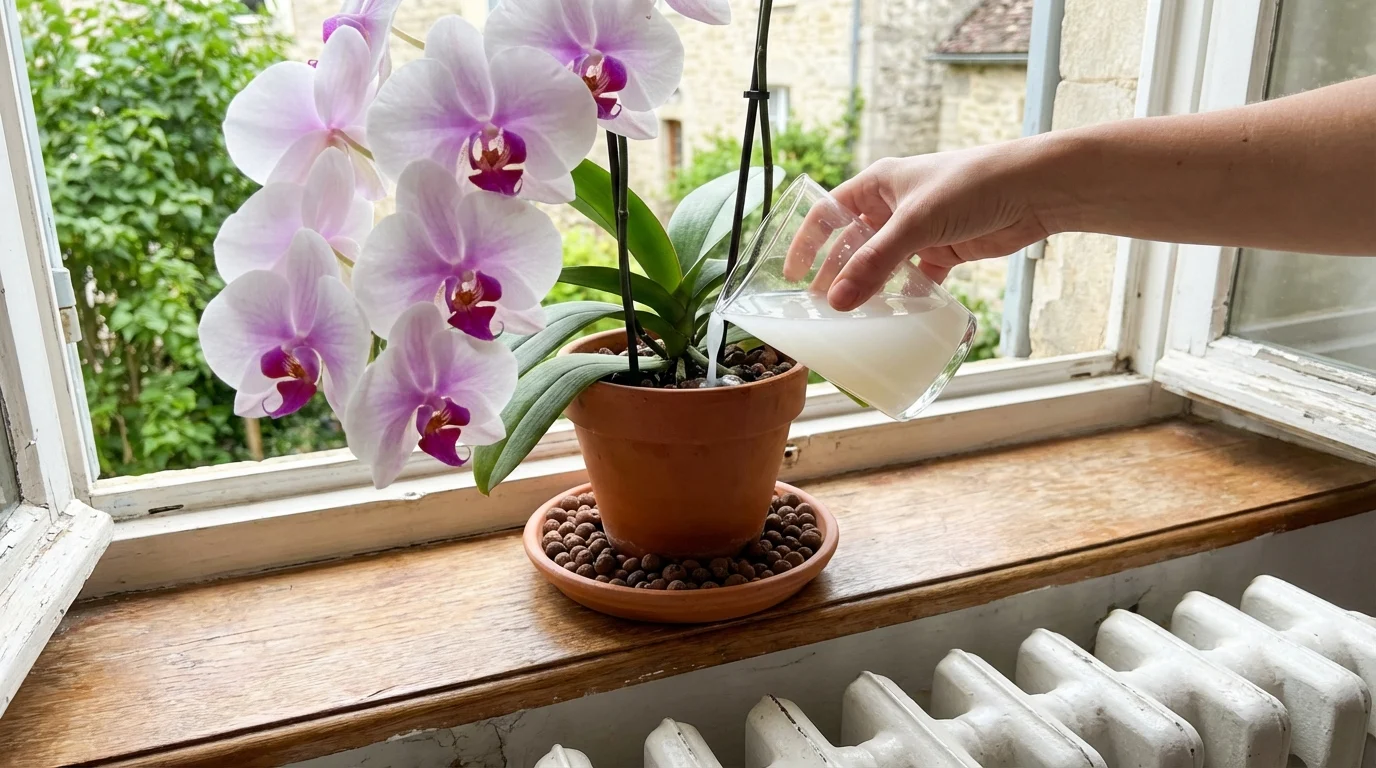
Your orchids seem frozen in place on the windowsill. The last flowers have fallen, the flower spikes are bare, and the plant looks tired. Many home gardeners assume orchids are difficult or believe they need an expensive, specialized fertilizer. In reality, the solution is often already in your kitchen—simple, discreet, and usually overlooked.
One of the easiest helpers is rice water for orchids. This everyday kitchen leftover works like a gentle tonic: it strengthens roots, helps the plant recover after winter, and prepares it for a new, abundant flowering cycle. When used correctly, applying it just once a month is enough.
Why Orchids Often Fail to Bloom Without Rice Water
During winter or in well-heated homes, Phalaenopsis orchids suffer from dry air and temperature fluctuations. On a windowsill above a radiator, humidity levels often drop below 40 percent, while these orchids thrive best between 50 and 70 percent. This stress weakens the roots and prevents the formation of new flower spikes.
However, a flowerless orchid is not a lost cause. Firm green or silvery-gray roots and healthy green leaves indicate that the plant is simply in a resting phase. With enough bright light without direct sun, increased humidity, and targeted nourishment, it can recover. This is exactly where rice water comes in.

Rice Water for Orchids: What Experts Say
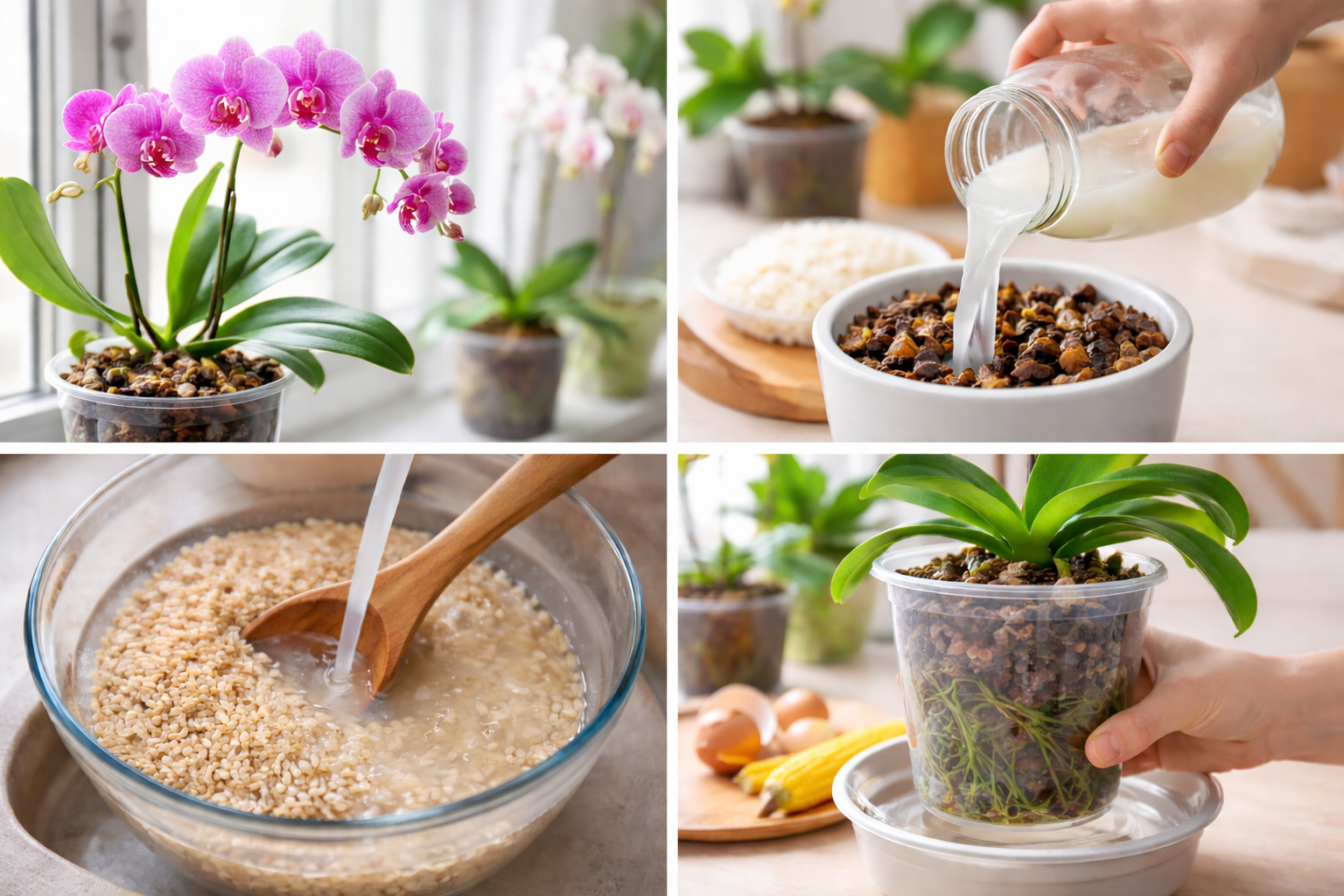
Water used to rinse or cook rice contains valuable nutrients such as B vitamins, magnesium, phosphorus, potassium, and starch. This combination naturally supports root growth and strengthens the plant. Experts particularly recommend rice water from brown or whole-grain rice, as it is richer in nutrients.
Proper preparation is essential. The rice water must contain no salt, oil, or seasoning. After cooling, it should be diluted—ideally one part rice water to four parts clean water. This prevents starch from building up in the growing medium. Used once every four weeks, this mild nutrient solution is more than sufficient.
Other kitchen scraps such as cooked corn, eggshells, or banana peels can also be used as homemade fertilizers. However, they should never be applied at the same time, as this could overload the delicate orchid substrate.
A Safe Monthly Care Routine for Healthy Orchids
The key to success is a simple, consistent routine. Regular watering should continue by briefly soaking the pot in clean water, followed by thorough draining. Standing water must always be avoided.
Once a month, one regular watering is replaced with diluted rice water for orchids. Ideal conditions include daytime temperatures between 18 and 22°C and slightly cooler nights around 12 to 15°C. Bright, indirect light further encourages flower formation.
To ensure homemade fertilizers remain beneficial rather than harmful, watch for warning signs such as sticky residue on the substrate, a fermented smell from the pot, or spots on the leaves after misting. If these appear, it is best to pause fertilization.
With this simple method, you can turn an ordinary kitchen leftover into a natural blooming booster—and your orchids will reward you with stronger growth and a fresh wave of flowers.
