
When I first noticed a strange red, slimy shape in my garden, I honestly thought I had come across some kind of disturbing animal. Its unusual appearance, sticky texture, and foul smell made it seem like something unnatural had suddenly emerged from the soil. But the truth turned out to be far more surprising, completely natural, and, in its own way, absolutely fascinating.
One ordinary morning, I stepped outside to water my flowers, expecting nothing more exciting than the usual quiet start to the day. Instead, right there in the flower bed, I saw an odd red mass pushing up from the ground. It looked wet, fleshy, and almost alive. My first instinct was to step back. For a moment, I wondered whether it was some kind of strange creature, a giant larva, or even something potentially dangerous. As unsettling as it looked, curiosity quickly took over, and I decided to find out exactly what I was dealing with.
An Alarming Discovery in the Garden
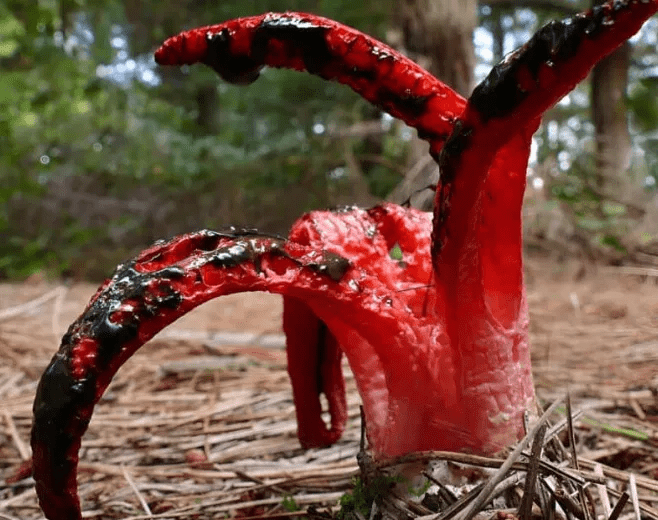
Picture the scene: I am walking quietly through the garden with a cup of coffee in hand when I suddenly notice a shiny reddish shape with forms that look like tentacles or fingers stretching outward. The object seems to have appeared almost overnight. Even worse, there is a powerful, unpleasant odor hanging in the air around it, making the whole experience even more unsettling.
That is exactly what happened to me. My immediate reaction was a mix of fear, confusion, and disbelief. I had never seen anything like it before. The shape was so unusual and the smell so strong that I was convinced it had to be some kind of animal or pest. Intrigued but slightly worried, I began searching for answers, hoping to identify the mysterious organism before it spread or caused damage in the garden.

What I discovered was both reassuring and astonishing.
Not an Animal, but an Extraordinary Fungus

The strange “creature” was not an animal at all. It was actually a fungus called Anthurus archeri, more commonly known as devil’s fingers. The nickname is easy to understand the moment you see it. With its bright red arms spreading open like claws or tentacles, it has one of the most dramatic appearances of any fungus found in nature.
This remarkable species is originally native to Australia and Tasmania, but over time it has spread to several other parts of the world. Today, it can also be found in Europe, particularly in damp, wooded environments and other humid areas rich in organic material. Although it may look exotic or out of place, it is now part of the natural fungal landscape in many regions.
What makes it so striking is its shape. Rather than growing like a typical mushroom with a stem and cap, this fungus opens into several elongated red arms that emerge from the ground and spread outward. These structures are often covered in a sticky, dark, spore-bearing slime, which adds to its unsettling appearance and makes it look even more like something alive.
Why Does It Smell So Bad?
One of the most surprising features of this fungus is its odor. It gives off a strong smell often compared to rotting flesh or decaying organic matter. For humans, the odor is deeply unpleasant, but in nature, it serves a very clever purpose.
The smell is designed to attract flies and other insects. These insects land on the fungus, drawn in by what they interpret as a food source or a place to lay eggs. As they move across its slimy surface, spores stick to their bodies. The insects then carry those spores away to new locations, helping the fungus reproduce and spread naturally.
So while the smell may seem disgusting to us, it is actually an effective survival strategy. Instead of relying on wind alone, the fungus uses insects as transport. It is one of those strange but brilliant examples of how nature evolves unexpected solutions to ensure the continuation of a species.
A Fungus That Begins Life as an Egg
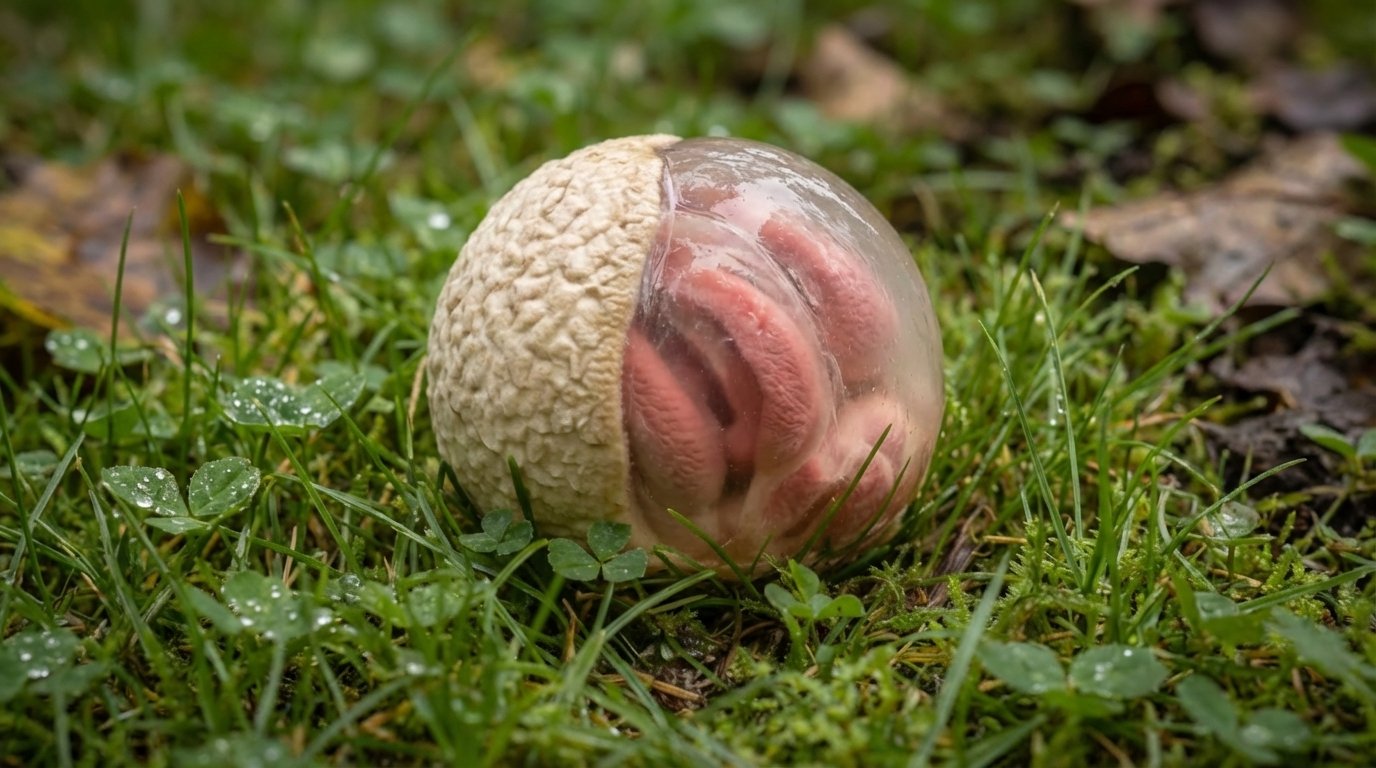
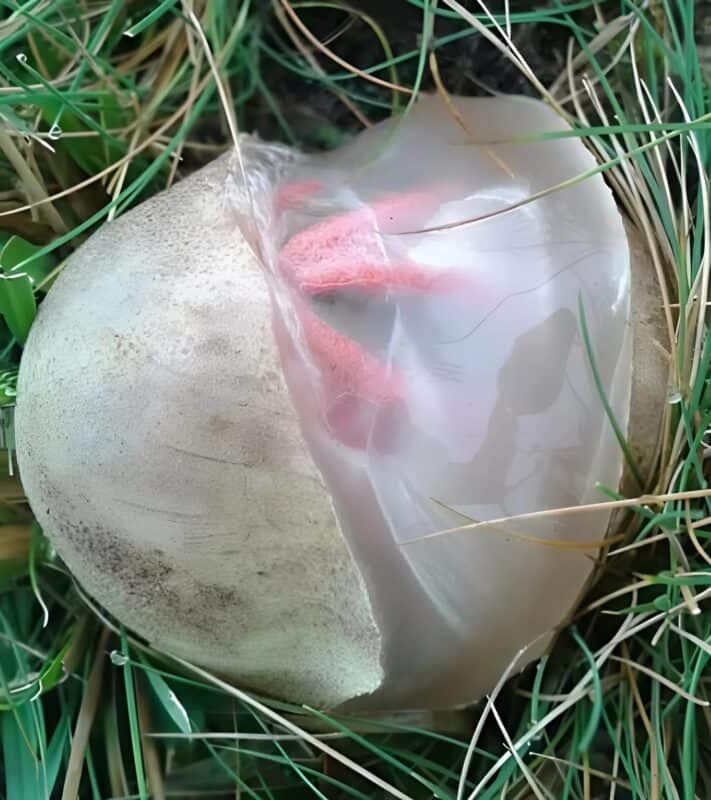
Another fascinating detail is that this fungus does not start out looking frightening at all. In its early stage, it appears as a small whitish “egg” resting on or just beneath the surface of the soil. At that point, there is little to suggest the bizarre shape it will soon take.
As it matures, the outer layer splits open and the red arms begin to emerge. They unfold rapidly, transforming the fungus from a small, harmless-looking bulb into a dramatic, star-shaped organism that seems to have burst out of nowhere. This sudden change explains why encountering it unexpectedly in a garden can feel so shocking. One day there is nothing unusual, and the next day a strange red form appears as though it arrived overnight.
This transformation is one of the reasons the fungus captures so much attention. It does not just look unusual when fully open; its entire life cycle feels almost theatrical, moving from a plain egg-like form to something that resembles a creature from another world.
Is It Dangerous?
The good news is that this fungus is generally not dangerous. Despite its alarming appearance and unpleasant smell, it is not usually harmful to people or pets in ordinary garden situations. However, as with many wild fungi, it is still best not to touch it with bare hands. Some people may experience mild skin irritation, and unnecessary contact should always be avoided.
If it needs to be handled for any reason, wearing gloves is the safest option. In most cases, though, there is no need to interfere with it at all. It will usually disappear on its own after some time, especially once it has completed its reproductive stage.
Far from being a threat, it is simply part of the natural cycle of decomposition. Like many fungi, it helps break down organic matter and contributes to the biodiversity of its environment. Even if it looks frightening at first glance, it is really just another example of the strange and essential life forms that exist all around us.
Nature Is Full of Unexpected Surprises
This experience reminded me of something important: nature constantly surprises us. What seems frightening, unnatural, or even monstrous at first often turns out to be a perfectly normal part of the ecosystem. The unfamiliar can easily trigger fear, especially when it appears suddenly and looks unlike anything we expect to find in our own backyard.
In reality, we know only a small fraction of the plants, fungi, and species that share our environment. Sometimes, all it takes is a closer look at a garden, a forest path, or a patch of damp soil to discover something extraordinary. Not every strange sight is dangerous. Sometimes it is simply a rare opportunity to witness one of nature’s most unusual creations.
The next time I come across something odd in the natural world, I will try not to panic right away. Instead, I will pause, observe, and learn. After all, what first appears mysterious or alarming may actually be one of the most fascinating natural wonders hidden in plain sight.
