
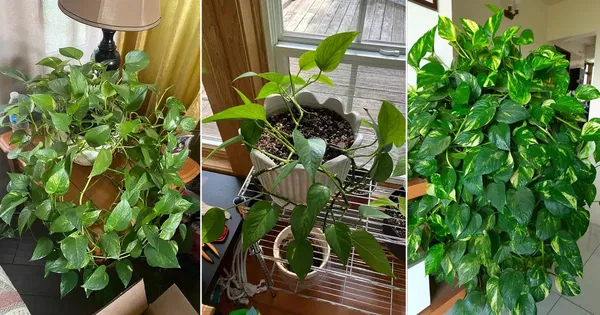
5 Easy Tricks to Grow a Bushier Pothos Without Pruning
With just a few simple and fuss-free techniques, you can encourage your pothos to grow fuller, lusher, and more vibrant—no scissors required. Try one or more of these methods and watch your plant naturally fill out over time.

1. Coil the Vines to Encourage New Growth

One of the most effective ways to thicken your pothos is to gently lay long vines across the surface of the soil. When a vine’s nodes touch moist soil, they naturally begin producing roots. Each newly rooted node can develop into a fresh shoot, adding volume to the plant.
Simply loop or spiral the vines around the pot, securing them lightly with hairpins or floral wire if needed. Within a few weeks, rooted sections will start forming new leaves and stems, creating a naturally layered, fuller look.

Pro Tip: Lightly scratching the underside of each node before pressing it into the soil can help accelerate root development.
2. Micro-Feed for Consistent, Compact Growth
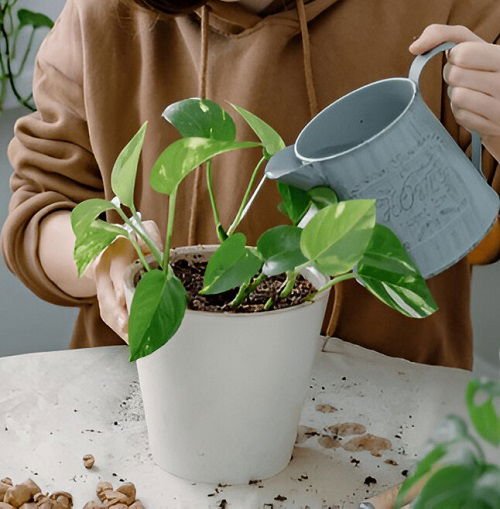
Instead of giving your pothos one strong feeding each month, switch to gentle micro-doses every 10–12 days. Dilute a balanced liquid fertilizer to one-fourth strength, then water as usual.
This steady nutritional boost promotes active node development and helps prevent leggy, stretched growth. It is especially effective for plants growing in low-light homes, where pothos can easily become sparse.
Adding a small amount of seaweed extract or fish emulsion once a month can further stimulate branching and leaf production.
3. Bounce Light to Activate Hidden Nodes

Pothos plants often grow dense at the tips while becoming sparse near the base. This happens because only the upper foliage receives ample light. To fix this, use reflective surfaces—such as mirrors, white boards, or even aluminum foil—to redirect light back toward the lower parts of the plant.
This mimics natural light coming from multiple angles and encourages inner nodes to awaken and sprout new vines. Rotating your pot every few days ensures even exposure all around.
You can also use a clamp light with a daylight bulb (5000–6500K) to brighten darker corners and promote fuller growth.
4. Use a Shallow, Wide Pot to Promote Lateral Growth

Pothos naturally trail downward when grown in deep vertical pots. Switching to a shallow, wider container encourages lateral spread and promotes a fuller plant structure.
A pot that is 8–10 inches wide and about 5–6 inches deep gives roots more room to expand horizontally, stimulating growth from multiple points instead of just the tips.
Pro Tip: Top the soil with moss or coco husk mulch to help maintain surface humidity and support aerial root development.
5. Create Rainforest-Like Humidity Cycles
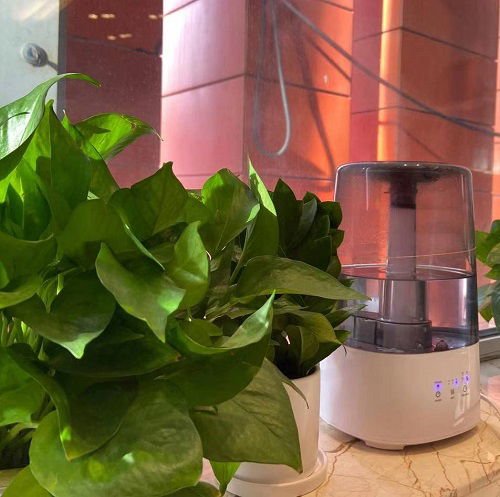
Pothos thrive when humidity changes slightly between day and night. During the day, maintain higher humidity (around 60–70%) using a humidifier or pebble tray. At night, allow levels to drop to 40–45% by improving ventilation.
This natural humidity fluctuation helps encourage tighter internodes, stronger aerial roots, and overall bushier growth. Grouping your pothos with other humidity-loving plants can also create a beneficial microclimate.
Note: Pothos is mildly toxic if ingested by pets or children—keep it out of reach.
Growing a lush, full pothos is all about creating the right conditions. Implement a few of these simple techniques and let your plant flourish on its own.
