
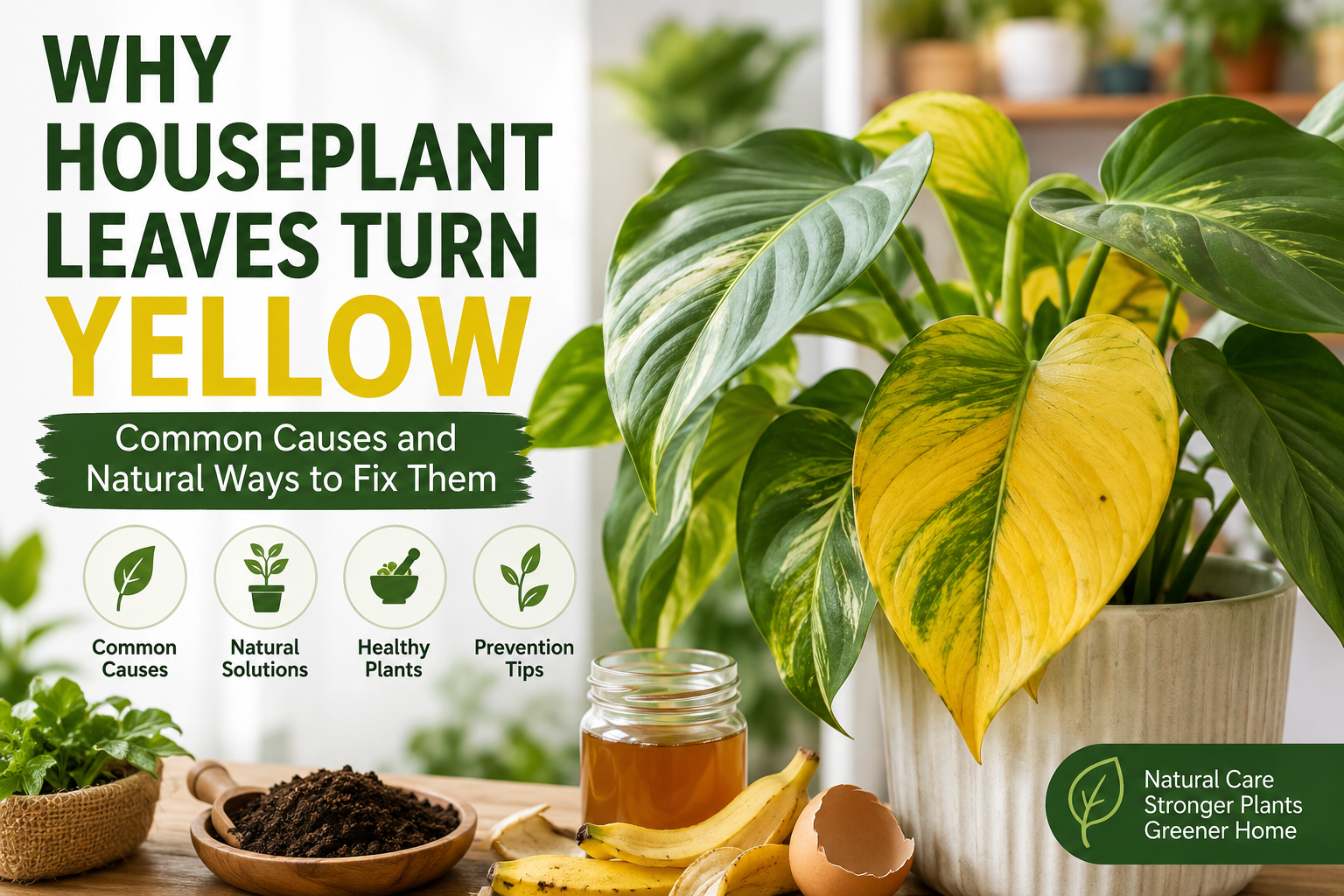
Nothing is more disappointing than watching the lush green leaves of your favorite houseplant slowly turn yellow. While yellowing leaves are a common problem, they don’t always mean your plant is dying. In most cases, they are simply a sign that the plant is trying to tell you something is wrong.
By identifying the cause early and using natural solutions, you can often restore your plant’s health and encourage vibrant new growth.
1. Overwatering: The Most Common Cause
Too much water is the leading reason houseplant leaves turn yellow. When the soil stays constantly wet, the roots cannot get enough oxygen. As a result, they begin to weaken or rot, making it difficult for the plant to absorb nutrients.
Natural Solution:
Allow the top 2–5 cm (1–2 inches) of soil to dry before watering again.
Always use pots with drainage holes.
Empty excess water from saucers after watering.
Mix compost with perlite or coarse sand to improve drainage.
2. Underwatering
Plants also suffer when they don’t receive enough moisture. Dry soil prevents roots from delivering water to the leaves, causing them to yellow, curl, and eventually fall off.
Natural Solution:
Water deeply until excess water drains from the bottom of the pot.
Check soil moisture regularly instead of watering on a fixed schedule.
Add organic mulch on larger indoor pots to reduce moisture loss.
3. Lack of Sunlight
Light is essential for photosynthesis. When a plant doesn’t receive enough natural light, older leaves often turn yellow before dropping.
Natural Solution:
Move the plant closer to a bright window.
Rotate the pot every week so all sides receive equal light.
Use grow lights if natural sunlight is limited.
4. Too Much Direct Sun
Not every houseplant enjoys intense sunlight. Some species develop yellow patches or scorched leaves after prolonged exposure to strong afternoon sun.
Natural Solution:
Place sensitive plants in bright, indirect light.
Use sheer curtains to filter harsh sunlight.
Gradually introduce plants to brighter conditions instead of making sudden changes.
5. Nutrient Deficiency
Yellow leaves can indicate that the plant lacks essential nutrients such as nitrogen, magnesium, or iron.
Natural Solution:
Feed your plants naturally using:
Homemade compost
Worm castings
Diluted compost tea
Banana peel fertilizer (rich in potassium)
Crushed eggshells (for calcium)
These natural fertilizers nourish plants without exposing them to harsh chemicals.
6. Poor Drainage
Even if you water correctly, compact soil that retains too much moisture can suffocate roots.
Natural Solution:
Repot your plant using a loose, well-draining mix containing:
Potting soil
Coconut coir
Perlite
Pine bark
Coarse sand
Healthy roots need both moisture and air.
7. Temperature Stress
Houseplants dislike sudden temperature changes. Cold drafts, air conditioners, heaters, or placing plants near frequently opened doors can stress them, causing leaves to yellow.
Natural Solution:
Keep plants in stable indoor temperatures.
Avoid placing them directly beside heating or cooling vents.
Protect tropical plants from cold winter drafts.
8. Natural Aging
Sometimes yellow leaves are completely normal. Older leaves naturally age, turn yellow, and fall as the plant directs energy toward producing new growth.
What You Should Do
Simply remove the yellow leaf with clean pruning scissors. This helps the plant focus its energy on healthy foliage.
How to Prevent Yellow Leaves Naturally
Healthy houseplants require balance more than constant attention. Follow these simple habits:
Water only when the soil needs it.
Provide the right amount of light for each plant.
Feed with organic fertilizers every few weeks during the growing season.
Ensure proper drainage.
Clean leaves regularly to remove dust.
Inspect plants frequently for pests and early signs of stress.
Final Thoughts
Yellow leaves are not always a reason to panic. In most cases, they are an early warning that your plant’s growing conditions need adjustment. By observing your plant carefully and choosing gentle, natural solutions instead of quick chemical fixes, you can restore its health and enjoy vibrant green foliage all year long.
A little patience, proper watering, and a healthy growing environment are often all your houseplants need to thrive.
