
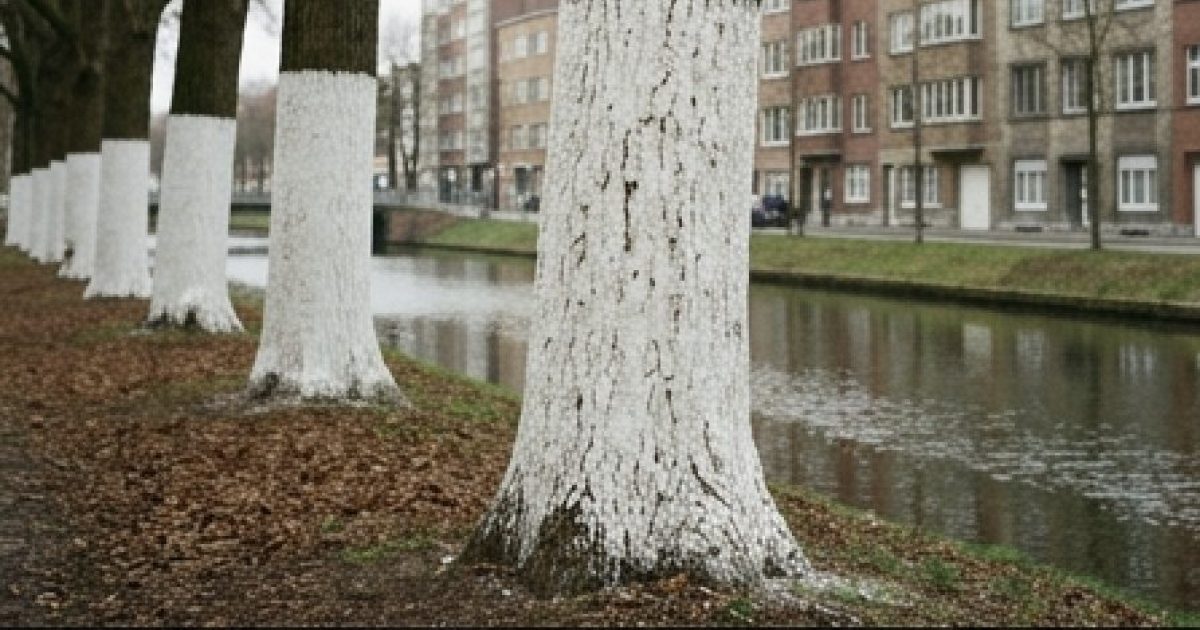
While walking through a park, a city street, or along certain roads, you have likely noticed that the bases of many tree trunks are painted white. This small detail often catches the eye and sparks curiosity because, at first glance, it might appear to be merely decorative. However, this practice actually conceals a simple yet clever horticultural technique passed down through generations, intended to protect the health of trees. Once you fully understand the true purpose of this white paint, it becomes impossible to view these whitened trunks in the same way again.
Why are tree trunks covered with white paint?
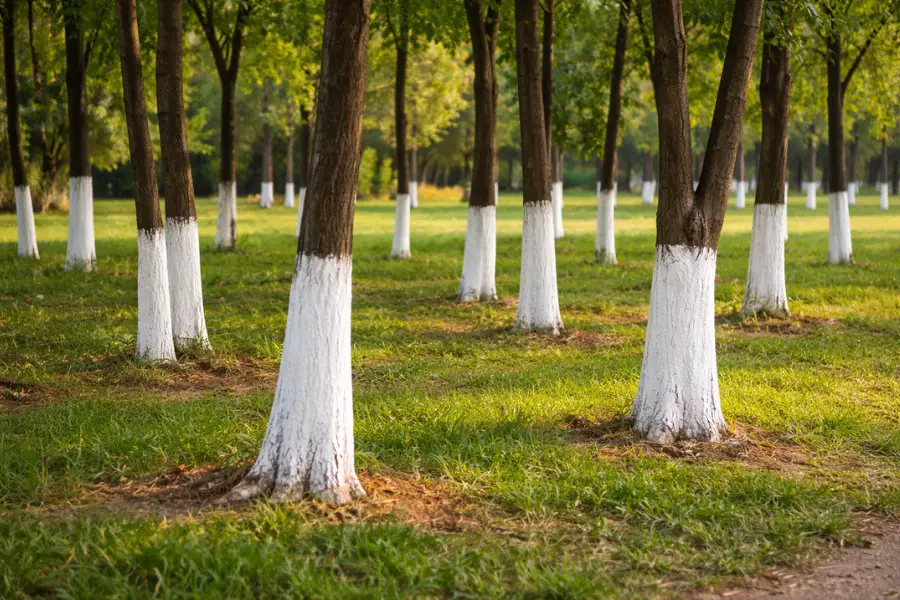
Contrary to common misconceptions, this white coating is not purely decorative. It primarily serves a very practical purpose: protecting the tree from various external aggressions that can weaken its trunk throughout the changing seasons.
Often, what is referred to as “paint” is not paint in the traditional sense. It usually consists of a lime-based whitewash or a specially formulated mixture designed for plants. This solution forms a protective layer around the trunk, functioning much like a natural sunscreen for the tree.
This method is widely used in gardens, orchards, and public spaces because it offers several key benefits that are crucial for maintaining tree health.

An effective barrier against the sun’s effects
The primary benefit of this white paint is that it protects the trunk from harmful solar rays, especially on hot and sunny days.
As is well known, white reflects light instead of absorbing it, which prevents the bark from overheating. This protective layer helps to minimize heat damage caused by excessive sun exposure.
Without this protection, some trees—particularly young ones or those with thin bark—are at risk of sunburn from prolonged exposure. This can lead to cracks, weakened areas, and even premature drying out.
Therefore, the white paint acts as a thermal shield, helping to maintain a more stable temperature on the surface of the trunk.
A natural defense against certain pests
An often underestimated advantage of this whitewash is its role in deterring certain insects and small pests.
Traditional formulas, especially those based on lime, make the bark less appealing to some harmful insects that seek to settle and damage the tree.
Although it is not a miraculous cure, this technique helps create an environment less favorable to these pests, thereby contributing to the prevention of some kinds of damage.
Another significant benefit is that on a whitened trunk, it becomes much easier to spot abnormalities such as cracks, marks, or unusual stains, enabling early intervention when necessary.
Valuable assistance against temperature fluctuations
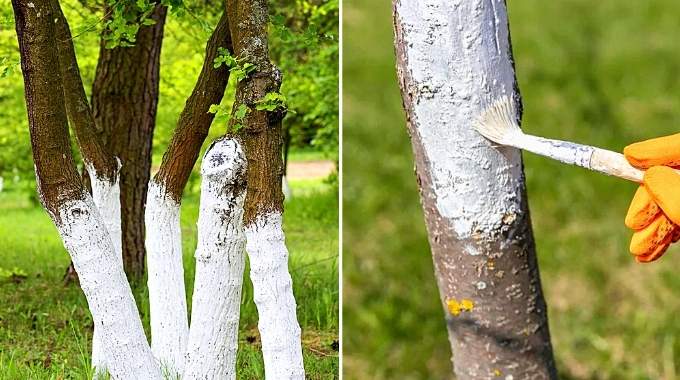
While we often think about the sun, it’s important not to forget that temperature swings also pose a serious challenge for trees.
The abrupt transition from cool nights to warm days causes significant thermal stress. When these fluctuations occur repeatedly, they gradually weaken the bark and promote the formation of cracks.
By reflecting daytime heat, the white coating reduces these sudden temperature changes, lessening the tension on the trunk’s surface.
This type of protection is especially valuable in spring or late winter when days can be warm under the sun but evenings are still cold.
Why is this technique so widely adopted in public spaces?
The frequent presence of whitened trees in parks, sidewalks, and avenues can be explained by the fact that it is a simple, inexpensive, and effective method.
It requires minimal equipment, can be applied quickly, and combines several benefits in a single treatment. For municipalities and amateur gardeners alike, it represents an accessible solution to strengthen trees without the need for complex care.
This technique is also very popular in orchards, where young fruit trees are particularly vulnerable to external attacks.
A simple gesture with lasting effects
What many people see as a mere aesthetic touch is actually an ancient method that continues to prove its effectiveness year after year.
By protecting the bark, reducing damage caused by the sun, and helping the tree better adapt to its environment, the white coating contributes to extending the healthy life of tree trunks.
It shows that sometimes, the most modest measures are also the most wisely chosen.
