
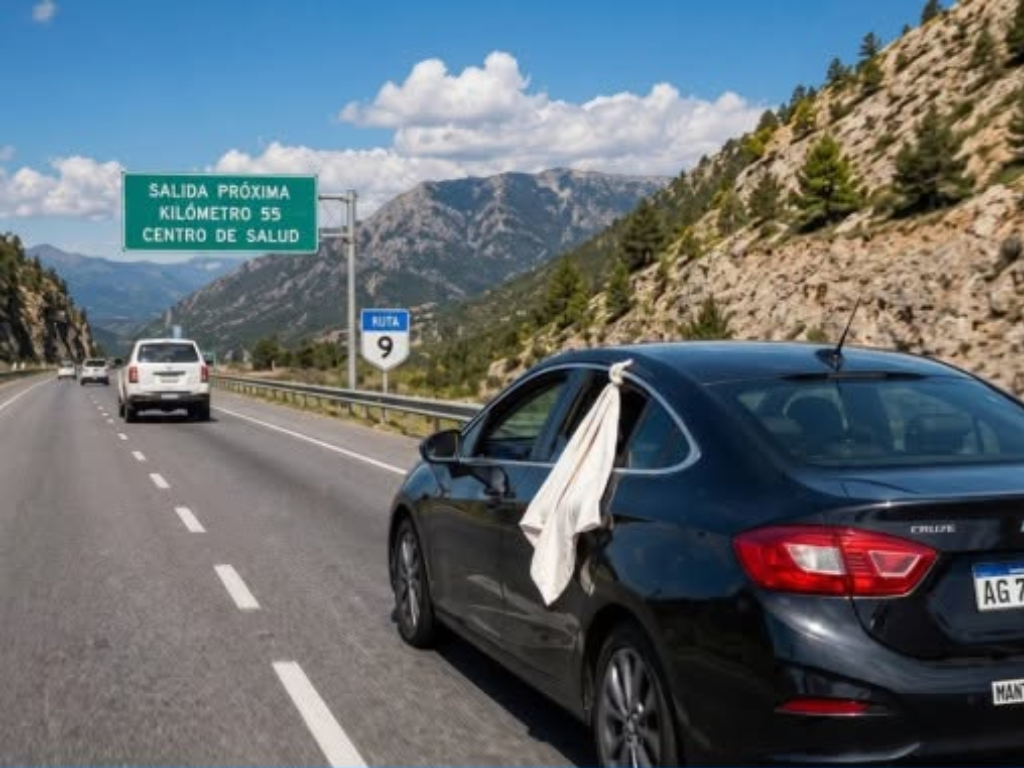
An Improvised Signal Full of Meaning
The white cloth hanging from the window of a car is not mentioned in any official driving manual or regulation. Yet, it undeniably exists, passed discreetly from driver to driver as a kind of silent language shared among motorists.
Why is white the chosen color? This is no coincidence. White is universally associated with peace, truce, but above all with a silent call for help. When a white cloth flutters from a window, the message it sends is simple and clear: something is wrong inside that vehicle.
Common Situations Where This Gesture is Used
Several circumstances might prompt a driver to improvise this signal:
– A mechanical breakdown: when the car is stranded on the roadside, the cloth signals its presence to prevent any accident risk. – A medical emergency: if someone inside requires urgent care, the driver uses this sign to alert other road users. – Traveling in a convoy: during processions or group trips, this cloth helps distinguish the vehicles that belong to the same convoy. – Running out of fuel: when the car is stopped due to lack of petrol, the white cloth indicates an involuntary halt.
In all these cases, this simple gesture conveys the same reality: a call for attention, and sometimes assistance.

Does This Signal Grant Any Special Priority?
It is crucial to be perfectly clear: no, this white cloth does not grant any legal priority on the road. Only official emergency vehicles — ambulances, fire trucks, police — can receive exemptions, and only when their sirens and flashing lights are active.
A private car displaying a white cloth cannot run a red light, exceed speed limits, or take precedence on a reserved lane. Even in stressful or critical situations, the traffic code applies to everyone, without exception.
How to React When You See This Signal?
You should neither panic nor ignore it. Here are the recommended behaviors:
– Slow down gently, avoiding sudden braking that could surprise drivers behind you. – Yield only if it can be done safely and without breaking traffic laws. – If the vehicle is stationary, assess whether you can stop safely, signal your presence with hazard lights, and offer help if appropriate. – Call emergency services — 15, 17, or 18 depending on the country — if you judge the situation requires it, as this is often the most effective assistance you can provide. – Stay calm when facing a driver who may be distressed or unpredictable.
Solidarity on the Road, But With Responsibility
Helping a motorist in difficulty is a valuable act of solidarity. However, this goodwill must not compromise anyone’s safety on the road. Often, contacting emergency services remains the safest and most appropriate response.
This informal signal persists because it fills a gap: hazard lights can indicate a stop but do not specify the nature of the problem. In that gap, drivers have crafted their own code.
Learning to recognize this signal means driving with a bit more compassion — and sometimes, that makes all the difference.
