
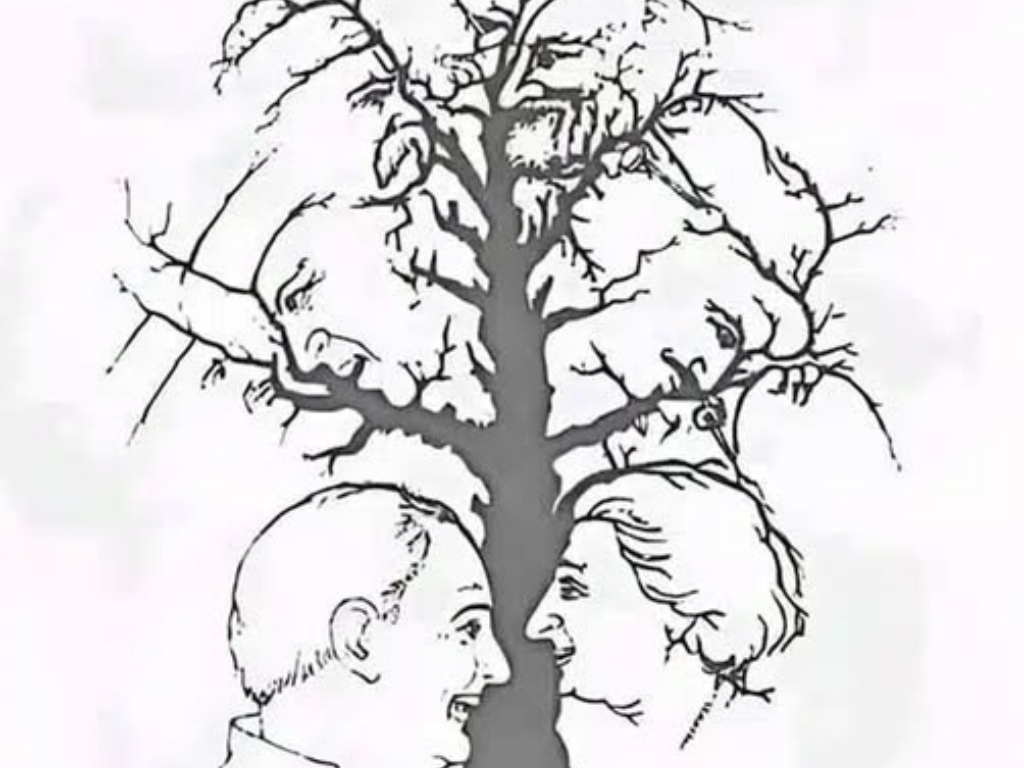
The Strange Legacy of a 19th-Century Illusion
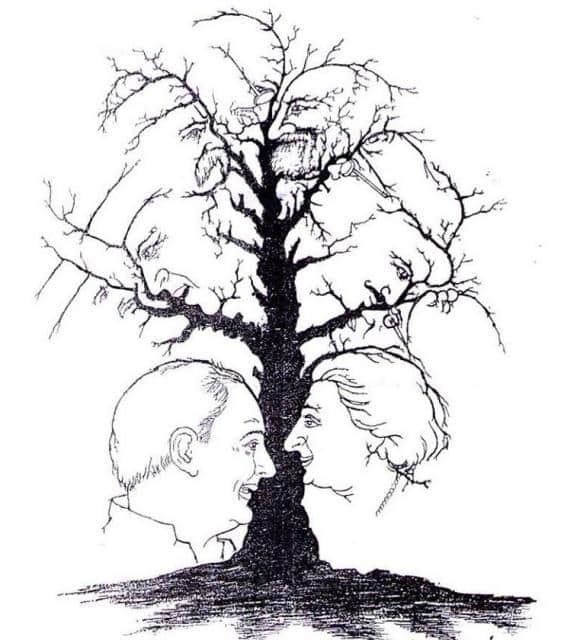
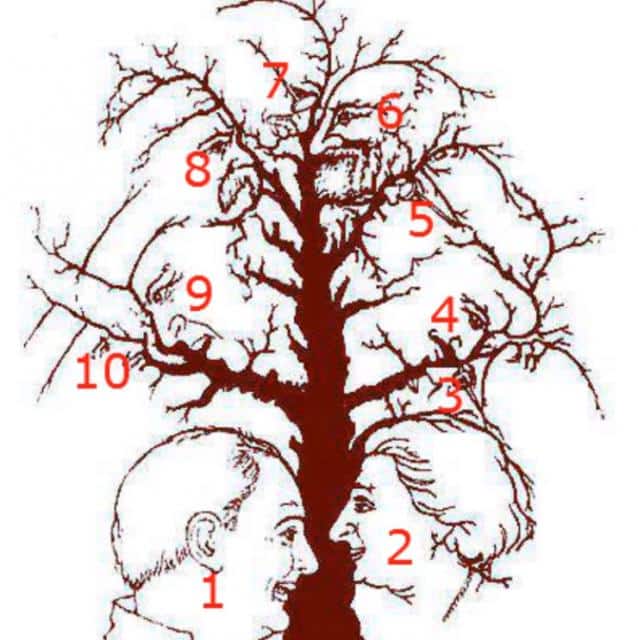
The “Tree of Appearances” is not a recent creation. This enigmatic image dates back over 140 years, having been first published in a renowned American magazine of the time, Harper’s Weekly. What continues to intrigue viewers today are the ten faces hidden within the foliage and bark: some appear to resemble famous figures, seemingly recognized long after this illustration was made. Is this a mere coincidence, or the result of subtle artistic inspiration? The mystery remains unresolved.
Unlike modern illusions, often created through digital technologies, this piece relies solely on a meticulous interplay of lines and shadows. It is precisely this simplicity that gives it a distinct charm: despite the passage of time, it still captivates and fascinates everyone who gazes upon it.
Why Does Our Brain See Faces in a Tree?
The secret lies in a universal psychological phenomenon called pareidolia. Our brain is wired to quickly recognize faces, a capability that develops from early childhood to decode expressions and familiar emotions, even when they are not real. This mechanism is what drives us to see smiles in car headlights, faces in the shapes of clouds, or even eyes on an old building facade.
When confronted with the Tree of Appearances, our mind acts like a detective: scanning every area of the image, piecing shapes together and assigning meaning to them. While some notice the faces instantly, others take longer. But once these figures are perceived, they dominate our vision and become impossible to ignore, as if etched permanently in our perception.
When This Illusion Reflects Our Everyday Perception
Beyond its playful aspect, this illusion reveals a fundamental truth: we never perceive reality as it truly is, but only through the filtering lens of our brain. Our memories, expectations, and even our mood tint the way we see the world around us.
Are you rushed or tired? Your attention narrows to the essentials, often masking the most subtle details nearby. Conversely, when you are calm and attentive, a simple glint of light, a forgotten flower on the pavement, or a fleeting smile in a crowd can suddenly capture your gaze.
The Tree of Appearances thus symbolizes an invitation to slow down, to adopt a fresh perspective, and to wonder what might be discovered by shifting how we perceive things.
A Reflection of Our Contemporary Illusions
In today’s age of social media, flooded with visual tests and optical challenges designed to “reveal your personality,” the Tree of Appearances maintains a rare authenticity. Without filters or digital artifices, this 19th-century drawing continues, more than a century after its creation, to surprise and enchant those who encounter it.
