
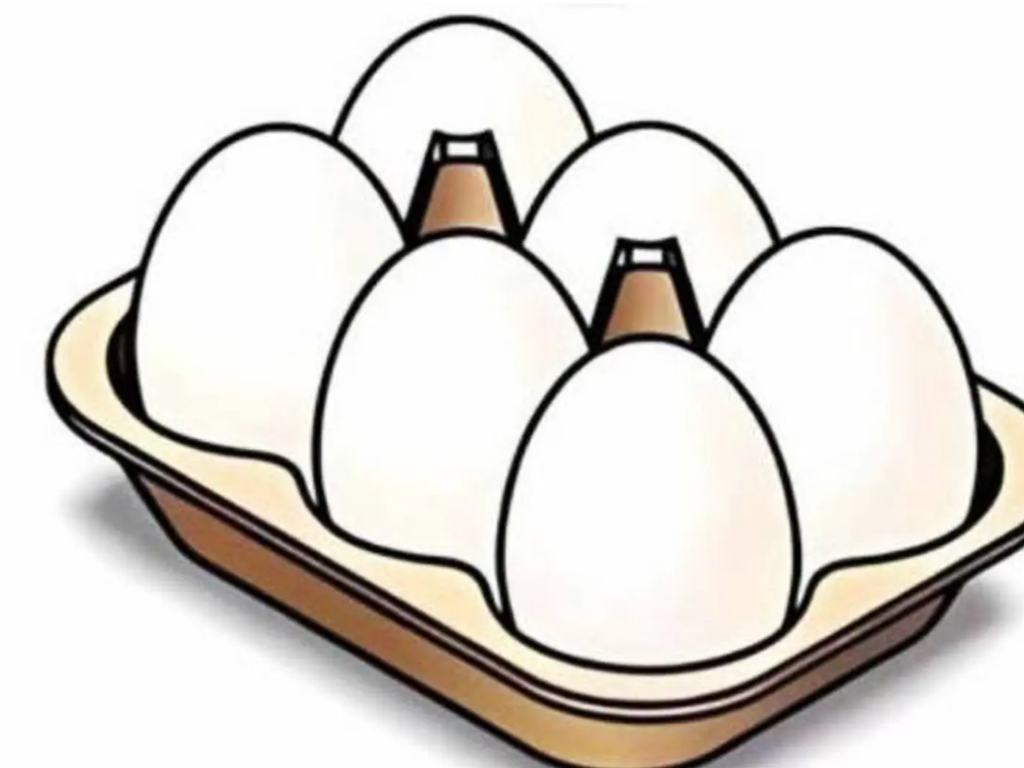
Why Do These Riddles Always Trick Us?
Just take a moment to observe: puzzles like these don’t truly require advanced mathematical skills, but rather they primarily challenge our intuition, which often acts a bit too quickly. Our brain prefers to take the most direct route, especially when the problem statement is brief and straightforward. We rapidly add up the actions—breaking, cooking, eating—and the answer seems to naturally present itself. Warning, spoiler: it never truly is that simple.
This phenomenon has a name: it’s called the mental impulsivity bias (a very simplified version, so no worries!). In essence, we rush into calculations instead of pausing to consider the true meaning of the words. This exact tendency is what makes these riddles so effective: they engage the part of us that feels confident and sure… only to realize afterward that it was mistaken.
The Egg Riddle: A Commonly Overlooked Detail That We Rarely Notice

Let’s calmly review the facts:
- You start with 6 eggs.
- You break 2 eggs, fry those exact 2 eggs, then eat those same 2 eggs.
At no point is there any mention of using other eggs beyond these. In other words: you simply transformed two eggs from start to finish. It’s akin to saying, “I took a croissant, sliced it, spread butter on it, then ate it.” Just because multiple actions were performed doesn’t mean three croissants were used—one sufficed.

This is where our logic often goes astray: we tend to think in terms of different actions rather than identical items.
The result is straightforward: you still have 4 intact eggs carefully stored and ready to be turned into an omelet or a Sunday cake.
What This Riddle Reveals About Our Thinking Process (And Why That’s Good News)
Challenges like this highlight an important truth: we are so accustomed to juggling multiple tasks simultaneously that our brain anticipates results before paying close attention. A friend might read the words “break,” “fry,” “eat” and picture three separate actions, therefore assuming three different eggs. Do you do the same? Don’t worry: this only proves that your mind is sharp and trained to react quickly.
The key lies in practicing the ability to slow down for just a fraction of a second—to reread and analyze carefully. This small, often overlooked habit becomes a valuable ally in daily life. It helps you understand information better, handle unexpected situations, make calm decisions… in short, it simplifies life by preventing quick mistakes.
How to Enjoy This Kind of Riddle in Your Daily Routine
Want to stimulate your mind without making life complicated? Here are three simple yet effective ideas:
• Share a riddle with family or colleagues: a little puzzle during coffee break or at happy hour instantly lightens the mood.
Keep a small notebook of challenges: one riddle per week for fun and surprise.
Test your logic in real situations: for example, describe a common daily action precisely. You’ll notice how we often embellish more than we actually do!
