
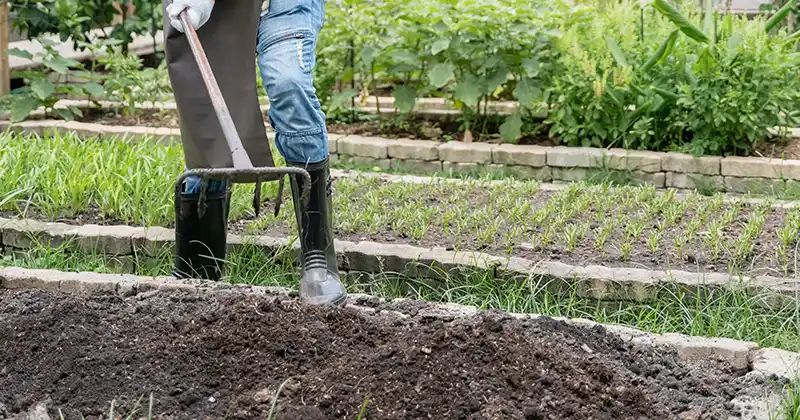
If you find that the soil in your garden is barren, compacted, and unable to support healthy plant growth, don’t worry — there is a simple and effective method to bring it back to life. This technique transforms poor soil into a thriving environment, rich in nutrients and teeming with beneficial microorganisms. By following this detailed guide, you will implement a sustainable solution to promote the health of your plants using a unique charcoal enrichment process.
Why Choose Charcoal?
Charcoal has a special structure that makes it an ideal habitat for beneficial microorganisms. Its porous texture allows these microbes to settle and flourish for several years, continuously improving the soil’s quality. Once properly activated, charcoal becomes a true source of nutrients, helping your plants grow stronger and more vigorous.
Step 1: Preparing the Charcoal
Start by breaking the charcoal into smaller pieces. The goal is to increase the surface area so that microbes can more easily attach themselves. It is not necessary to reduce it to powder, but smaller fragments will enhance the process’s effectiveness.
Gather a sufficient amount of charcoal.
Crush it into smaller pieces using a hammer or a heavy object.

Place it into a container for the activation phase.
Step 2: Activating the Charcoal with Beneficial Microorganisms
The next step is to infuse the charcoal with microbes that will enrich your soil. This phase is crucial to ensure the charcoal acts as a long-lasting microbial reservoir.
Put the pieces of charcoal into a large 20-liter bucket.
Add non-chlorinated water or rainwater. Avoid chlorinated water as it can kill beneficial microbes.
Incorporate decomposed manure or compost, which will serve as a source of microbes. This organic matter is rich in bacteria and fungi essential for soil health.
Mix well so the charcoal absorbs the mixture evenly.
Cover the bucket loosely and let it rest for a week. During this time, microbes will multiply and colonize the porous structure of the charcoal.
Step 3: Preparing the Garden Soil
While the charcoal mixture is activating, prepare your soil to receive this powerful enrichment.
Loosen the soil: If your soil is compacted, turn it over with a spade. This improves aeration and makes it easier for roots to develop.
Add organic matter: Incorporate compost to improve the soil structure and provide essential nutrients.
Integrate bone meal: Rich in phosphorus and calcium, bone meal encourages root development and plant robustness.
Mix thoroughly: After adding all the amendments, homogenize the substrate to create a balanced and nourishing base.
Step 4: Applying the Microbe-Enriched Charcoal
After one week, your charcoal mixture will be ready for use.
Stir the bucket again to distribute the elements evenly.
Spread the microbe-enriched charcoal over the surface of the prepared garden bed.
Lightly incorporate it into the top layer of soil to facilitate the integration of the microbes.
This final step is crucial for the long-term improvement of your soil. The microorganisms housed within the charcoal will continue to break down organic matter and gradually release nutrients that will nourish your plants season after season.
Reasons for the Success of This Method
Long-term soil health: Charcoal serves as a permanent refuge for beneficial microbes, maintaining fertile soil year after year.
Better plant growth: By encouraging a dynamic microbial community, roots absorb essential nutrients more efficiently.
Sustainable gardening: Unlike chemical fertilizers, this method naturally improves soil quality, reducing the need for artificial additives.
In Conclusion
It is entirely possible to transform tired soil into a rich, fertile, and living medium using this simple charcoal enrichment method. By taking the time to prepare, activate, and incorporate charcoal in your garden, you create a self-sustaining ecosystem that will benefit your plants for many years to come.
Try this technique and watch your garden flourish like never before!
