
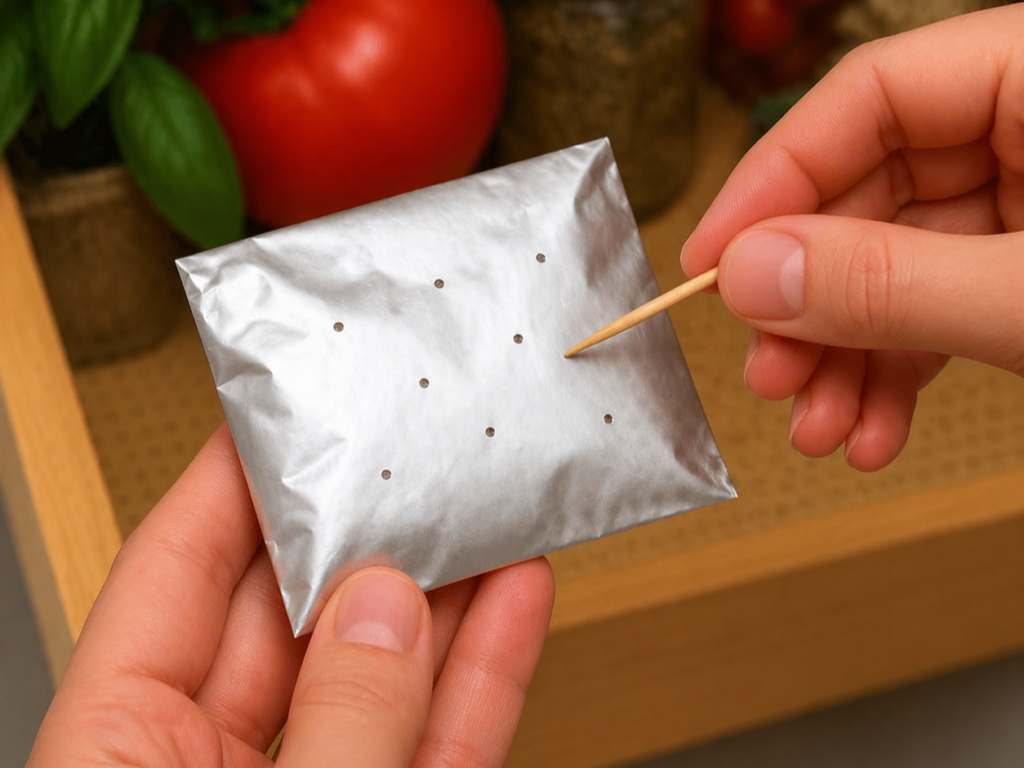
The kitchen, with its warmth, food supplies, and humidity, serves as a genuine sanctuary for pests. It is common to spot moths invading cupboards, ants roaming the countertops, or even detect early signs of a cockroach presence.
Before resorting to chemical insecticides with potentially harmful effects, there is a simple, natural, and accessible alternative: a mixture of three common ingredients whose strong aromas can effectively help repel certain insects.
Important note: this solution is primarily preventive and should ideally be combined with thorough cleaning to optimize its effectiveness.
Watch the video to discover how this method works:
Why Choose Natural Solutions for Pest Control?
Although chemical insecticides provide quick action, they also have limitations and potential risks:

Irritating fumes that can affect the respiratory tract
Residual deposits on some surfaces
Potential danger to children and pets
In contrast, natural remedies offer several significant advantages:
A gentler use that respects the home environment
No direct contamination of food items
Cost-effective and easy-to-prepare solutions
A long-lasting preventive effect against infestations
Three Natural Ingredients to Repel Moths, Ants, and Other Pests
This homemade mixture is based on scents that insects generally avoid. Its effectiveness lies in the powerful odors it emits.
Ground Coffee — 3 Tablespoons
Ground coffee releases an intense aroma that disturbs many insects, making their surroundings less welcoming.
Bay Leaves — a Good Handful
Rich in aromatic compounds, bay leaves are frequently used to repel moths and crawling insects.
Ground Pepper — 1 Tablespoon
Its sharp scent and irritating properties disrupt the orientation sense of various pests.
This trio effectively targets:
Closet moths
Unwanted ants
And various other crawling insects
How to Prepare and Use This Natural Repellent?
1. Mixing the Ingredients
Combine all the ingredients:
3 tablespoons of ground coffee
1 tablespoon of ground pepper
A handful of bay leaves previously crushed
Thoroughly mix all the elements to obtain a homogeneous powder.
2. Enhancing the Aromas
Lightly crush the bay leaves to promote the release of their essential oils, which are the source of their powerful fragrance.
3. Preparing Scented Sachets
For this, use:
Fabric sachets
Fine gauze
Or small paper bags
Fill them with the fragrant mixture.
4. Facilitating Diffusion
Close the sachets without compressing them too tightly to allow the scents to freely spread in the air.
5. Place Them Wisely
Position the sachets in:
Closets where food is stored
Corners and crevices of the kitchen
Behind kitchen appliances
Around potential entry points for insects
These aromas help make these areas unattractive to pests.
Why Is This Technique Effective?
Insects rely heavily on their sense of smell to:
Locate their food
Navigate their surroundings
Identify places favorable for survival
Certain strong odors can:
Disturb their sense of orientation
Make certain spaces unpleasant and therefore avoided
Encourage insects to flee particular zones
However, the effectiveness depends on the level of infestation, the specific conditions of the location, and the regularity of cleaning.
Practical Tips to Optimize Results
Maintain Thorough Cleaning
It is essential to regularly remove:
Crumbs
Grease stains
Any food residues
Prefer Airtight Storage of Food Items
Store flour, rice, pasta, and cereals in well-sealed containers to limit insect access.
Control Kitchen Humidity
Insects thrive particularly well in humid places. Reducing humidity limits their proliferation.
Regularly Renew Your Sachets
Change the mixture every two to three weeks or as soon as the scent fades to maintain its effectiveness.
One Last Tip for a Healthy Home
Often, we realize too late how improving storage habits and regular maintenance can effectively limit the presence of pests.
By combining this simple and natural method with rigorous kitchen hygiene, you will promote a healthier, more pleasant environment that is far less conducive to the settlement of unwanted insects.
