
A Mushroom That Looks Like a Sci-Fi Set Piece
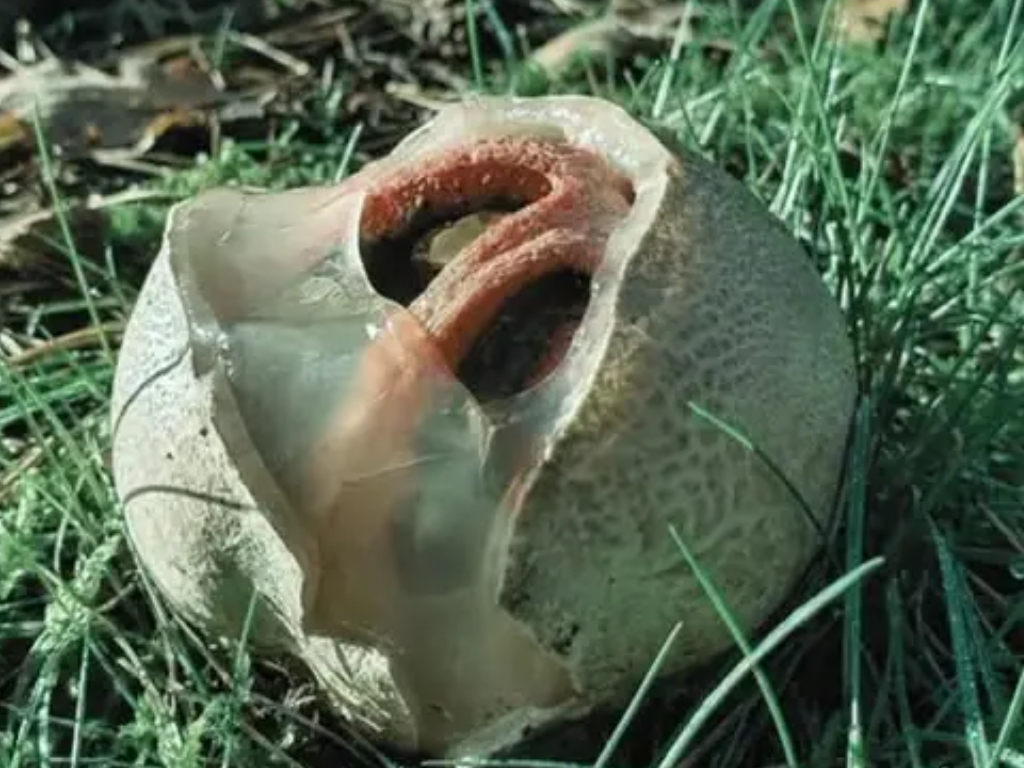
Everything starts with a small “egg.” Yes, you read that correctly. The Phallus impudicus, more commonly known as the “stinkhorn” in English-speaking countries, begins its life as a firm, smooth globe partially buried in the soil. Specialists refer to this as the “witch’s egg.” Inside this protective casing, the mushroom is already folded in on itself, poised to unfold.
When the time comes, it wastes no time. In just a few hours, the shell cracks open and a hollow, elongated stalk rises from the ground. Some individuals can grow several centimeters in a single morning. This is one of the fastest-growing mushrooms. It’s no surprise that many walkers or gardeners stumble upon it, startled, during a casual stroll or routine outdoor maintenance.
The Noxious Smell: An Extraordinary Ecological Mechanism
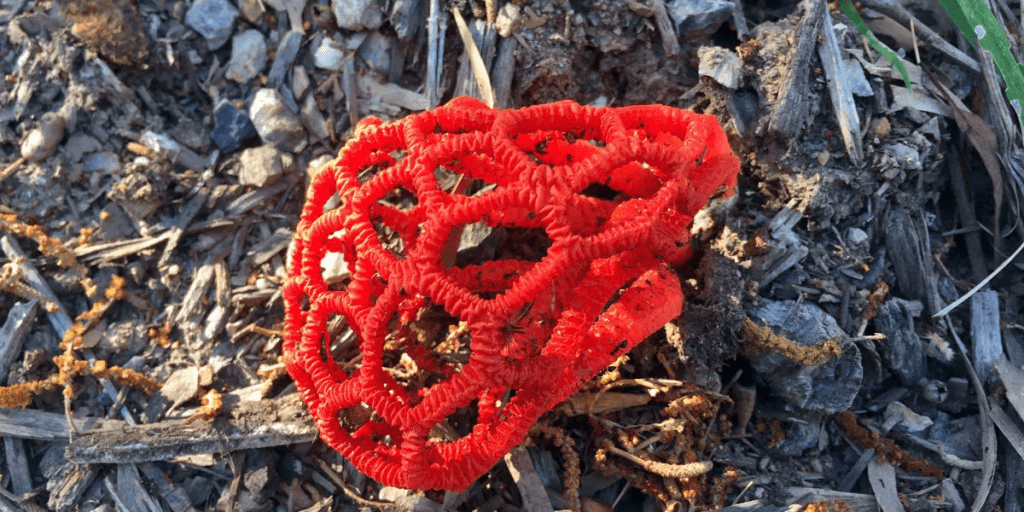
What truly makes this mushroom fascinating is its strong and putrid odor. Although unpleasant to us, this smell is actually a remarkable ecological strategy.
While most mushrooms disperse their spores by releasing them into the wind, the stinkhorn employs a different tactic. Its cap is covered in a sticky substance called gleba. This material attracts flies and other carrion-feeding insects, which land on the mushroom. When they do, these insects carry the spores clinging to their legs and spread them to new locations. The result is an efficient dispersal system that requires no gusts of wind at all. Nature can indeed be very clever.

A Disturbing Appearance Yet an Indispensable Environmental Role
With nicknames like “corpse fungus,” “devil’s egg,” or “zombie mushroom” — common epithets on social media when photos are shared — it’s easy to think this mushroom is dangerous. Yet, that is far from the truth.
The stinkhorn is a saprophytic fungus, which means it feeds on decomposing organic matter such as dead leaves, branches, or rotting wood. Through this process, it plays a vital role in recycling nutrients in the soil and promotes the overall health of forest ecosystems. It is truly an unsung hero, despite its appearance that could send shivers down your spine in a horror movie.
Should You Really Fear Its Presence?
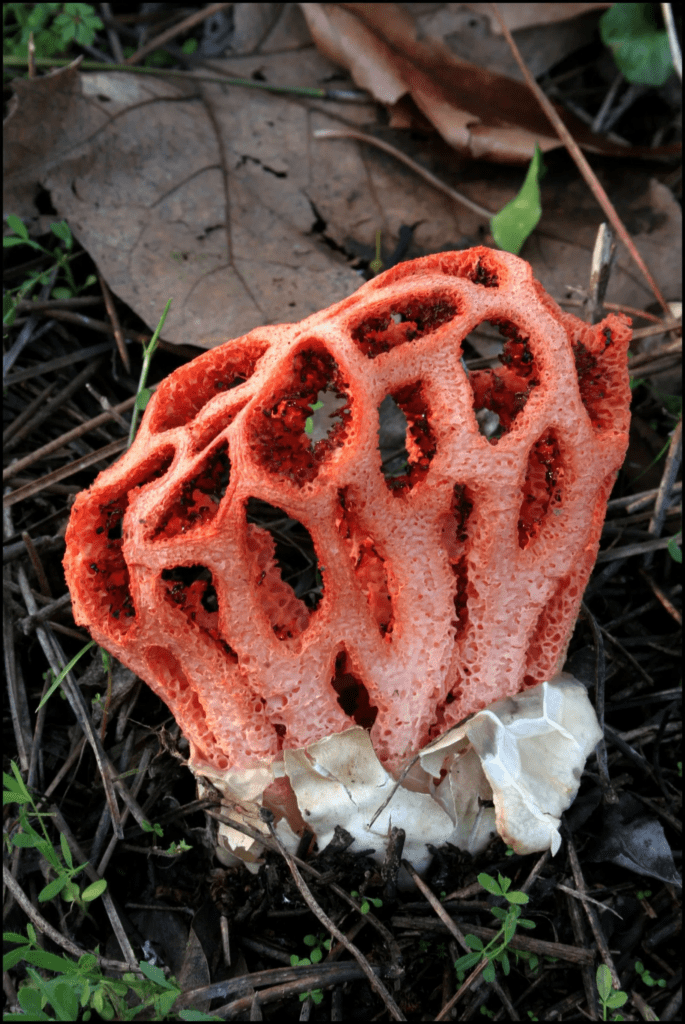
Good news: this mushroom poses no danger to humans. It can be handled safely as it is not toxic. Some cultures even consume it in its egg stage, though it is strongly recommended to refrain from doing so without expert mycological knowledge, as several closely related species can be easily mistaken for it.
If you encounter it in your garden or while walking in the forest after rain, don’t rush to remove it or run away — just let it carry on doing its work.
Nature does not always need to be beautiful to be extraordinary.
