
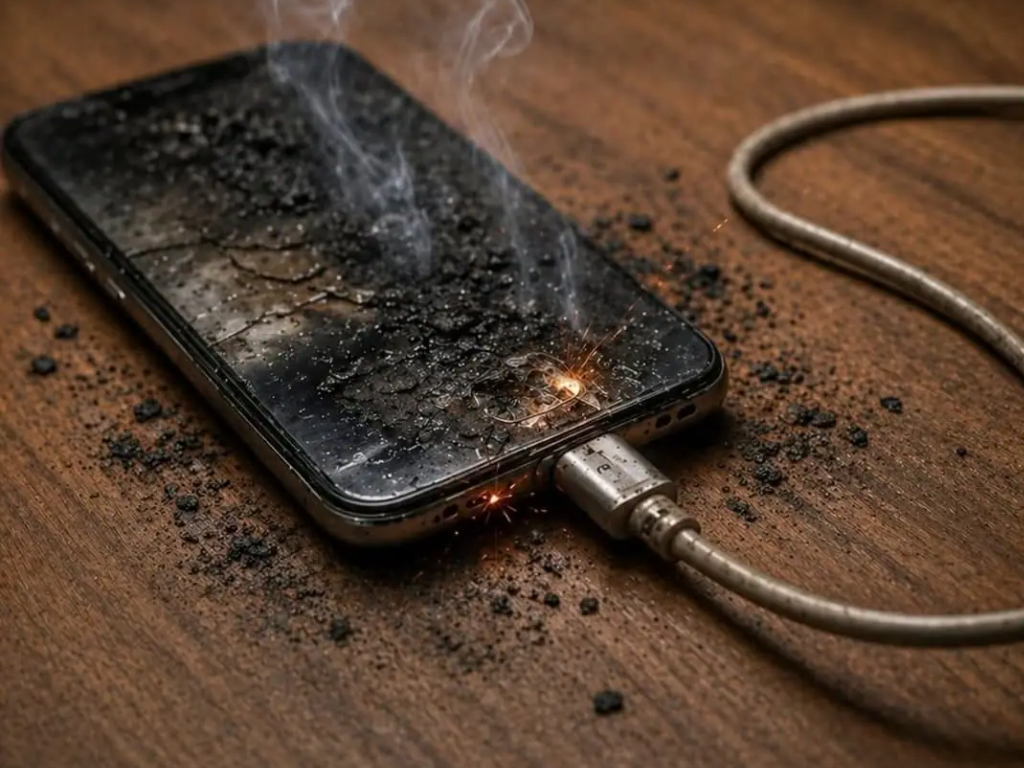
What Firefighters Encounter All Too Often at Home
Firefighters regularly warn about the dangers associated with common electronic device charging habits in households. Among these unsafe practices, the most widespread is undoubtedly charging a smartphone under the pillow, buried beneath blankets, or placed directly on a mattress.
Indeed, when your phone is charging, it naturally generates heat. On a hard surface, this heat dissipates easily into the air. However, when the device is trapped under several layers of fabric or foam, the heat cannot escape. It then rises significantly, which can lead to serious consequences.
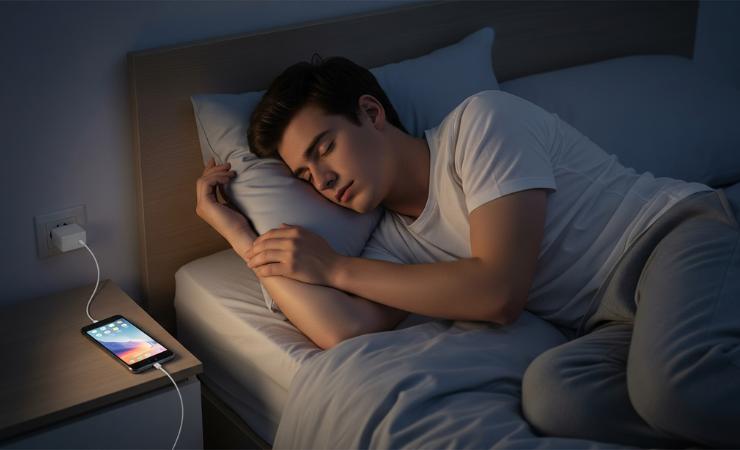
The Dangers of Poor Ventilation During Charging
An excessive buildup of heat in a smartphone’s battery can cause a range of serious problems: rapid loss of battery capacity, damage to internal components, battery swelling, and even frequent charging failures. In extreme cases, this overheating can lead to smoke or fire.
This risk becomes even more critical at night because during sleep, one does not notice abnormal heat or warning signals that the phone might emit. Over several hours, if a problem arises, no one can intervene in time.

How to Ensure Safe and Efficient Charging
Fortunately, the solution is quite simple. You just need to always place your phone on a hard and clear surface while it is charging. Experts especially recommend:
– The bedside table – A desk – A wooden shelf – A kitchen countertop – A dedicated charging station
Conversely, it is essential to systematically avoid charging your phone under the pillow, beneath blankets, on the bed, on the couch, or on a pile of clothes. All these surfaces trap heat and increase the likelihood of incidents.
Habits to Adopt to Preserve Your Battery and Safety
Some simple daily habits can help reduce risks:
Choose a certified charger. It is important to use only the cables and adapters recommended by your phone’s manufacturer. Generic or uncertified accessories may have compatibility issues or inconsistencies, increasing the risk of overheating.
Stay alert to abnormalities. If your smartphone heats up unusually, if the battery swells, or if charging becomes erratic, consult a professional promptly to avoid worsening the situation.
Avoid extreme temperatures. Batteries do not tolerate direct, prolonged heat such as on a car dashboard in full sun, nor extreme cold. Therefore, it’s best to avoid these conditions to maintain proper battery function.
Keep the charging area clear. It is crucial that air circulates freely around the charger. Do not place paper, fabric, or clothing immediately near your phone while it is charging.
This simple adjustment—changing where you charge your phone—can truly make a difference for safety in your home.
