
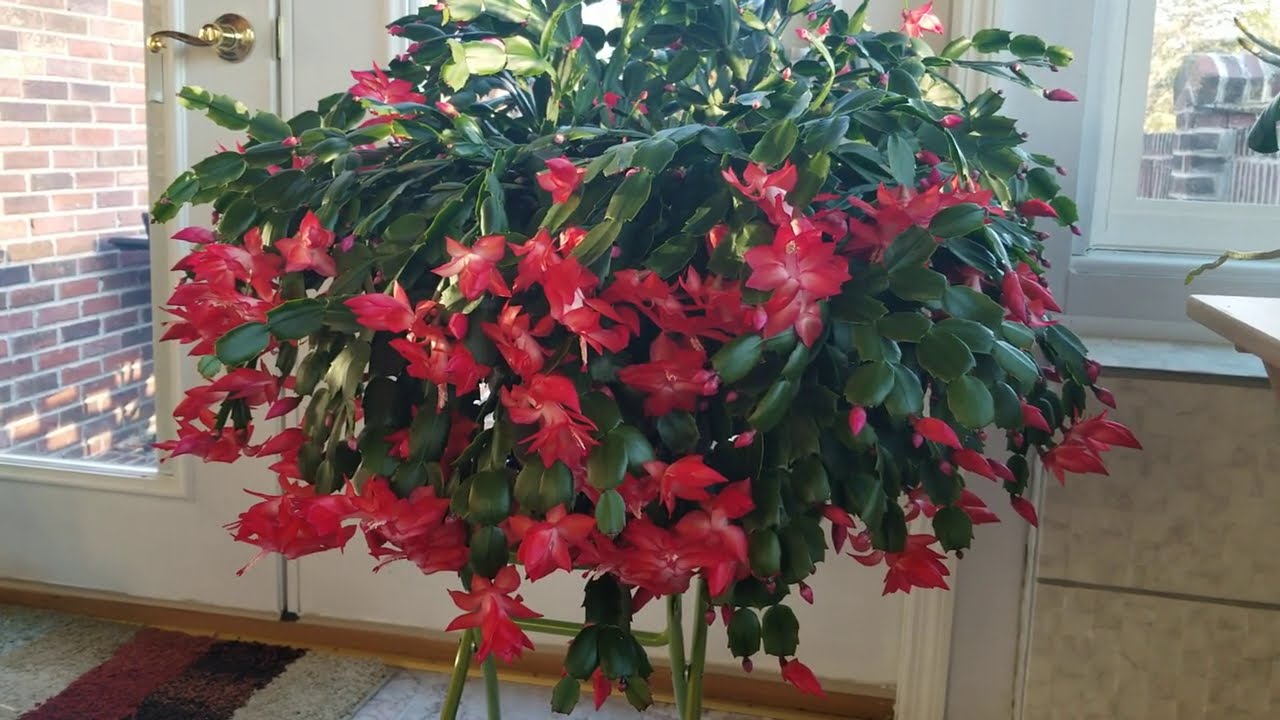
Christmas cacti don’t follow the usual “feed monthly and forget it” houseplant routine. Because their growth and bloom cycle shifts through the year, they benefit from different fertilizer goals at different times—and there’s also a window when you should stop fertilizing completely. Getting that timing right is often the difference between a plant that stays green and a plant that erupts in flowers.
Let’s make the feeding schedule simple, predictable, and bloom-friendly.
Why Christmas Cactus Feeding Feels Tricky
On ordinary days, holiday cacti are wonderfully low-maintenance. They tolerate a bit of neglect and don’t demand constant attention. The confusion usually starts when you want them to bloom on cue. That’s when timing, light, and nutrition suddenly matter—and the plant stops feeling “easy.”
The good news: once you understand the plant’s yearly rhythm, feeding becomes straightforward.
A Quick Christmas Cactus Primer

Holiday cactus types
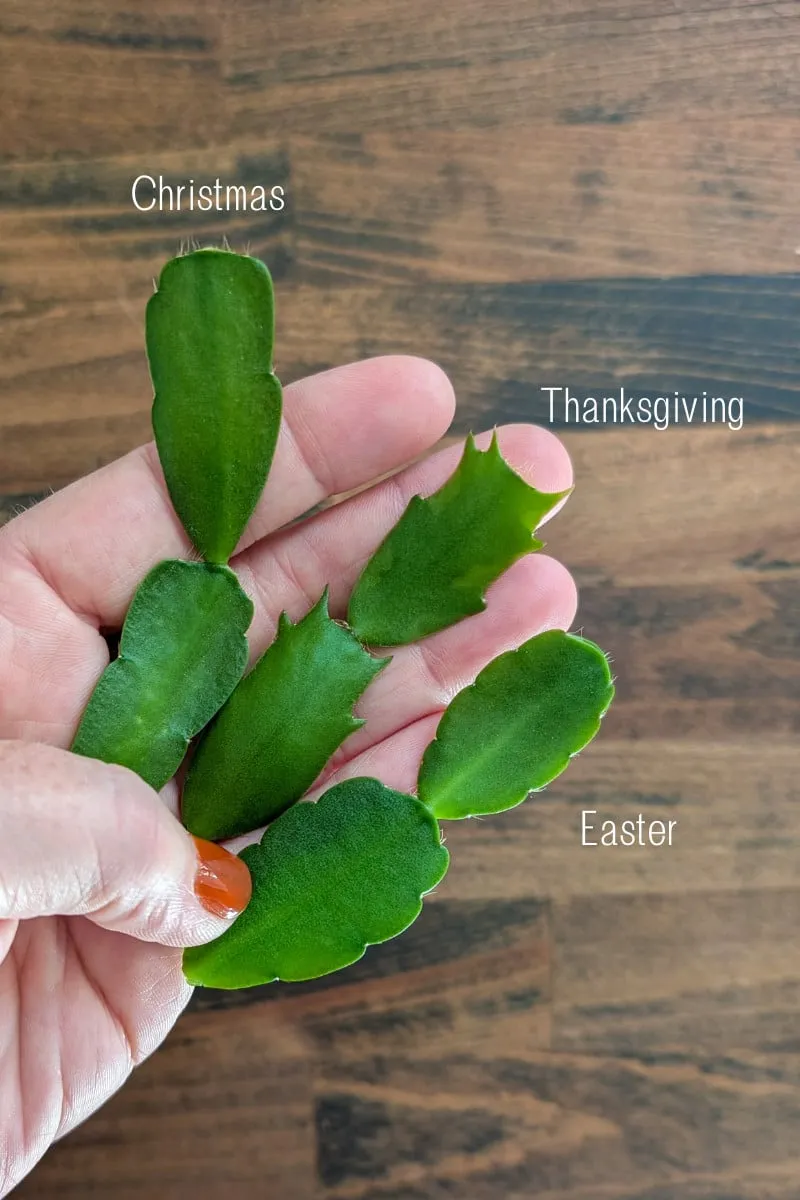
“Christmas cactus” is often used as a catch-all name, but most holiday cacti sold as houseplants belong to the genus Schlumbergera. Two common types are:
Thanksgiving cactus (Schlumbergera truncata) and Christmas cactus (Schlumbergera x buckleyi). There’s also an Easter cactus, which is a different plant and not in the Schlumbergera genus.
What triggers buds and blooms
Holiday cacti respond strongly to day length. As days shorten and nights get longer and cooler in fall, the plant slows down and begins setting buds. That’s why blooms tend to arrive around the holidays.

Potting and watering basics that affect fertilizing
These plants prefer to be slightly root-bound and can suffer from root rot if they sit wet. Use a pot with a drainage hole and a well-draining mix suited for epiphytic-style plants. Repotting is usually needed less often than with many other houseplants.
Not All Fertilizer Is Created Equal
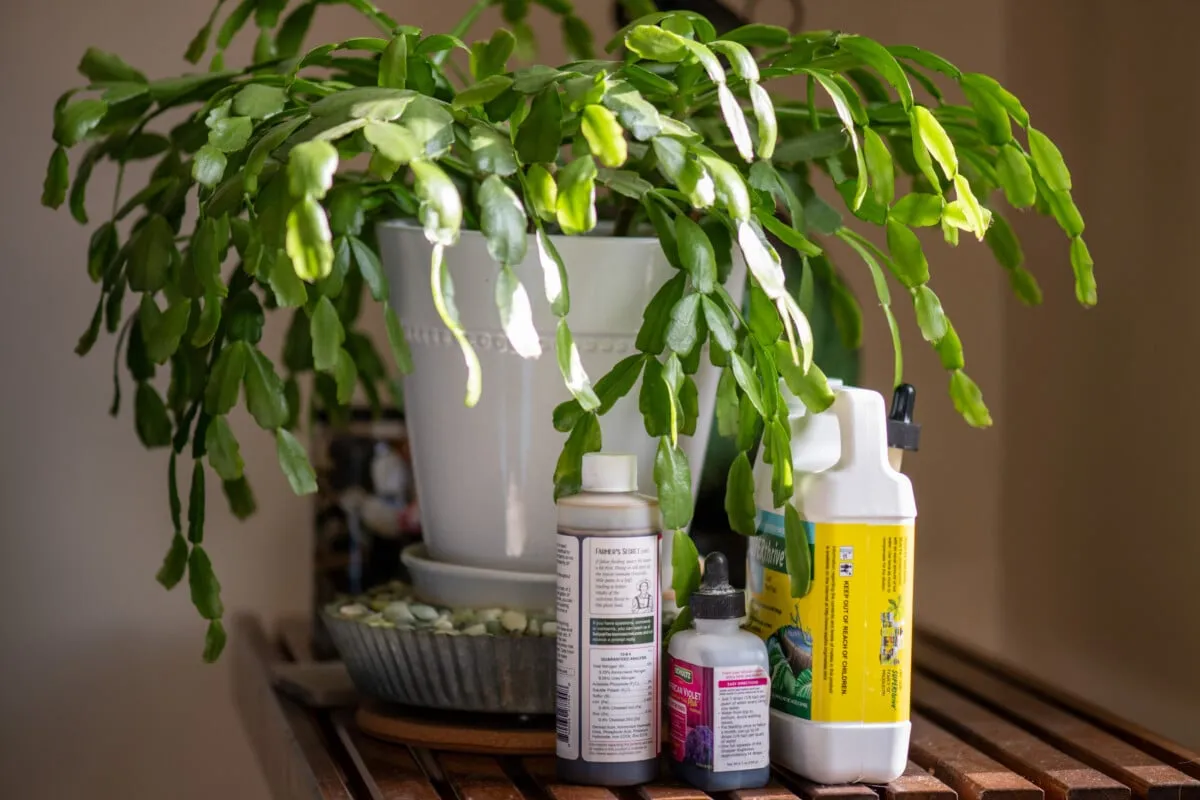
To feed a Christmas cactus well, you don’t need a shelf full of “specialty” products—you need to understand the NPK ratio on any fertilizer label. Those three numbers represent the percentages of:
The big three nutrients: N, P, and K
Nitrogen (N) supports leafy, green growth and new segments.
Phosphorus (P) supports roots and helps fuel flower and bud development.
Potassium (K) supports overall plant strength, water balance, and bloom quality.
Ignore marketing labels and match the ratio
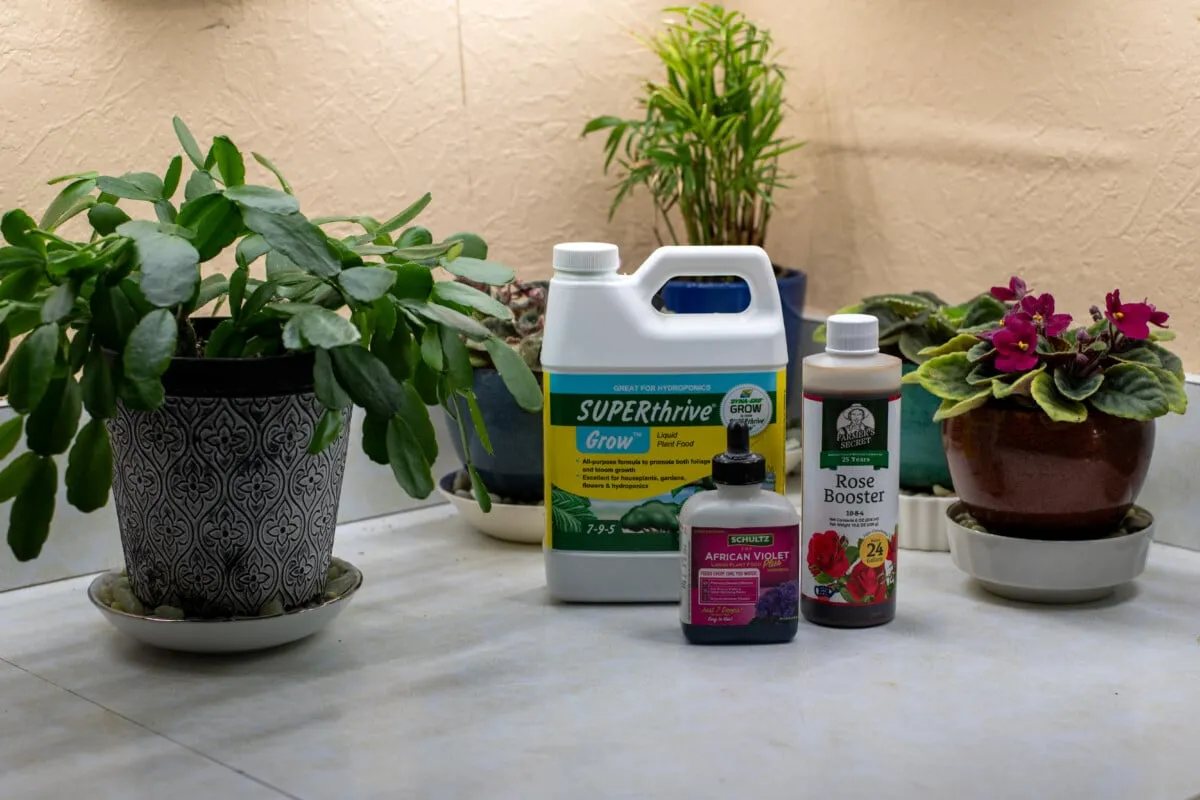
Many fertilizers are marketed for a specific plant (“rose food,” “tomato fertilizer,” “flower booster”), but what matters most is whether the NPK ratio fits what you want the plant to do right now. If you want lush growth, you’ll lean higher in nitrogen. If you want bud and bloom support, you’ll reduce nitrogen and prioritize phosphorus and potassium.
Once you think in NPK ratios instead of product names, choosing fertilizer becomes much easier.
The Three-Phase Fertilizing Plan
Christmas cacti do best with a feeding routine that matches their seasonal cycle. Think of the year as three phases: active growth, pre-budding, and budding through dormancy.
Phase 1: Active Growth Phase

As late winter shifts into spring and days begin to lengthen, your Christmas cactus gradually “wakes up.” This is the plant’s grow-big-and-bushy season.
How to tell your plant has broken dormancy
Look for two clues:
New segments starting at the tips and faster-drying soil that signals the plant is using more water again.
If the plant looks slightly wrinkled between waterings and the mix dries more quickly than it did in winter, that’s often your cue that active growth has started.

What fertilizer to use in this phase
During active growth, choose a fertilizer that’s higher in nitrogen (or at least not nitrogen-starved). This supports new segment production and helps the plant build size and energy reserves for later blooming.
If your plant is already large and you don’t want a burst of new growth, a more balanced formula can work fine—just avoid formulas that are extremely low in nitrogen during this stage.
How often to feed
Feed during the active growing season while you’re watering regularly. A practical approach is to fertilize consistently but occasionally flush the pot with plain water to prevent fertilizer salts from building up in container soil.

Phase 2: Pre-Budding Phase
In late summer, you have two smart options:
Option 1: stop fertilizing altogether.
Option 2: switch to a formula that is very low in nitrogen while still offering phosphorus and potassium.
The goal now is to stop encouraging fresh green growth and instead help the plant focus on storing resources it can use to form buds and open flowers.
Phase 3: Budding Period Through Dormancy
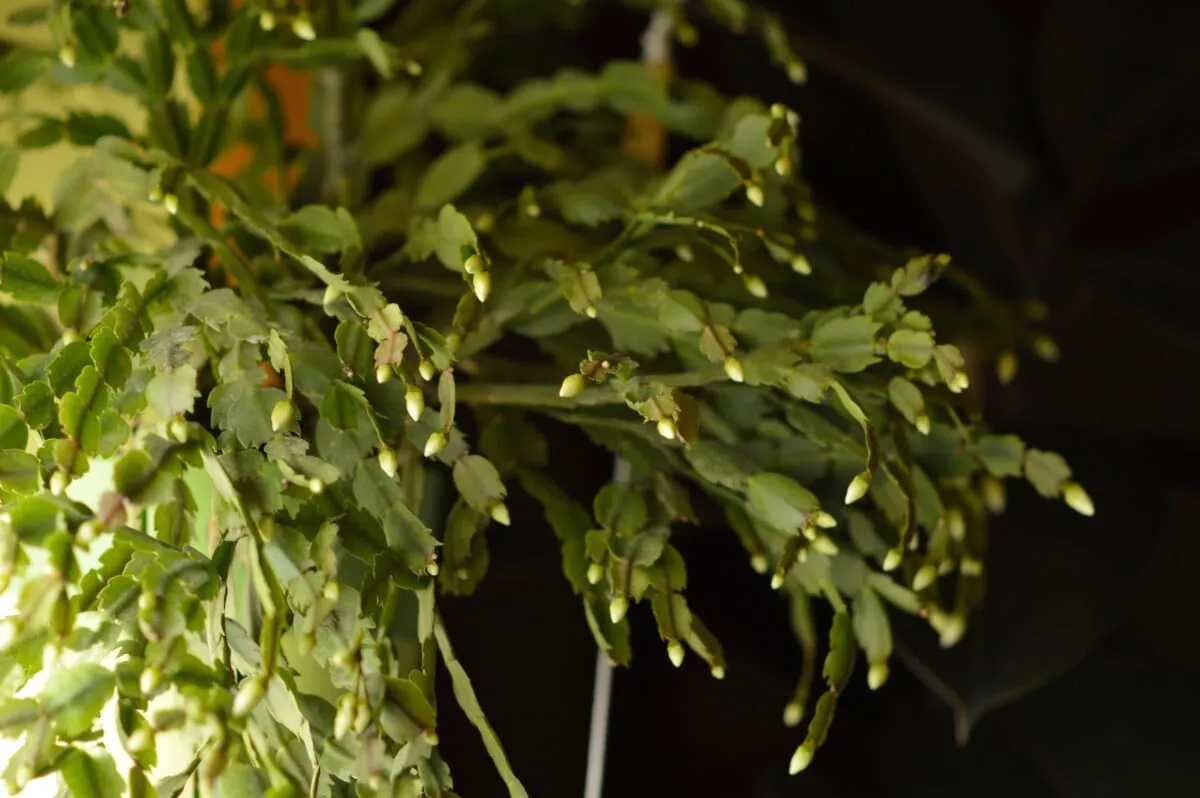
As fall progresses, the plant slows down and shifts from growth to bud production. At this point, it’s best to stop fertilizing. If you fed well through spring and summer, your plant should already have what it needs.
How to water during this slower season
Water less, but don’t let the plant fully dry out for long stretches. A reliable rule is: check the top inch of soil; if it’s dry, water lightly.
Continue gentle watering through blooming. After flowering finishes, the plant rests for the remainder of winter. During this dormancy period, do not fertilize. When spring returns, the cycle begins again.
Summary: The Simple Yearly Schedule
Spring & summer: feed to support active growth (lean higher in nitrogen).
Late summer: reduce or stop feeding (optionally switch to very low nitrogen).
Fall through winter dormancy: stop fertilizing; water lightly as needed.
Stick with one plan for a full year, observe how your plant responds, and adjust gently. With consistent timing and the right NPK focus, your holiday cactus will be far more likely to reward you with a full, showy bloom season.
