

Preparing your own homemade vegetable broth is an excellent way to enrich the flavor of your dishes while embracing a natural approach free from chemical additives. Unlike industrial broths that are often loaded with preservatives, excess salt, and artificial flavors, making your own broth allows you full control over its ingredients. This way, you obtain a healthy and nutritious base, perfect for soups, stews, and other recipes. Here is a comprehensive guide to crafting a flavorful and preservative-free vegetable broth that is easy to store and versatile in use.
Why Choose to Make Your Own Vegetable Broth?
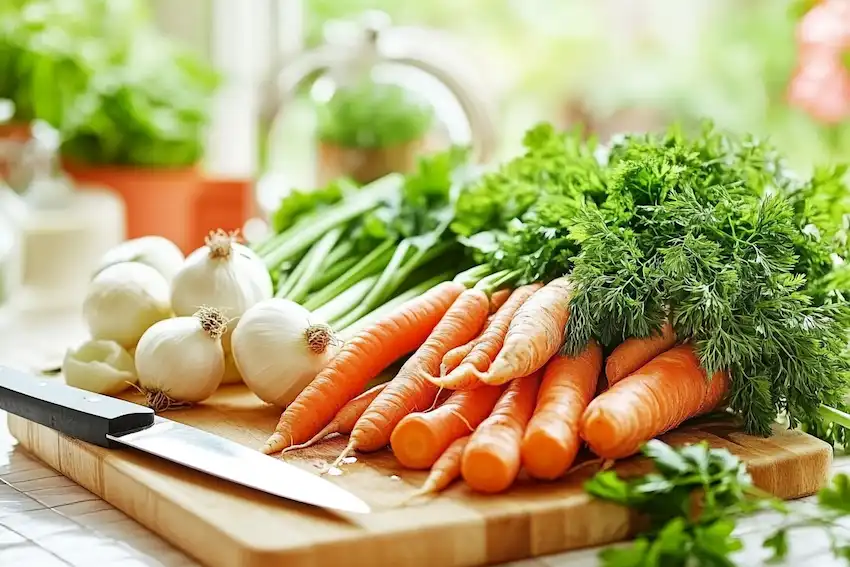
Homemade vegetable broth offers many advantages compared to store-bought products:
Free from chemical additives: no preservatives, no excessive salt, and no artificial flavors.
Rich in nutrients: a true source of vitamins and minerals delivered by fresh vegetables.
Customizable: you can adjust the flavors according to your taste preferences or specific dietary needs.
Cost-effective: a smart way to use up your leftover vegetables, helping to reduce food waste.
When you make your broth yourself, you can also incorporate vegetables with remarkable health benefits such as wild spinach or lamb’s quarters. Discover their nutritional richness and how to use them in cooking with helpful resources covering lamb’s quarters and wild spinach recipes, along with the health benefits of lamb’s quarters.
Essential Ingredients for Your Broth
3 carrots – to add a mild, earthy sweetness.
1 leek – provides a subtle onion-like flavor.
2 parsnips – bring a sweet and slightly nutty taste.
2 parsley roots – sharp, with a pungent and herbaceous flavor.
1 onion – an essential savory base.
2 garlic cloves – impart a warm and complex note.
½ kohlrabi – contributes a mild and slightly cruciferous flavor.
½ celery root – enhances the earthy and celery-like undertones.
A piece of turmeric – adds color and anti-inflammatory properties.
A handful of fresh parsley – for a fresh and herbal touch.
Sunflower oil – used to sauté and release the vegetables’ aromas.
80 grams of salt – to enhance the taste and act as a natural preservative.
Step-by-Step Preparation
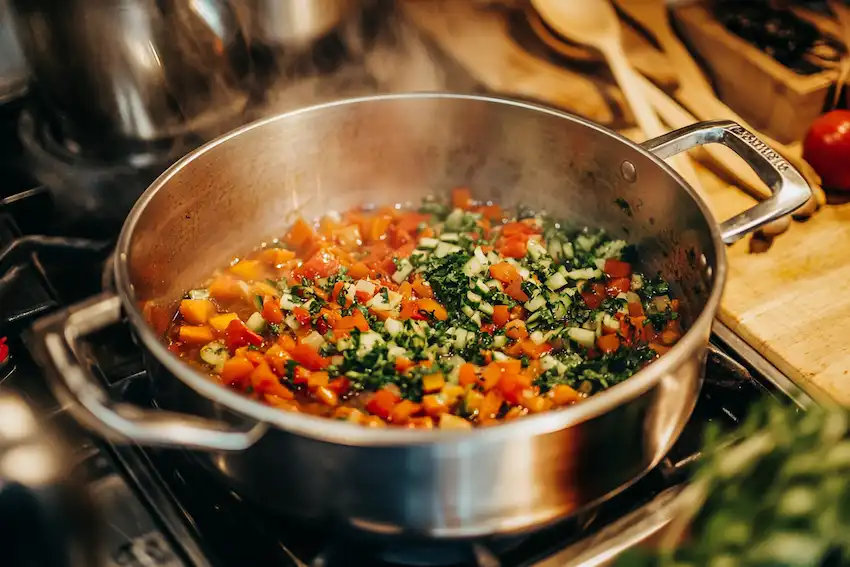
1. Preparing the Vegetables
Begin by thoroughly washing and peeling all the vegetables. Then, cut them into medium-sized pieces to ensure even cooking and a perfect balance of flavors.
2. Sauté the Vegetables
Pour some sunflower oil into a large pot and heat over medium flame. Add the chopped vegetables and sauté them for 5 to 7 minutes, stirring regularly. This step helps develop the aromas through gentle caramelization.
3. Gentle Steaming
Cover the pot, reduce the heat, and let the vegetables cook in their own steam for about 8 minutes until tender. This concentrates the flavors and results in a broth rich with taste.
4. Blending the Broth (Optional)
If you prefer a smoother broth, you can blend the mixture using an immersion blender or food processor. This step is optional; the broth can also be used clear as is.
5. Storage and Freezing
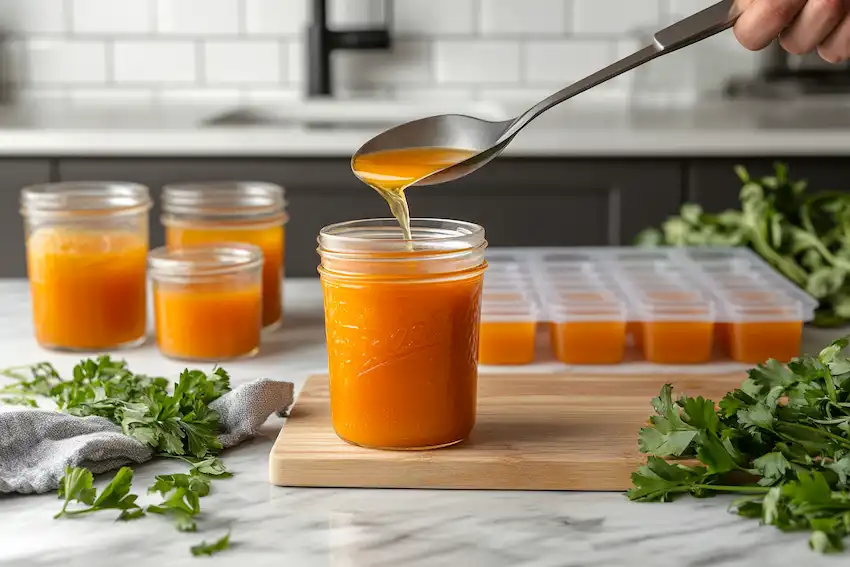
Once cooled, divide the broth into portions. Use ice cube trays or airtight containers for storage. For longer preservation, wrap the portions in aluminum foil before freezing. Properly stored, your broth will keep for several months.
How to Incorporate Your Vegetable Broth into Dishes
Soup base: perfect for all kinds of soups, from hearty rustic styles to creamy bisques.
Cooking grains: replace water with broth when cooking rice, quinoa, couscous, and enhance their flavor.
Slow cooking vegetables: elevate mushrooms, leafy greens, or root vegetables by braising them in broth.
Sauces and jus: adds depth and creaminess to sauces and meat or vegetarian jus.
Benefits of Homemade Vegetable Broth
Packed with nutrients: brimming with vitamins, minerals, and antioxidants from fresh vegetables.
Enhanced flavors: amplifies the natural tastes of your dishes without any additives.
Environmentally friendly: reduces waste by utilizing leftover vegetables.
Economical: made from ingredients you likely already have at home, reducing reliance on store-bought products.
Tips for Success When Making Your Broth
Seasoning: start with 80 grams of salt and adjust to taste—you can always add more later.
Vary the vegetables: don’t hesitate to add less common vegetables like lamb’s quarters or wild spinach to increase nutritional value and diversify the flavor profile.
Avoid overcooking: prevent overly long cooking times to preserve the intensity and freshness of flavors. About 8 to 10 minutes is sufficient.
Making your own vegetable broth is a simple yet rewarding practice that provides a flavorful, healthy, and preservative-free base for your entire cooking repertoire. With fresh ingredients and minimal effort, you will have a versatile ingredient capable of elevating your recipes while caring for your health. Moreover, this ecological approach values your vegetable scraps, reducing waste for a positive impact both in your kitchen and on the planet. Adopt this homemade broth in your meals and enjoy natural, intense flavors with every dish.
