
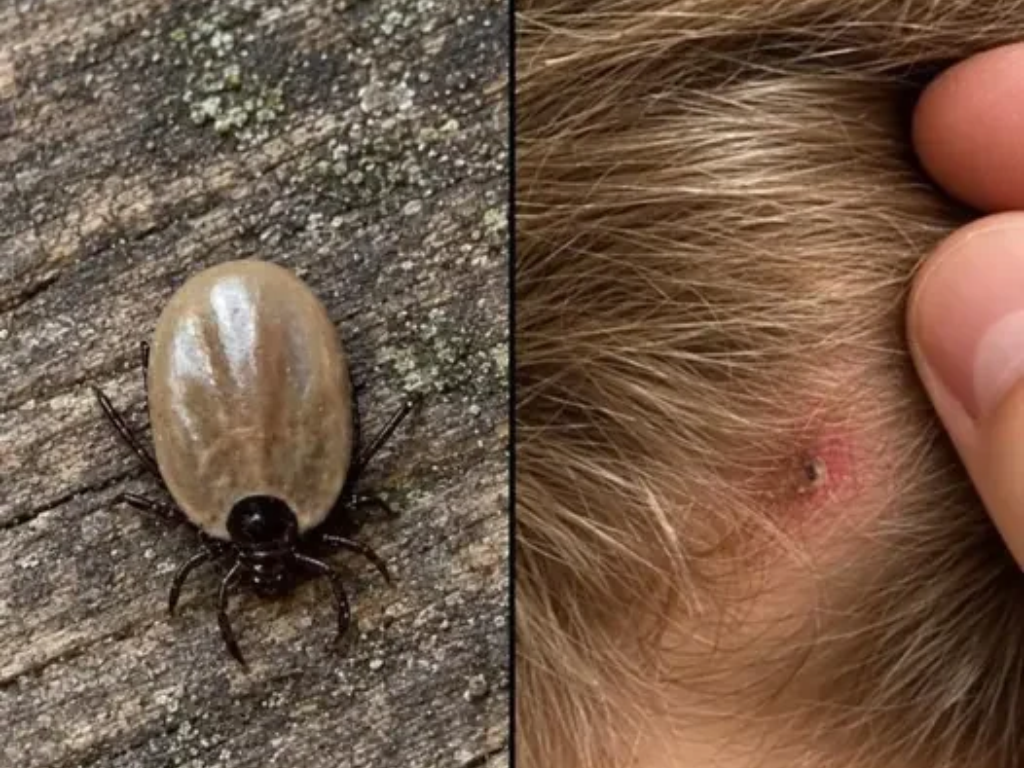
Why Do Ticks Prefer to Hide in Hair?
Ticks are primarily found in wooded areas, tall grasses, bushes, and gardens. When passing nearby, they latch onto skin or clothing, instinctively seeking warm, concealed spots. The scalp then becomes an ideal refuge: it is warm, protected, and difficult to examine closely.
What makes the situation even more complicated is that their bite is painless. They can remain attached for several hours or even days without the child feeling any discomfort. This is why establishing a routine of checking after each outdoor activity is essential.
How to Properly Check the Hair
Begin by seating your child in a well-lit area, and if possible, enlist the help of another person. Separate the hair into small sections using clips, then carefully comb through the scalp with a fine-toothed comb. Don’t forget to also check behind the ears, under the armpits, behind the knees, and around the waist.
If you spot a tick freely moving between hairs but not yet attached to the skin, gently remove it using tweezers or a tissue. Following this inspection, a gentle shampoo can help wash away any remaining parasites that might still be moving.
Removing a Tick Embedded in the Scalp: Essential Steps
If the tick has already latched on, remain calm. Part the hair around the affected area to get a clear view of the bite spot. Using fine-tipped tweezers or a tick remover (available at pharmacies), grasp the tick as close to the skin as possible, avoiding squeezing or crushing its body.

Then, pull upwards with a firm, steady motion, without twisting. The goal is to extract the tick in one piece. Once removed, clean the area thoroughly with soapy water or an antiseptic, and wash your hands carefully.
Crucial Mistakes to Avoid
We have all heard old wives’ tales such as applying oil, petroleum jelly, or nail polish to the tick. Avoid these methods as they are ineffective and may complicate the removal process. Also, do not try to crush the tick with your bare hands, as this could release pathogens.
Signs to Watch for in the Days Following a Bite
A slight local redness at the bite site is normal. However, remain vigilant in the following weeks. Consult a doctor if your child develops fever, chills, unusual fatigue, muscle or joint pain, swollen lymph nodes, or a spreading redness around the bite area.
Ticks can transmit certain diseases, such as Lyme disease. If you’ve saved the tick—for example, in a small sealed bag or stuck on adhesive tape—inform the doctor, as this can be very helpful for diagnosis.
How to Prevent Future Bites
Before every outing into nature, dress your child in covering clothes, preferably light-colored, as this makes detecting ticks easier. Upon returning, thorough inspection of the body and hair should become a systematic habit. Also remember your pets, who can bring ticks into the home.
A simple habit can prevent many troubles.
