
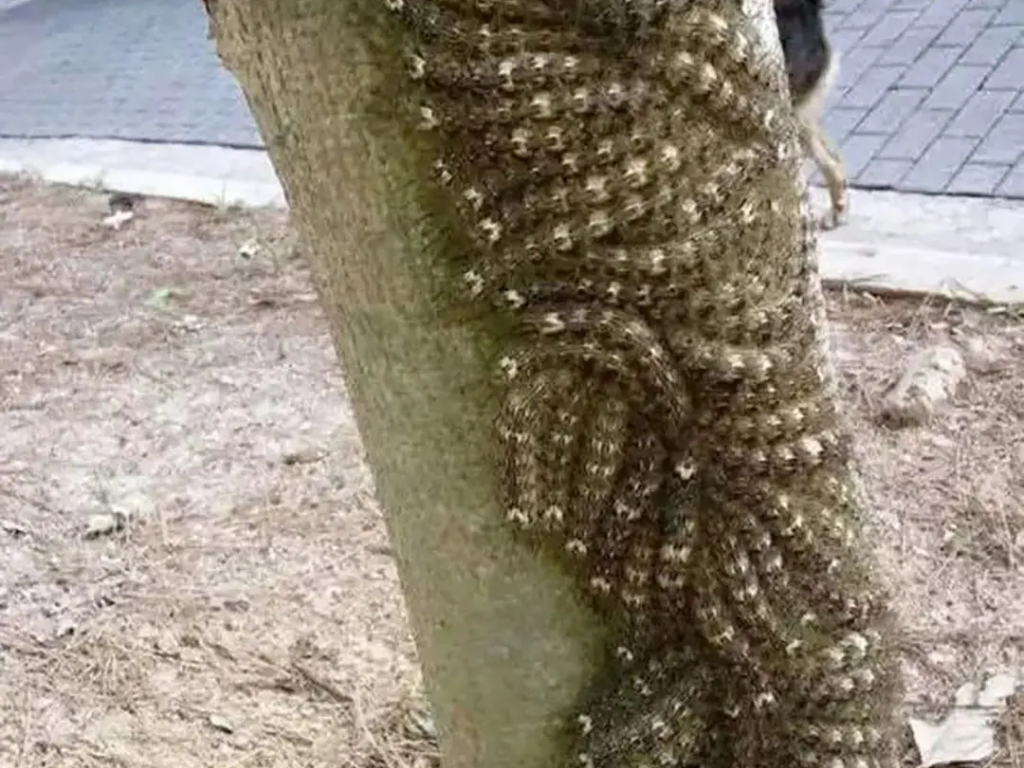
The Childlike Curiosity That Nearly Turned Tragic
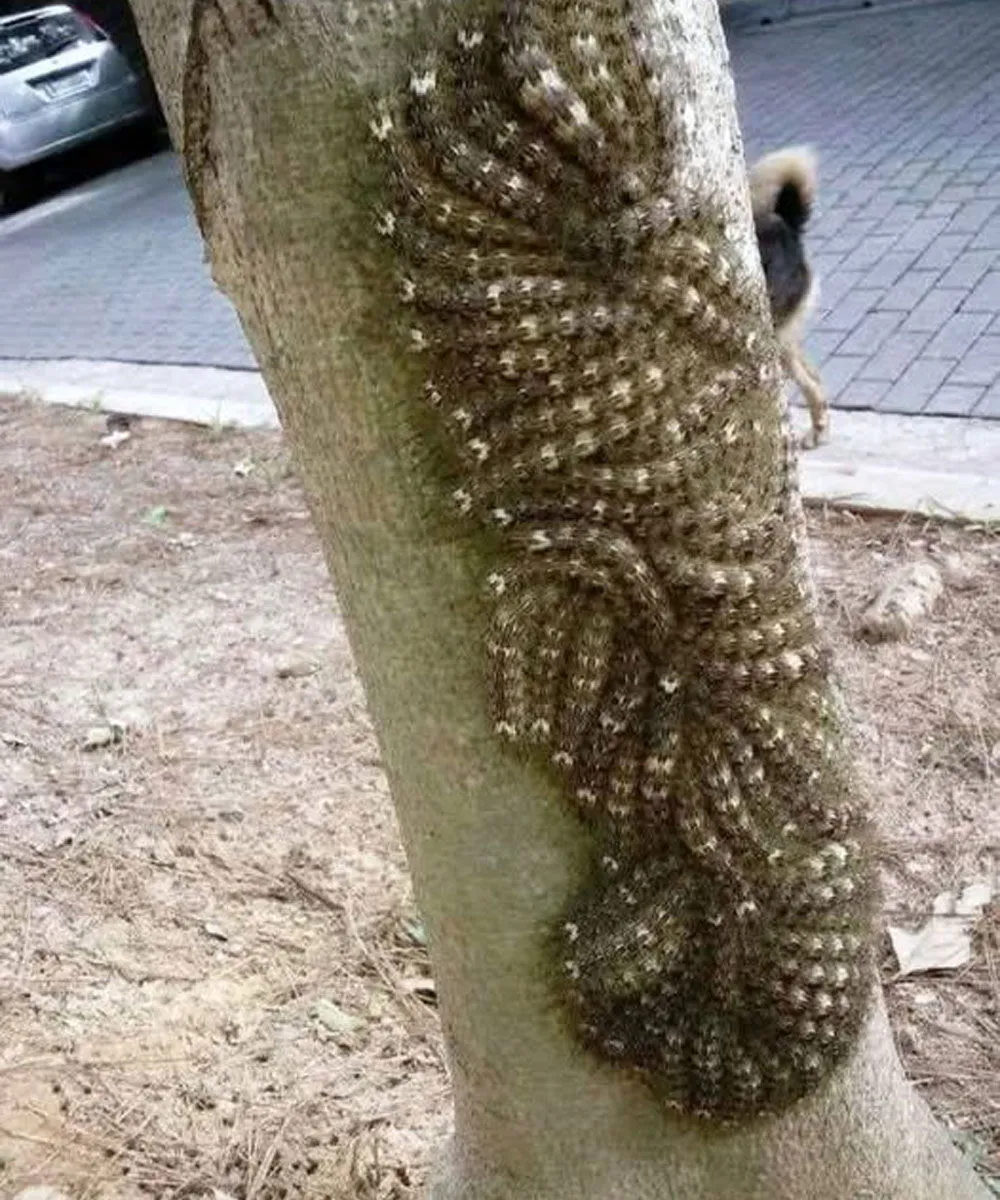
“Mom, dad, come see! The tree has stripes, it’s beautiful!”
Her excitement was palpable. My husband, who was sitting beside me, looked up and immediately sensed something was wrong. In a split second, he stood up and hurried to our daughter. Just centimeters away, his hand almost touched something we would never have imagined finding…
What we had mistaken for a simple natural pattern on the bark actually turned out to be a cluster of insects, both inconspicuous and irritating.
An Unexpected Enemy: Nature’s Mastery of Camouflage
These tiny creatures possessed a formidable weapon: perfect camouflage. Aligned with millimeter precision on the bark, they were absolutely indistinguishable from delicate moss or the natural cracks in the wood. Yet, these were indeed hairy caterpillars with stinging hairs capable of causing severe skin reactions.
A mere touch could induce discomfort, a burning sensation, and even serious complications. Young children and vulnerable individuals are particularly at risk when it comes to these insects.

How We Avoided Disaster
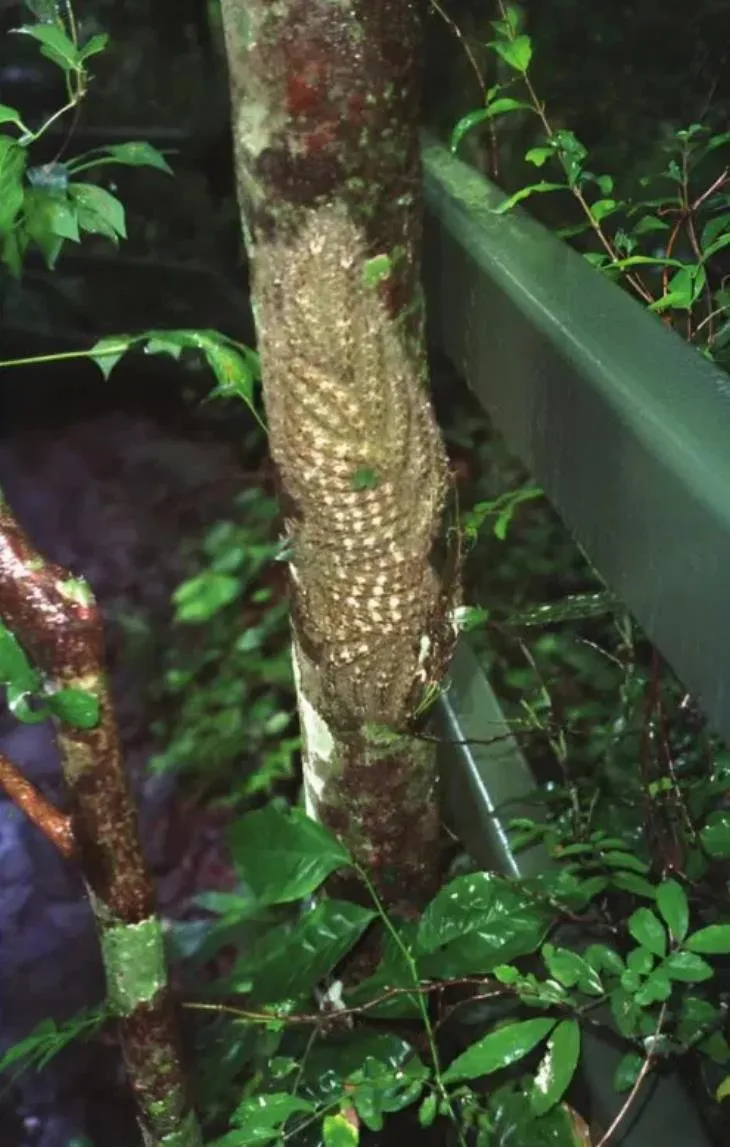
Instinctively, my husband gently moved our daughter away from the tree before we contacted municipal services or the National Forestry Office. Their response was swift: the insects were carefully removed, and warning signs were installed to inform passersby.
This episode opened our eyes to the fact that danger can lurk very close to us, even during a simple walk in the heart of nature.
Adopting Good Habits to Stay Safe on Walks
Since that experience, I have changed how I approach outings in nature. Not out of fear, but with heightened awareness. Here are some simple habits that can truly make a difference:
Take time to observe before touching: whether it’s a branch, a trunk, or a stone, it’s best to look carefully before placing your hand.
Teach children to ask permission: a simple “Can I touch this?” before exploring a natural element can prevent many accidents.
Equip yourself with light gear: a pair of thin gloves, a magnifying glass, and a first aid kit are not cumbersome but provide great reassurance.
Prevent rather than cure: if you spot an unusual grouping of insects or a strange pattern on a tree, don’t hesitate to inform the appropriate authorities or the town hall.
Communicating to Protect Better
Children understand quickly, especially when explanations are adapted to their age and are illustrated. For example, you can tell them that some insects wear “a tree costume” to hide and, just like a hedgehog, they must absolutely not be touched.
As parents and grandparents, we have an essential mission: to pass on this knowledge. A few minutes are enough to teach these precautions and thereby prevent an accident.
Appreciating and Respecting Nature
This experience has in no way diminished the joy I feel while walking in nature; on the contrary, it taught me to look more closely, to admire every detail, and to teach children that the beauty of nature goes hand in hand with respect and caution.
So, if one day, along a trail, you notice an unusual pattern or a strange grouping on a tree, remember: it’s better to refrain from touching and to act with caution by seeking advice.
