
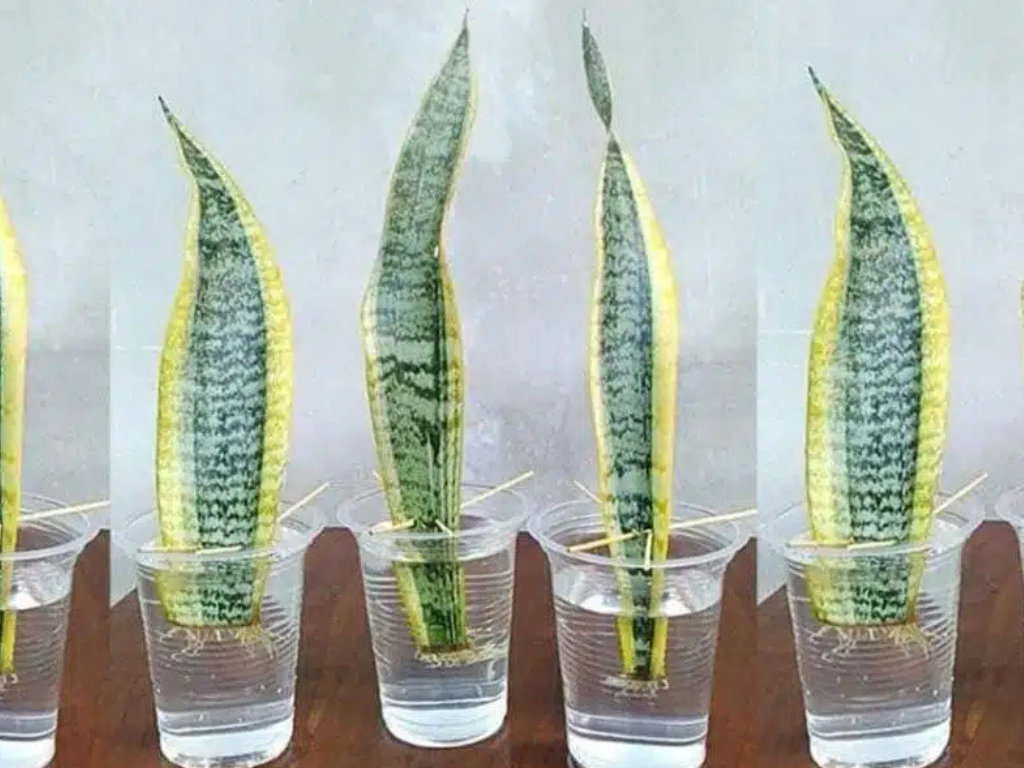
Why Propagate a Sansevieria Plant?
The Sansevieria, also known as the “mother-in-law’s tongue,” is cherished not only for its distinctive aesthetic appeal but also for its ability to purify indoor air. It requires very little maintenance and adapts effortlessly to all kinds of interior spaces. The opportunity to propagate it yourself offers numerous benefits:
Cost-effective: You no longer need to purchase a new plant to expand your collection.
Generous: It’s an excellent idea to gift a plant to your loved ones.
Practical: Perfect for renewing a specimen that has become too large or tired.
Healthy: More Sansevierias mean a cleaner, fresher indoor atmosphere.

Let’s explore together four easy and effective methods to grow your own little indoor jungle.
Four Simple Techniques to Propagate Your Sansevieria
Division: A Quick Solution for Established Plants
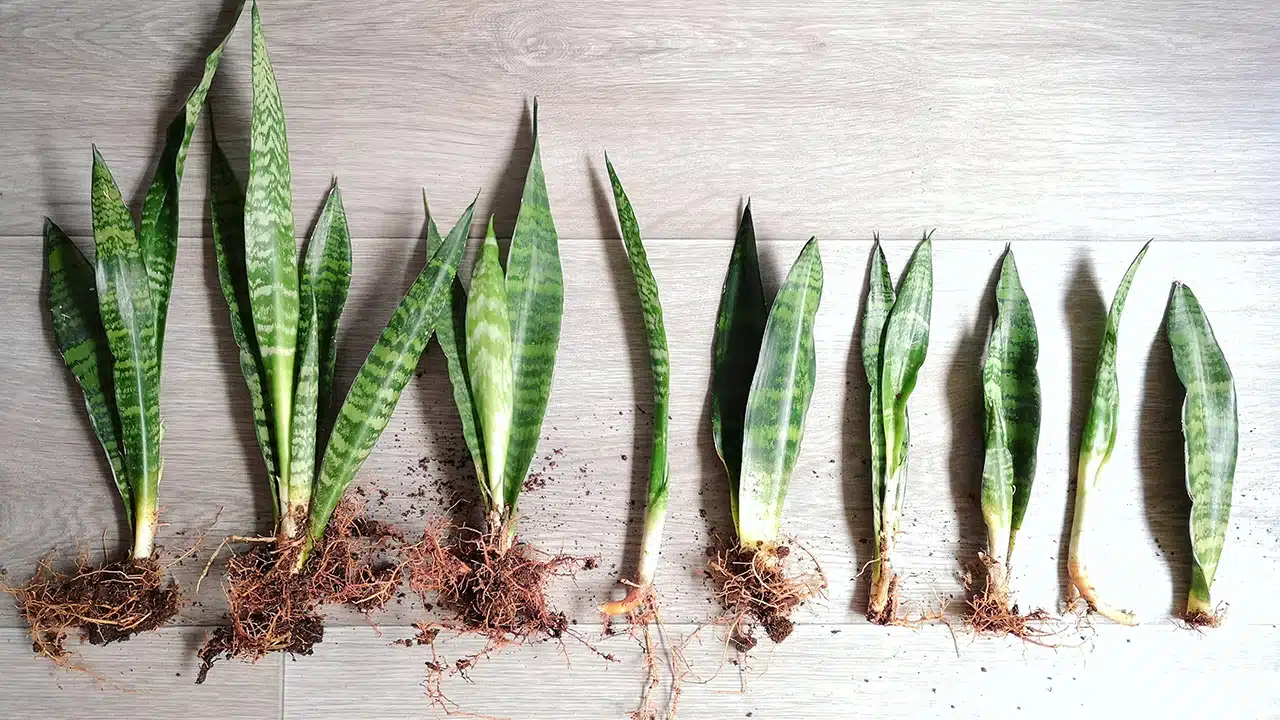
If your Sansevieria is well-rooted and has multiple clumps, division remains the most direct and fastest method to obtain several new plants.
How to proceed?
Carefully remove the plant from its pot.
Separate the different clumps while preserving their root systems.
If necessary, use a clean, sharp knife to divide the parts.
Replant each section in a new, appropriately sized pot.
Practical tip: choose a special cactus or succulent soil mix to ensure good drainage. Place the new plant in indirect light and reduce watering. After approximately 4 to 6 weeks, you will notice the first shoots appearing.
Leaf Cutting in Soil: An Economical and Rewarding Method
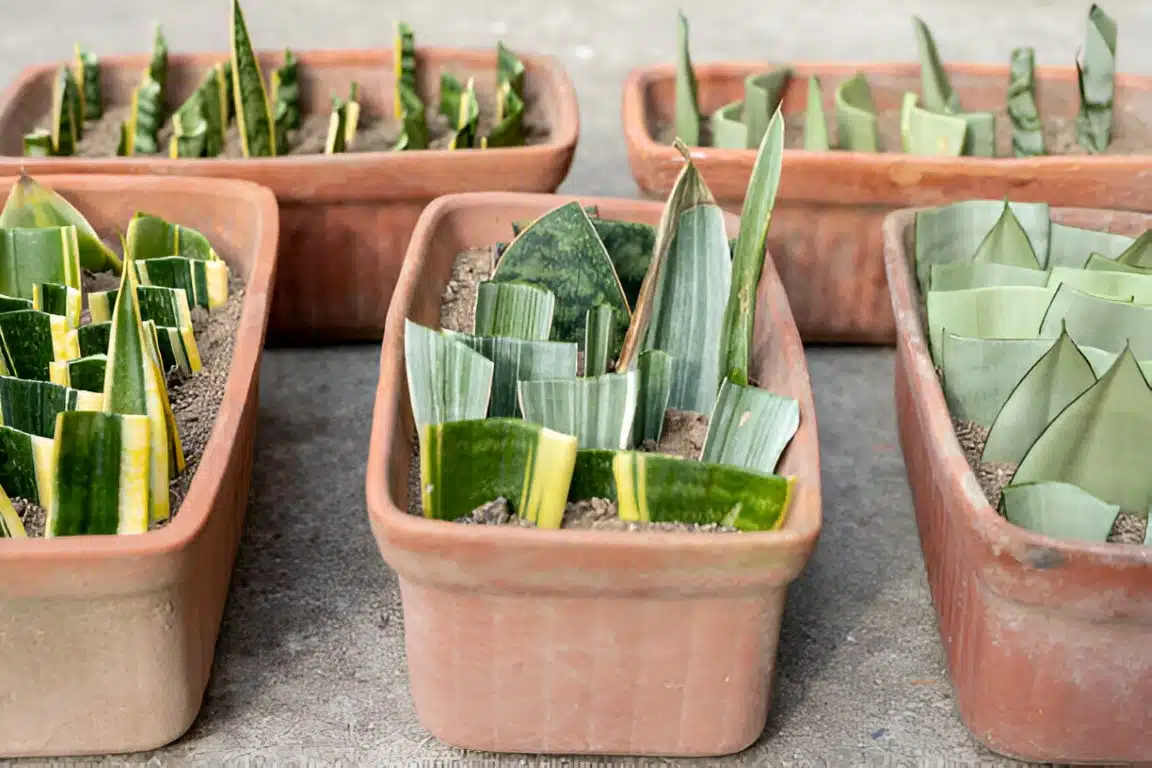
If you prefer to avoid disturbing the roots, try this simple technique that uses a single leaf to create a new Sansevieria plant.
The steps:
Cut a healthy leaf into segments about 8 to 10 cm long.
Allow these pieces to dry in the open air for 1 to 2 days so the cut ends can callous over.
Plant the segments vertically in a mixture of potting soil and light sand.
Water very sparingly, approximately every two weeks.
Patience and persistence: growth is slow and will take between 6 and 8 weeks, but the joy of seeing new sprouts emerge makes the wait worthwhile.
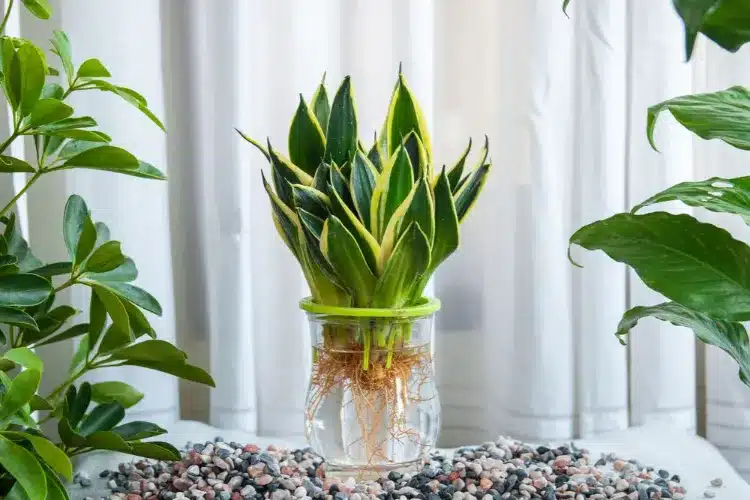
Water Propagation: Ideal for the Curious
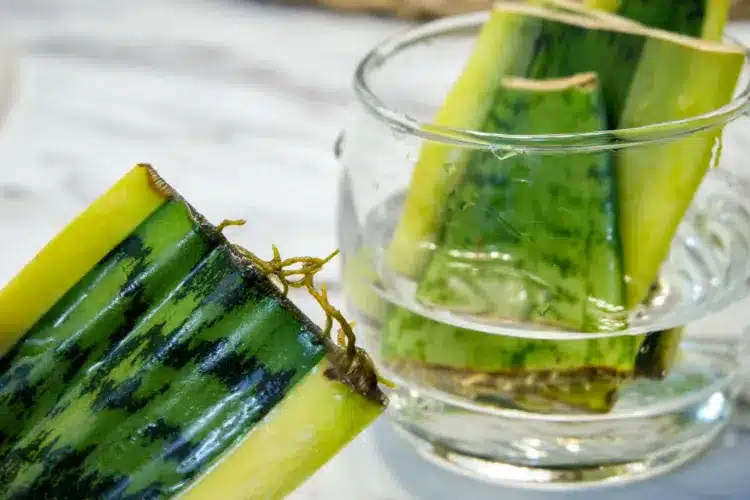
This technique is especially appealing to those who want to watch root formation in real time, offering an interesting visual experience.
How to do it?
Cut a leaf into approximately 8 cm segments.
Place the base of the segments into a glass of water, submerged about 2 to 3 cm.
Change the water every 5 days to keep it clean.
Once the roots reach a length of 5 to 7 cm, it is time to transplant them into a suitable soil mix.
Tip: use filtered or rested water to avoid chlorine, which could harm the plant. Position the container in a well-lit area without direct sunlight. The first signs of growth usually appear between 6 and 10 weeks.
Rhizome Division: A Choice for Enthusiasts
Sansevierias also propagate from their rhizomes — thick underground stems that enable the production of new plants.
The method:
Carefully dig up your plant.
Locate the rhizomes, which can be identified by their white color and fleshy texture.
Cut a rhizome that includes roots.
Replant it in an appropriate pot using a well-draining substrate, watering moderately.
Important to know: this method requires some skill in handling roots but is very effective. Expect to see signs of growth within 4 to 6 weeks.
Frequently Asked Questions About Sansevieria Propagation
Can you propagate Sansevieria in winter?
Yes, it is possible. However, growth will be slower. Spring remains the ideal season for optimal results.
How often should I water?
Watering should be moderate: once every 1 to 2 weeks is sufficient to avoid the risk of root rot.
Should I use fertilizer?
Initially, it’s best to hold off. Once the first shoots appear, you can start applying fertilizer, ideally once a month.
How do I recognize a successful cutting?
Strong root development and the appearance of young leaves are clear signs that your plantlet is thriving.
In Conclusion: Grow Your Indoor Jungle Without Breaking the Bank
Whether you are a beginner or a devoted enthusiast, propagating your Sansevieria is accessible to everyone. This activity is not only cost-effective and enjoyable but also a wonderful way to introduce more greenery into your home or to give a living gift to your friends and family. So, are you ready to get started?
