
Keeping your home clean does not have to rely on costly store-bought products. With a few everyday kitchen ingredients, you can create a powerful multi-purpose cleaner that cuts grease, removes stubborn grime, eliminates odors, and restores shine to common household surfaces.
This natural cleaning solution uses the strength of lemon peels combined with salt, baking soda, vinegar, and dish detergent. The result is a pleasantly scented, highly effective cleaner that works on cookware, sinks, tiles, and stainless-steel surfaces while helping you save money.
Why This Homemade Cleaner Is So Effective
This formula works because each ingredient plays a specific role in breaking down dirt and grease.
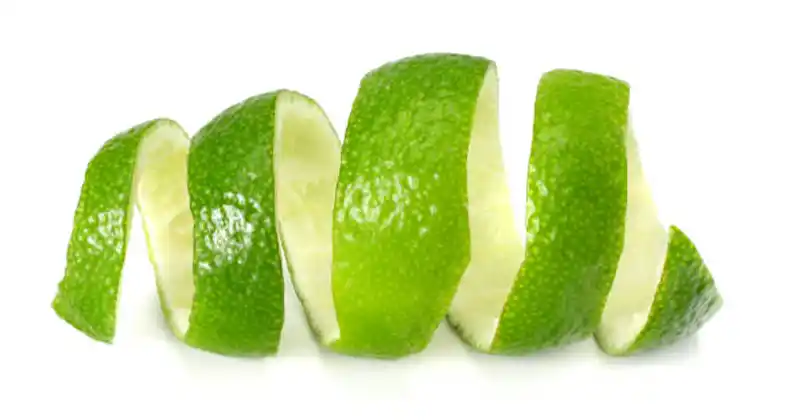
Lemon peels contain natural oils and citric acid that help dissolve grease, remove mineral buildup, and leave a refreshing citrus scent.

Salt acts as a gentle abrasive while helping draw out the beneficial oils from the lemon peel.
Baking soda softens water, breaks down grime, and neutralizes unpleasant odors.
Apple cider vinegar contributes antibacterial and antifungal properties that help disinfect surfaces.
Dish detergent enhances the grease-cutting power and gives the mixture a thicker, more practical cleaning consistency.
Together, these ingredients create a versatile cleaner that works well on pots, pans, sinks, stovetops, tiles, and stainless steel appliances.
How to Make the Lemon Peel Multi-Purpose Cleaner
Ingredients
1 liter of water
Peels from 5 lemons
2 tablespoons of salt
1 tablespoon of baking soda
150 ml of apple cider vinegar
1 bottle of liquid dish detergent
Step-by-Step Preparation
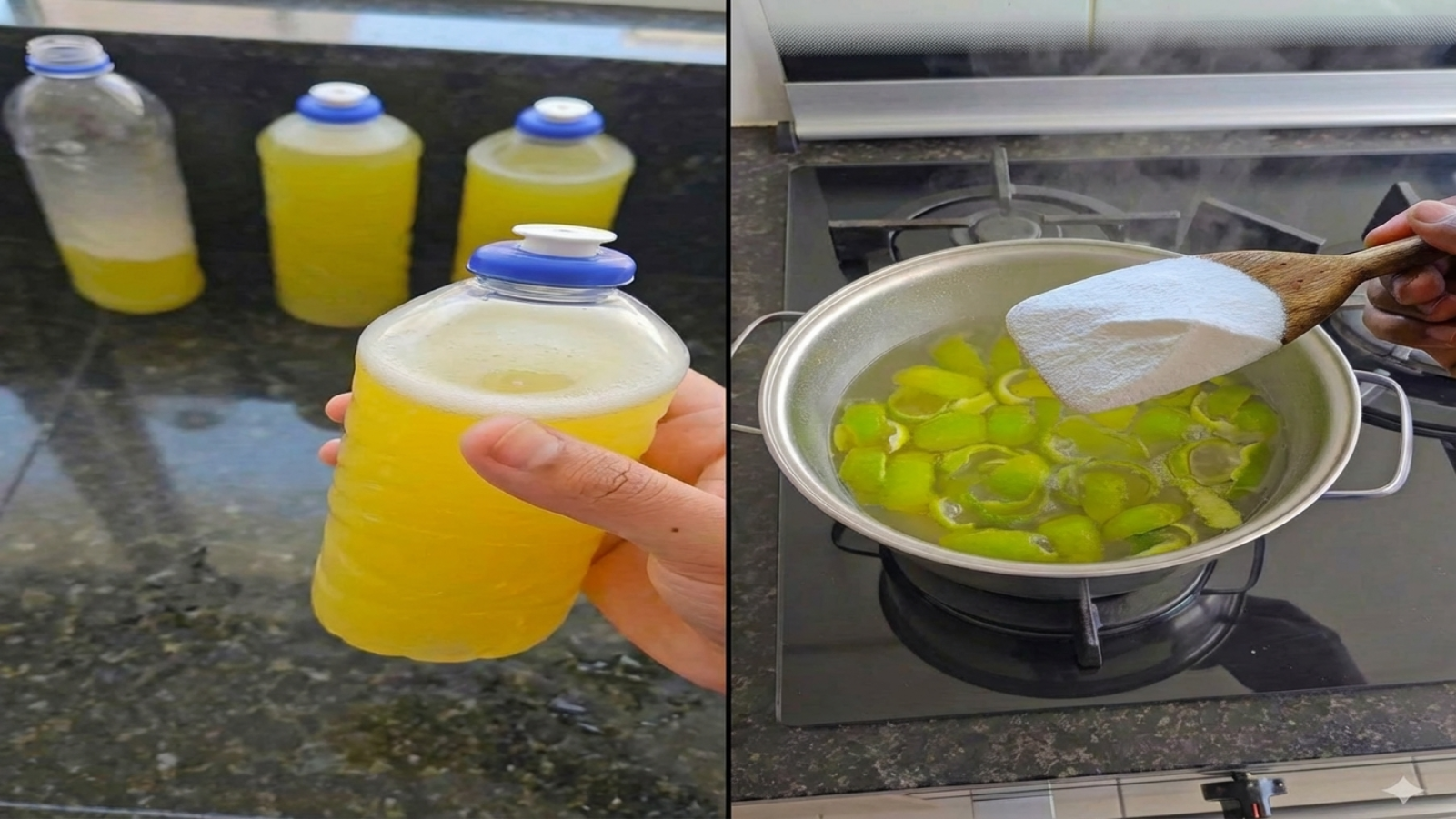
1. Heat the Water with the Lemon Peels
Pour 1 liter of water into a pot and add the lemon peels. As the water warms, the citrus oils and natural acids begin to release, forming the base of the cleaner.
2. Add the Salt
Stir in two tablespoons of salt until it dissolves completely. Salt helps extract the cleaning compounds from the lemon peels and assists in loosening stubborn residues.
3. Carefully Mix in the Baking Soda
Add one tablespoon of baking soda slowly. The mixture may foam slightly, which is normal. Continue stirring until everything blends smoothly.
You may notice the liquid turning slightly yellow as the lemon oils infuse the mixture.
4. Strain the Liquid
Once the mixture reaches a gentle boil, remove it from the heat. Strain the liquid to separate the lemon peels, leaving you with a warm lemon-infused cleaning base.
5. Slowly Add the Vinegar
Gradually pour 150 ml of apple cider vinegar into the mixture while stirring. Adding it slowly helps maintain a smooth and stable solution.

6. Mix in the Dish Detergent
Add the entire bottle of liquid dish detergent. Stir gently until the mixture becomes smooth, thick, and evenly blended.
7. Store the Cleaner
Pour the finished cleaner into clean bottles or containers. This recipe typically produces about three to four bottles of cleaner, making it a very economical alternative to commercial products.
How to Use Your Homemade Cleaner
For Burnt Pots and Pans
Apply the cleaner directly to the affected surface and let it sit for 3 to 5 minutes. Scrub gently with a sponge to lift burnt residue more easily.
For Stainless Steel Surfaces
This cleaner removes fingerprints, grease, and water marks. Apply a small amount to a sponge, wipe the surface, then rinse for a bright, polished finish.
For Sinks and Faucets
Use the cleaner to remove limescale, yellowish stains, and dull buildup from metal fixtures. Allow it to sit briefly before rinsing.
For Tiles and Countertops
Dilute one or two tablespoons of the cleaner in warm water to wipe down tiles, counters, and general kitchen surfaces.
For Tough Grease
Apply the cleaner undiluted to stovetops, oven doors, or areas with heavy oil buildup for stronger grease-cutting action.
Tips for Best Results
Shake the bottle gently before use, as natural ingredients may settle over time.
Rinse surfaces with warm water to enhance cleaning results.
Always test the cleaner on a small area first if using it on delicate materials.
Avoid using it on natural stone surfaces such as marble or granite, as citric acid may dull the finish.
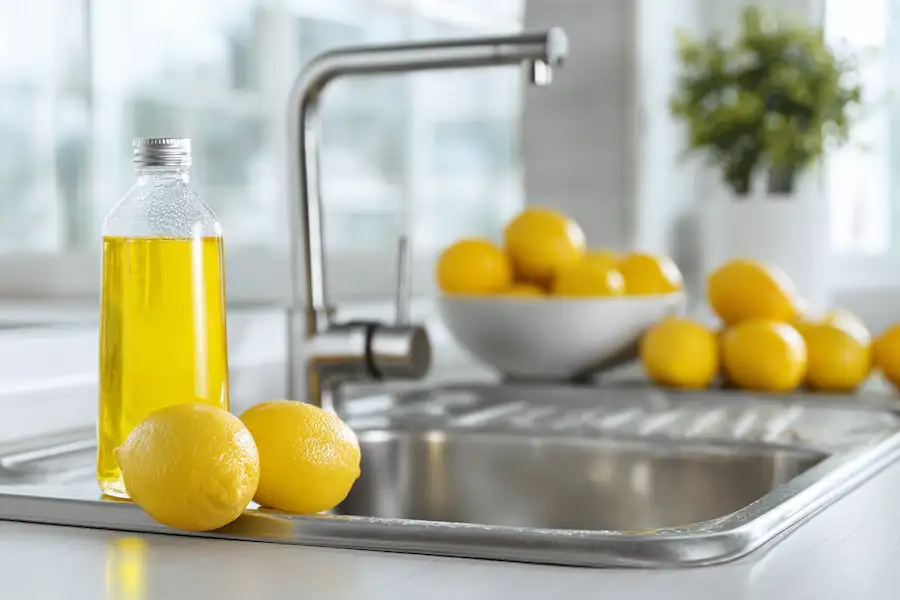
This homemade lemon peel cleaner shows that powerful cleaning solutions can be simple, natural, and affordable. With a few ingredients and minimal preparation, you can create a versatile cleaner that removes grease, restores shine, and refreshes your home.
Even better, this recipe helps you reuse lemon peels that would normally be discarded, turning kitchen scraps into a highly effective household cleaning solution.
Try it yourself, and you may find that this natural formula replaces several commercial cleaners in your everyday routine.
