
A Blood Blister: Often Alarming but Usually Harmless
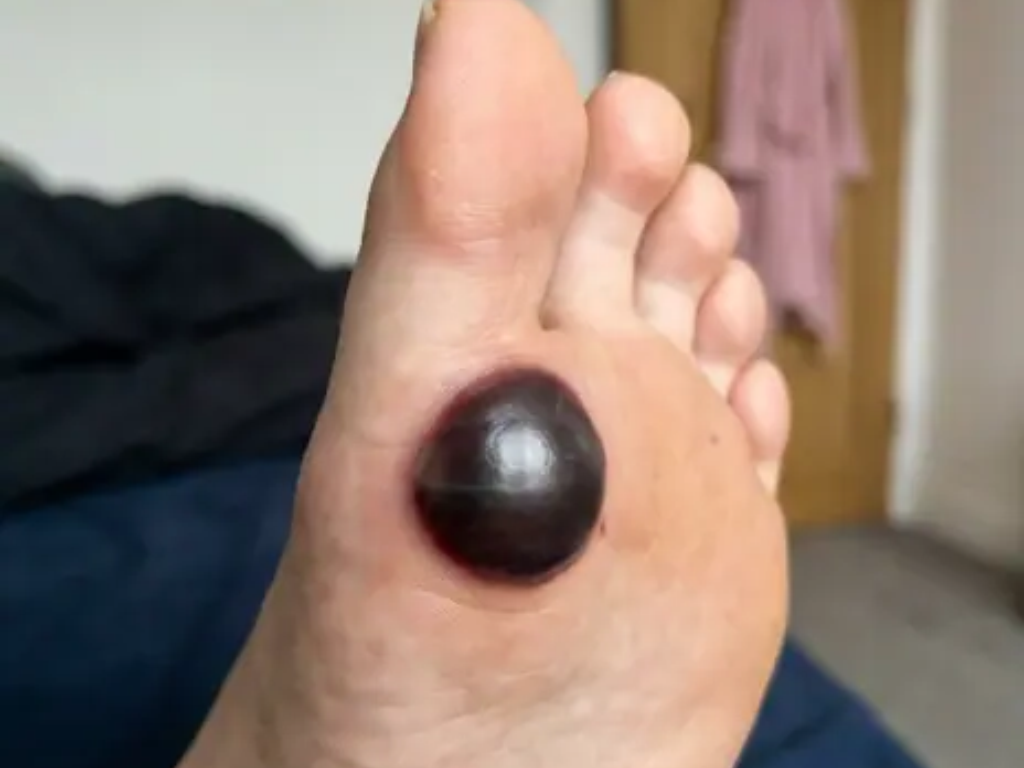
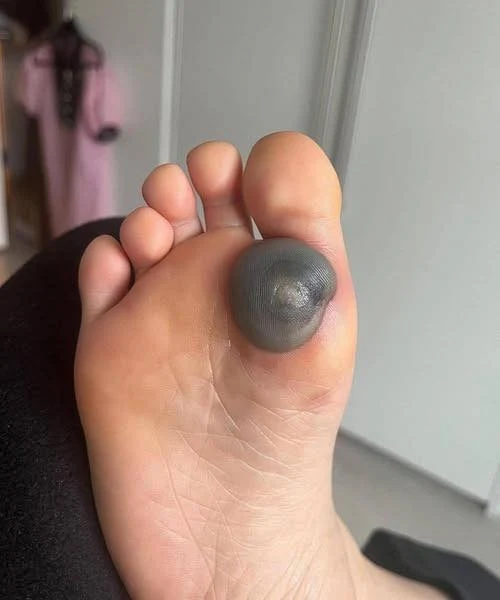
When a dark blister appears on the skin, the immediate thought is often that of a blood blister. These can take on hues ranging from deep red to purplish or even burgundy, which can be worrisome at first glance. However, in most cases, this formation is completely benign and naturally resolves within a few days.
Such blisters develop when small blood vessels beneath the epidermis rupture without damaging the outermost layer of the skin. The blood then accumulates just under the surface, creating the distinctive blister.
This phenomenon typically results from tight shoes, long walks, pinching, or intense physical exertion. The areas most commonly affected include the toes, the sole of the foot, and the heel, but blood blisters can also occur inside the cheeks.
When a Simple Blister Does Not Fully Explain the Pain
This point is crucial: a typical blood blister should not restrict the foot’s mobility. If your child has difficulty moving their foot, this often signals a more serious underlying issue.

Several causes could explain such a situation:
A localized infection. When bacteria invade the area, the pain intensifies and is often accompanied by spreading redness, warmth, swelling, and possibly fever.
Infectious cellulitis. This should not be confused with cosmetic cellulite. Infectious cellulitis is a severe bacterial skin infection that progresses rapidly, causing sharp pain, localized warmth, and difficulty moving the affected limb.
A deep hematoma. Even without any remembered injury, unnoticed trauma can cause internal bleeding affecting deeper tissues.
An insect bite. Certain inflammatory or allergic reactions can cause rapid swelling along with significant pain.
Nerve compression. Swelling that compresses a nerve can make movement painful or even impossible.
Signs That Require Immediate Medical Attention
It is important not to panic but to remain vigilant. Certain symptoms should prompt a rapid consultation, sometimes without delay:
– The foot cannot move at all
– The pain worsens rather than improves
– The redness spreads or forms streaks
– The skin feels hot to the touch
– Fever appears
– Your child seems tired, withdrawn, or drowsy
– A recent trauma, even minor, has occurred
In these circumstances, do not hesitate and seek emergency care or see a doctor as soon as possible.
What to Do While Waiting for Medical Evaluation?
To relieve your child while awaiting medical advice, here are some simple recommendations: elevate the foot to reduce swelling, apply a cold compress wrapped in a clean cloth (never directly on the skin), and most importantly, avoid attempting to pierce the blister.
If the symptoms remain mild and the foot’s mobility is preserved, you may monitor the situation at home by keeping the foot elevated, applying cold in 15-minute intervals, and keeping the area clean and dry. Nevertheless, when in doubt, consulting a healthcare professional is always the safest choice.
Trust your parental instinct—it is always your best guide.
