
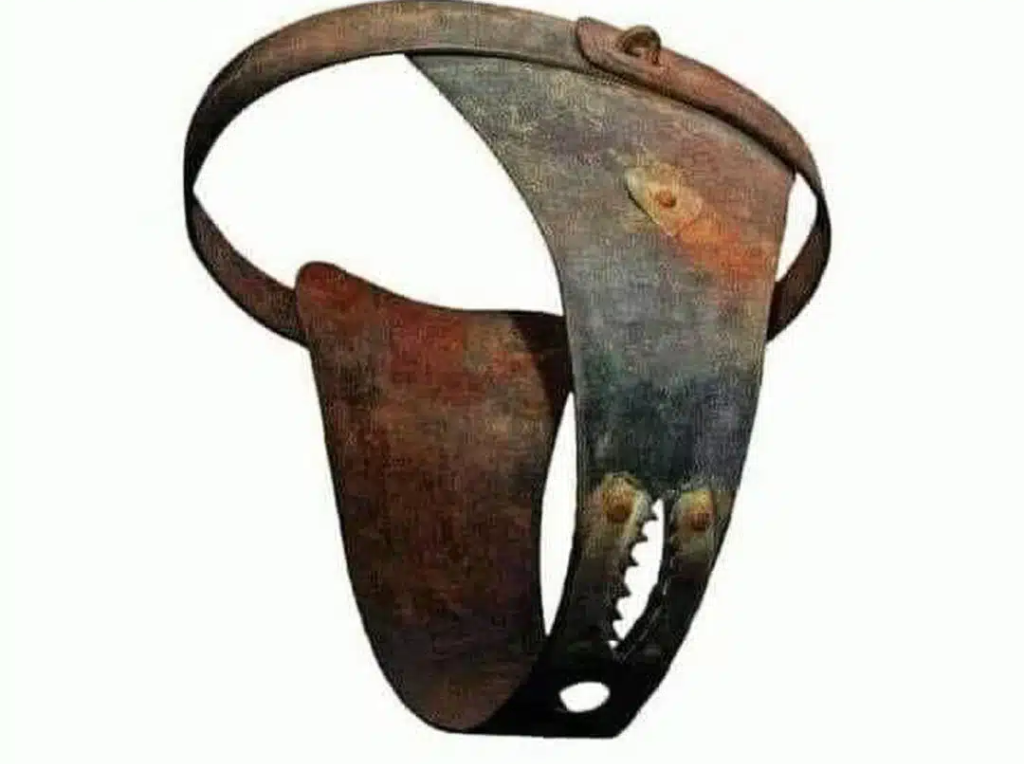
The Chastity Belt: A More Recent Invention Than Commonly Believed

Contrary to the widely held belief, the use of chastity belts during the Middle Ages is now recognized as being greatly exaggerated by popular narratives. Although a few illustrations appear in some old manuscripts, these are primarily satirical or folkloric depictions, rather than evidence of a widespread or common practice at that time.
The earliest surviving metal specimens, which can be admired today in various museums, in fact date from the Renaissance period or sometimes even from the 19th century. Many experts suggest that these devices served more as instruments of torture or were created as curiosity objects, wildly exaggerating the supposed strict moral codes of medieval times.
Moreover, the idea of forcing a woman to wear such a restrictive device for several months or even years would inevitably have caused severe infections and major health complications. It therefore seems highly unlikely that knights, concerned about defending their wives’ honor, would deliberately take such a risk.
Hygiene Practices in the Middle Ages: A Nuanced Picture


So, if these chastity belts were almost non-existent, what was the reality regarding personal hygiene during this period? It is true that regular bathing was not widespread. Yet, contrary to popular misconceptions, certain social classes had access to public baths or owned wooden tubs to wash at home. For the majority, however, water was often viewed as a conveyor of disease, and washing remained very basic.
The nobles and wealthy individuals tended to perfume themselves heavily and wore linen garments designed to absorb impurities from the skin. Regarding the famous bride’s bouquet, while part of its function was to mask body odors, this tradition also had roots in pagan rituals intended to bring luck and ward off evil spirits.
At the Intersection of Myth and Reality

The chastity belt as it is commonly imagined, as an accessory frequently used during the Middle Ages, is therefore largely a myth. It appears primarily as a later invention, fueled by fantasies and subsequent stories. Regarding hygiene, although it was very different from our modern standards, it was not entirely absent.
Ultimately, the Middle Ages remain a period often misunderstood, where preconceived notions and popular legends have sometimes overshadowed historical reality. It is therefore important to adopt a critical approach: do not blindly trust simplified versions that are often told to you!
