
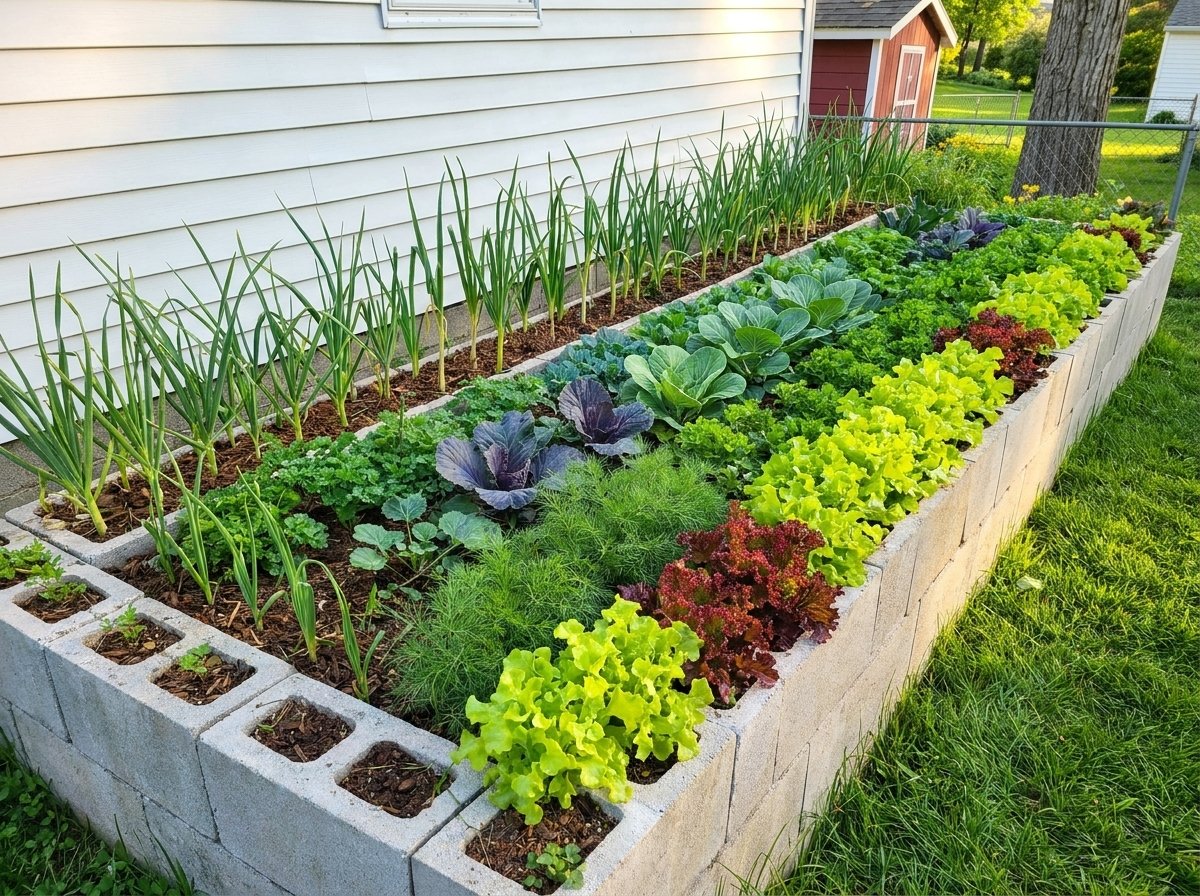
20 Concrete Block Garden Bed Ideas for a Stylish and Productive Outdoor Space
Concrete block garden beds are a smart, affordable, and long-lasting way to build a beautiful growing area. They are easy to arrange, sturdy enough for raised beds, and versatile enough for vegetables, herbs, flowers, succulents, or decorative landscape features.
Whether you have a spacious backyard, a narrow side yard, or a small patio corner, these concrete block garden bed ideas can help you create a practical garden that looks organized, inviting, and easy to maintain.
1. Classic Rectangular Concrete Block Vegetable Bed
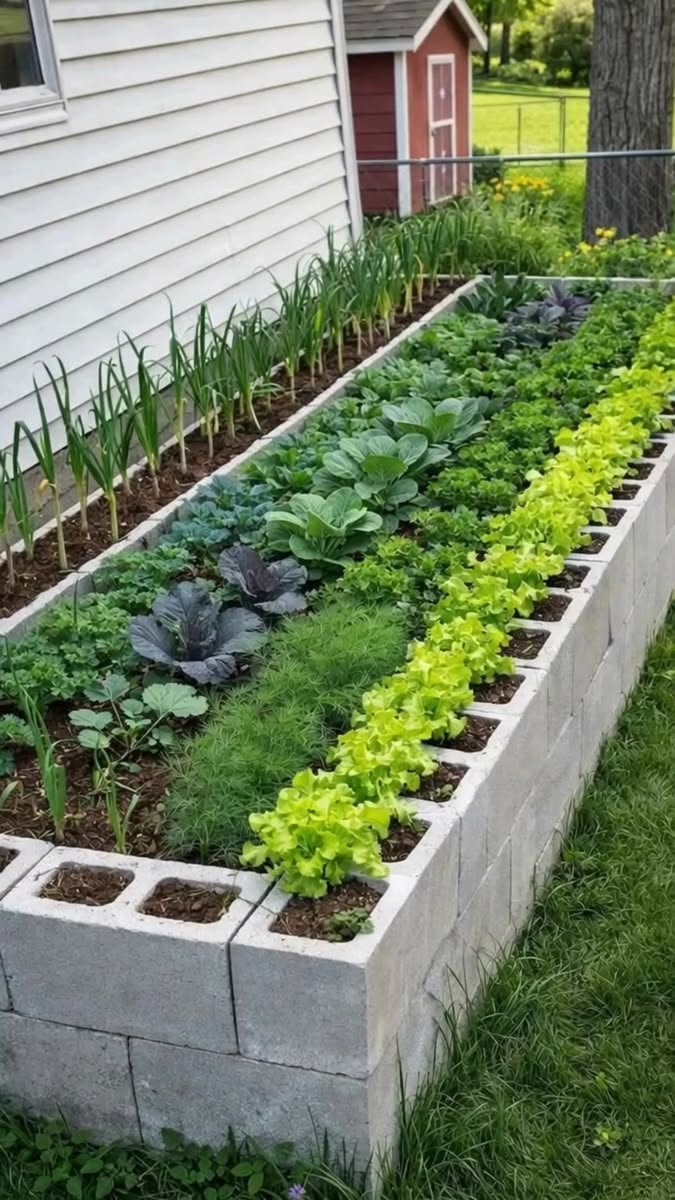
A rectangular concrete block bed is one of the simplest and most effective designs. The blocks create a strong border while the hollow openings can be used as extra planting pockets for herbs, flowers, or compact greens.
This layout works especially well for lettuce, cabbage, garlic, onions, and other neatly spaced crops. Its clean shape makes planting, watering, and harvesting easier while giving the garden a calm, organized appearance.

2. Layered Concrete Block Planter for Succulents
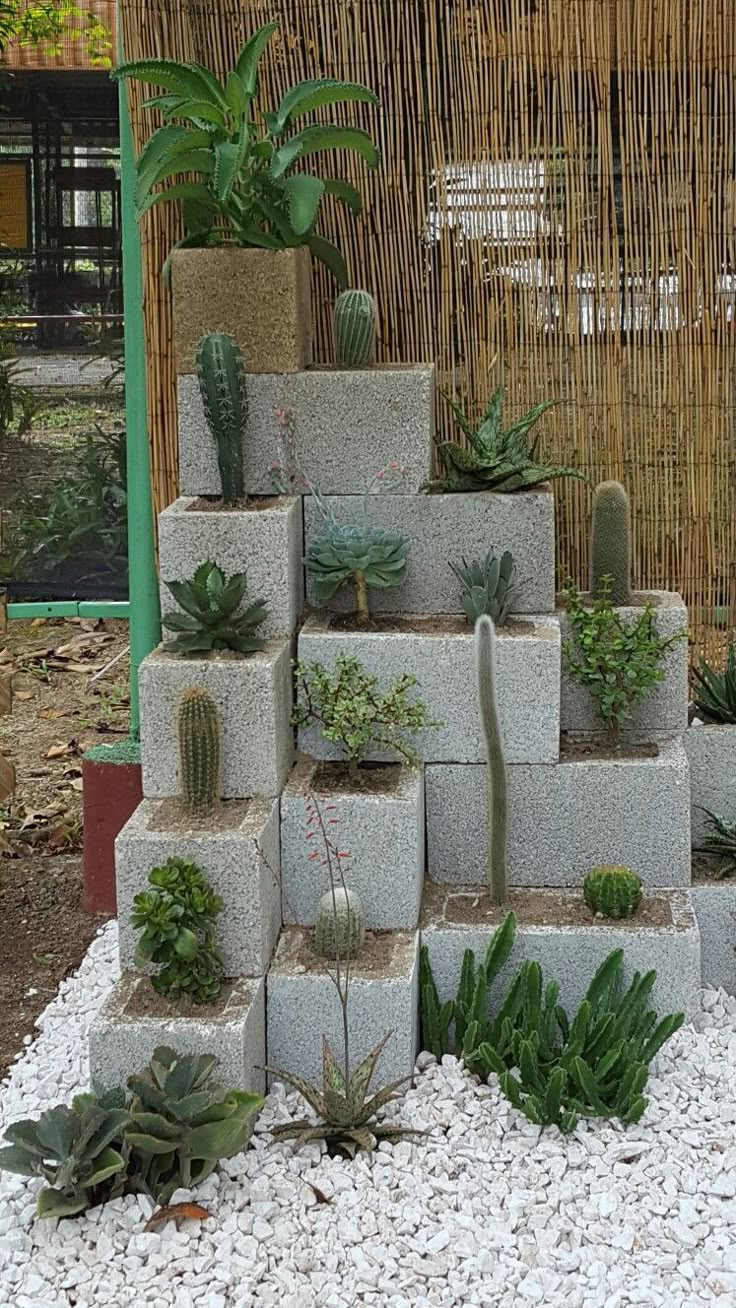
A tiered concrete block planter is ideal for succulents, cacti, and drought-tolerant plants. By stacking the blocks at different heights, you can create a compact vertical garden with plenty of visual interest.
The gray blocks pair beautifully with white gravel, bamboo fencing, and sculptural plants. This design is perfect for patios, courtyards, and small outdoor spaces where every inch matters.
3. Modern Concrete Block Beds with Mulch Pathways
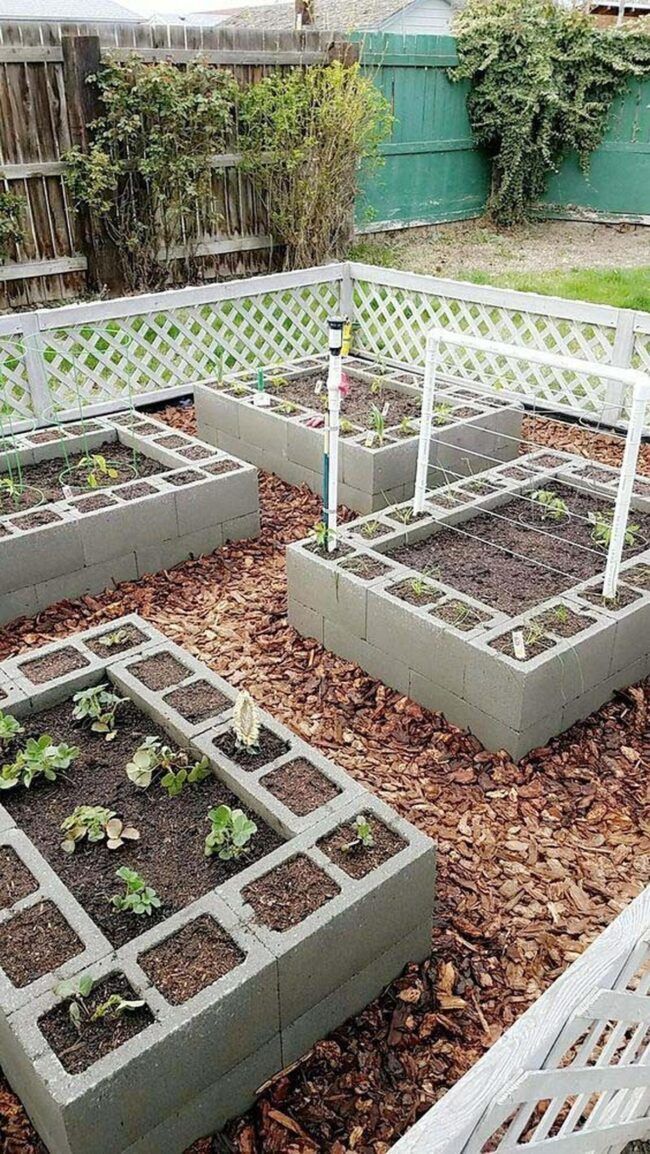
Concrete block beds surrounded by mulch create a tidy and functional garden zone. The mulch softens the industrial look of the blocks while helping retain soil moisture and reduce weeds.
The hollow block spaces can be filled with flowers or herbs to make the borders more decorative. This style is practical, modern, and easy to adapt for both small and large gardens.
4. Corner Concrete Block Garden with Stacked Planters
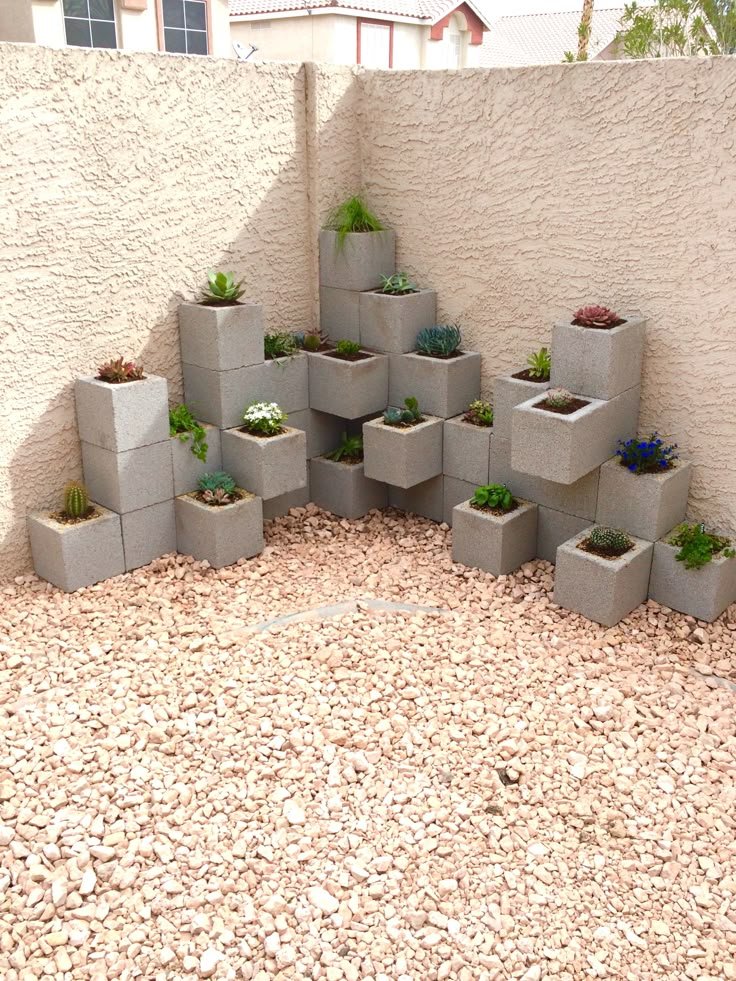
A corner garden made from stacked concrete blocks can turn an unused area into a charming focal point. The blocks can be arranged asymmetrically to create movement, height, and planting pockets.
This idea works especially well with succulents, small cacti, trailing plants, and colorful flowers. It is a smart choice for gravel gardens, xeriscapes, and compact urban yards.
5. Multi-Purpose Concrete Block Garden Bed
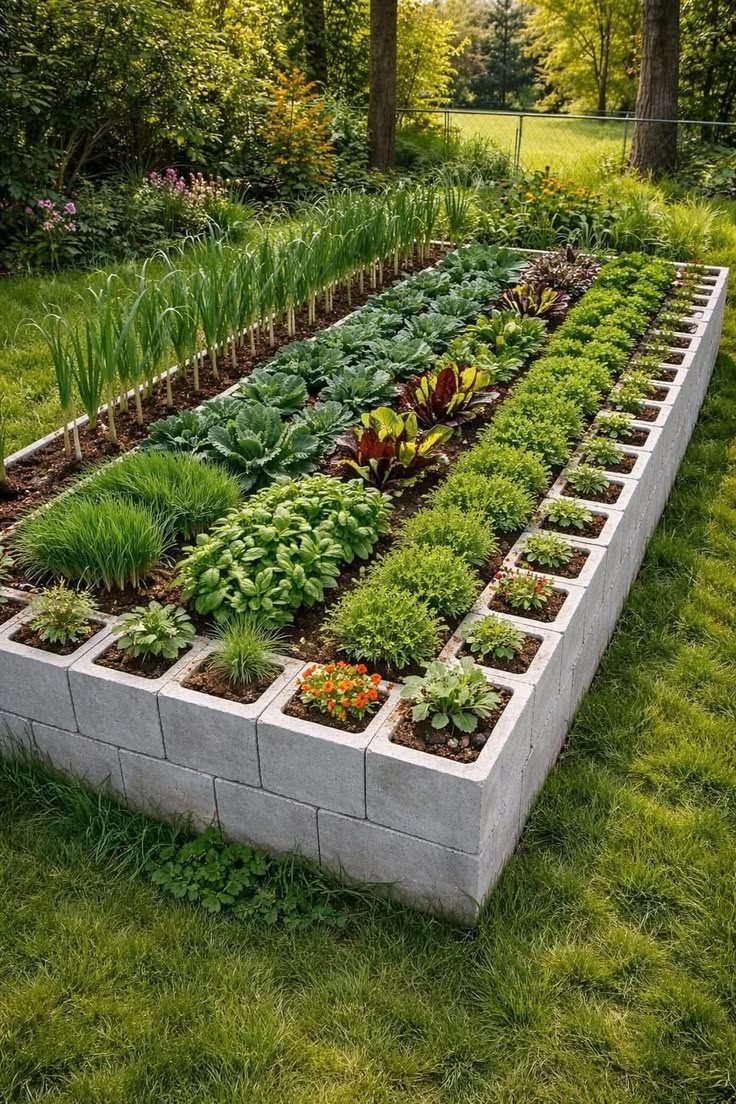
This design combines productivity and decoration in one raised bed. The central area can be planted with vegetables, while the block openings around the edge can hold herbs or bright flowers.
The result is a colorful, efficient garden that feels structured without looking plain. It is a great option for gardeners who want a bed that is both useful and attractive.
6. Tiered Concrete Block Bed with Herbs and Flowers
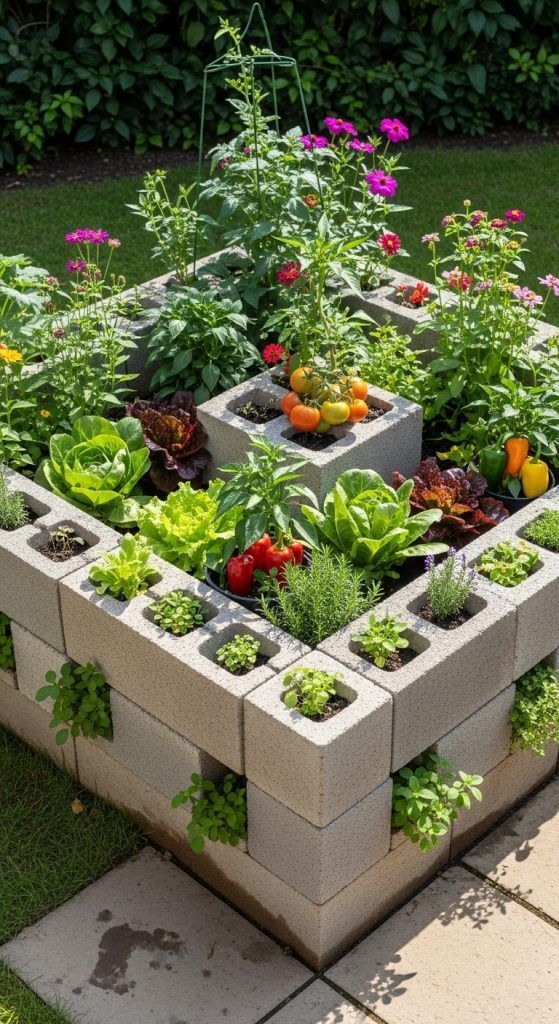
A tiered concrete block bed gives plants different levels to grow, making the garden feel fuller and more dynamic. The upper sections can hold herbs and flowers, while the main bed can support vegetables.
Plants such as rosemary, mint, peppers, lettuce, and compact blooms work beautifully in this style. It is a strong choice for small yards where vertical space is just as valuable as ground space.
7. Sleek Concrete Block Succulent Bed
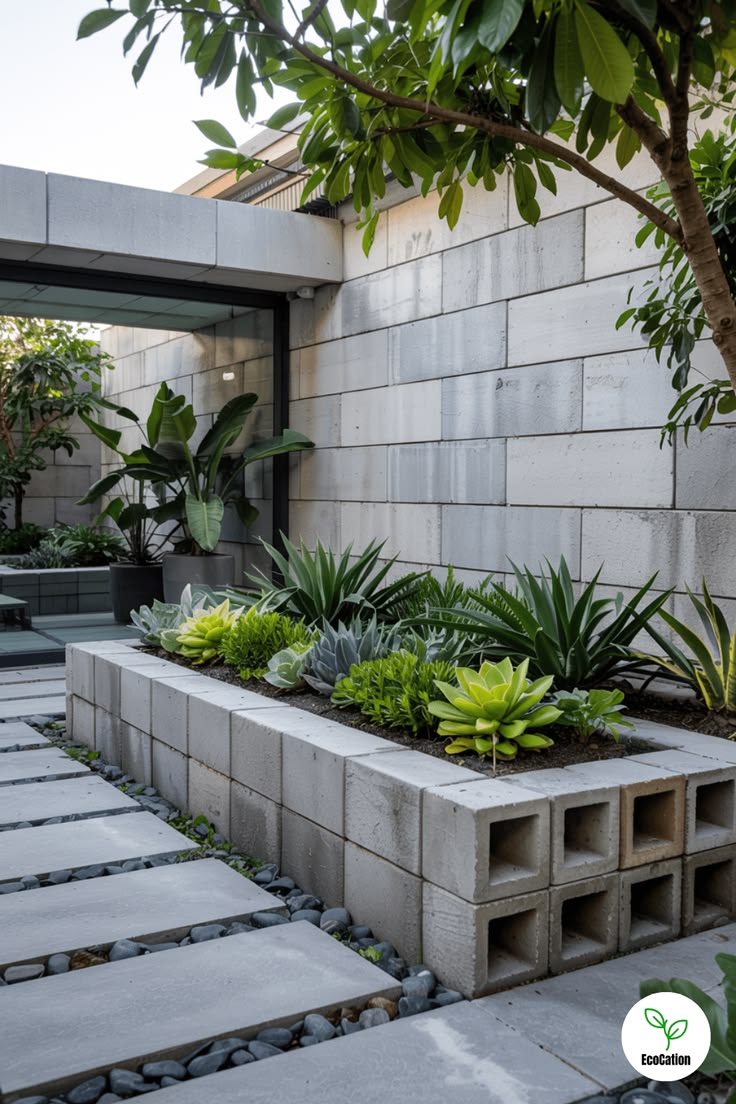
For a polished, low-maintenance garden, pair concrete blocks with succulents and decorative stones. Aloe, echeveria, sedum, and other drought-friendly plants bring texture and color to the simple block structure.
Surrounding the bed with river rocks or stepping stones gives the design a clean, contemporary finish. This idea is especially suited to modern homes and dry-climate gardens.
8. Concrete Block Bed with Flower-Filled Borders
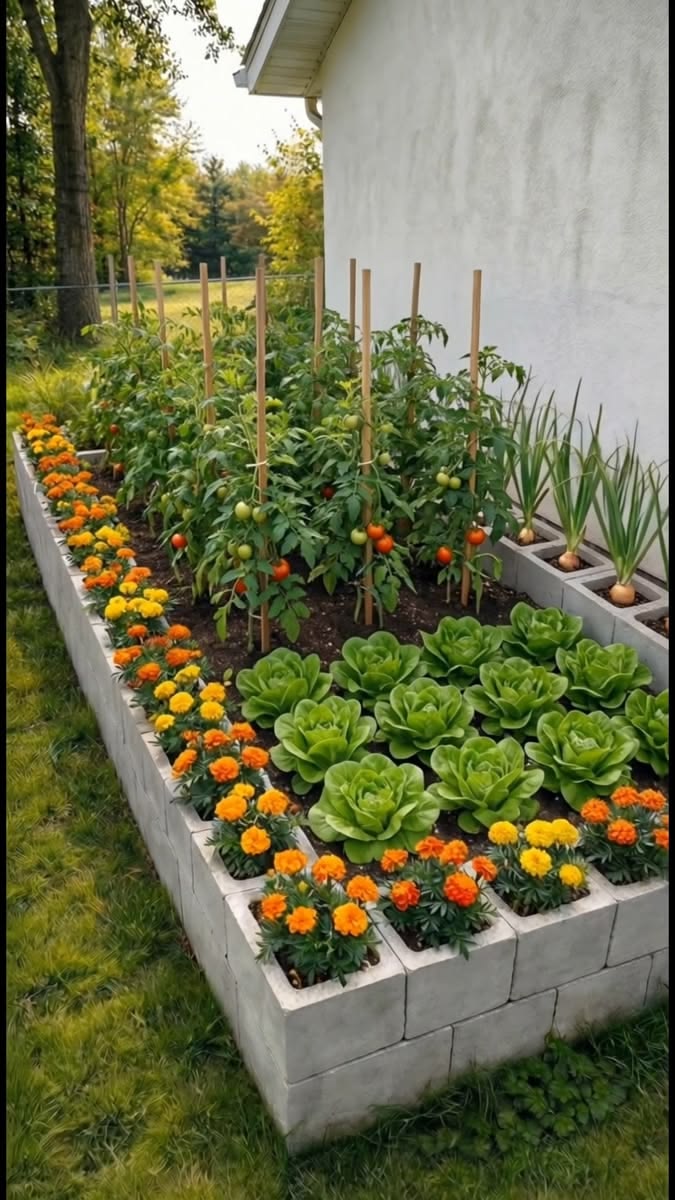
Filling the hollow spaces of concrete blocks with marigolds or other compact flowers instantly brightens a vegetable bed. The flowers create a cheerful border while helping the garden look more intentional.
Inside the main bed, leafy greens and staked tomato plants can thrive in organized rows. This design blends beauty and productivity in a simple, space-saving way.
9. Tiered Vegetable Garden with Concrete Blocks
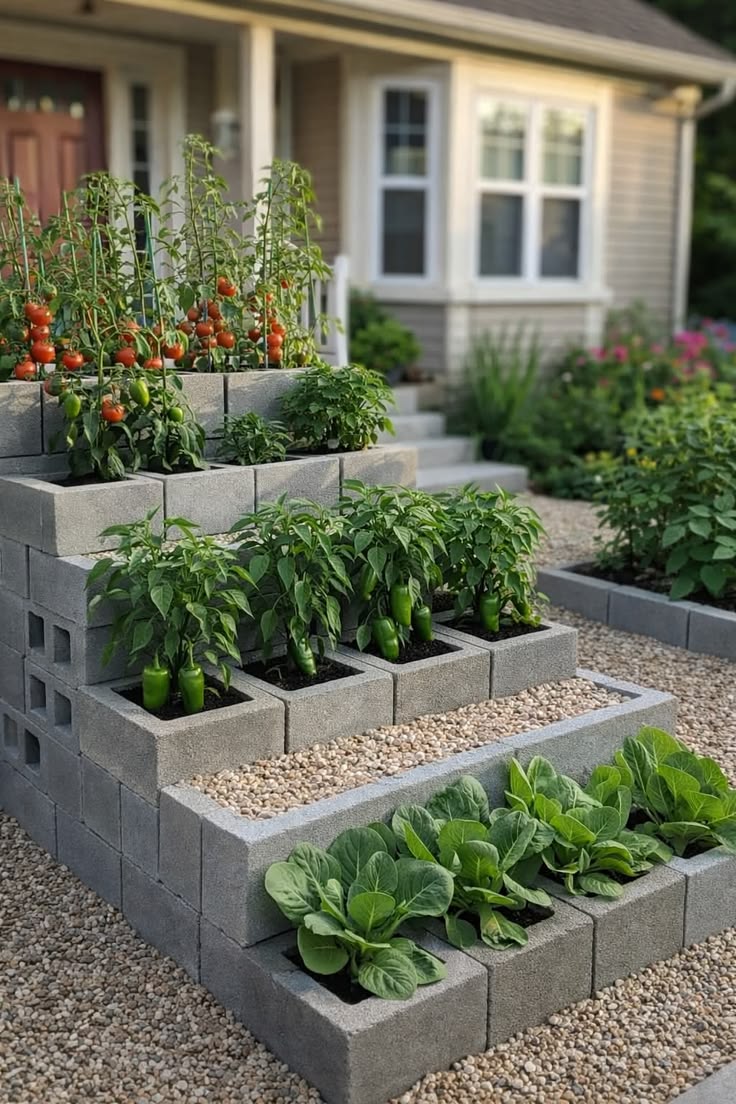
A multi-level concrete block garden is excellent for growing a mix of vegetables in a compact footprint. Lower levels can hold cabbage or lettuce, middle sections can support peppers, and upper tiers can showcase tomatoes.
The stacked structure improves visibility and makes the bed feel abundant. It also creates an attractive balance between rugged concrete and lush edible plants.
10. Parallel Concrete Block Beds with Gravel Walkway
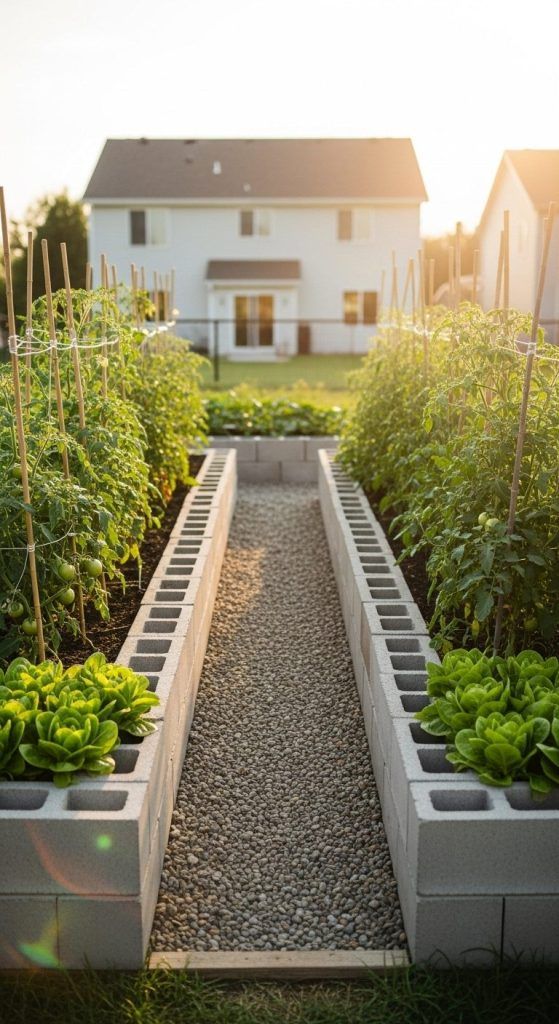
Two parallel concrete block beds with a gravel path between them create a clean and efficient garden layout. The walkway keeps the area accessible, dry, and easy to maintain.
This setup is ideal for tomatoes, herbs, lettuce, and other frequently harvested crops. It also gives the garden a symmetrical, professional look.
11. Illuminated Concrete Block Garden Wall
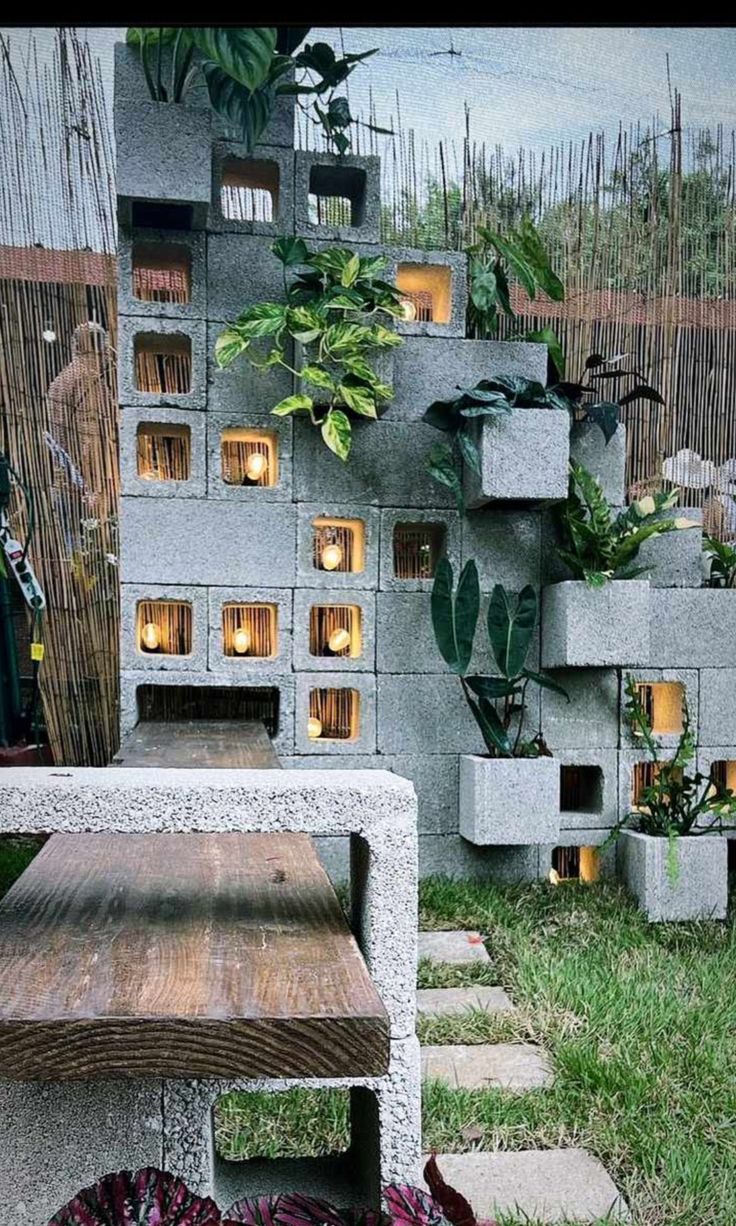
Concrete blocks can also be used to create a vertical garden wall with built-in charm. Some openings can hold trailing plants, while others can be used for soft outdoor lighting.
This design adds ambiance in the evening and makes the garden feel cozy and architectural. It works well near seating areas, patios, or privacy fences.
12. Backyard Concrete Block Raised Beds
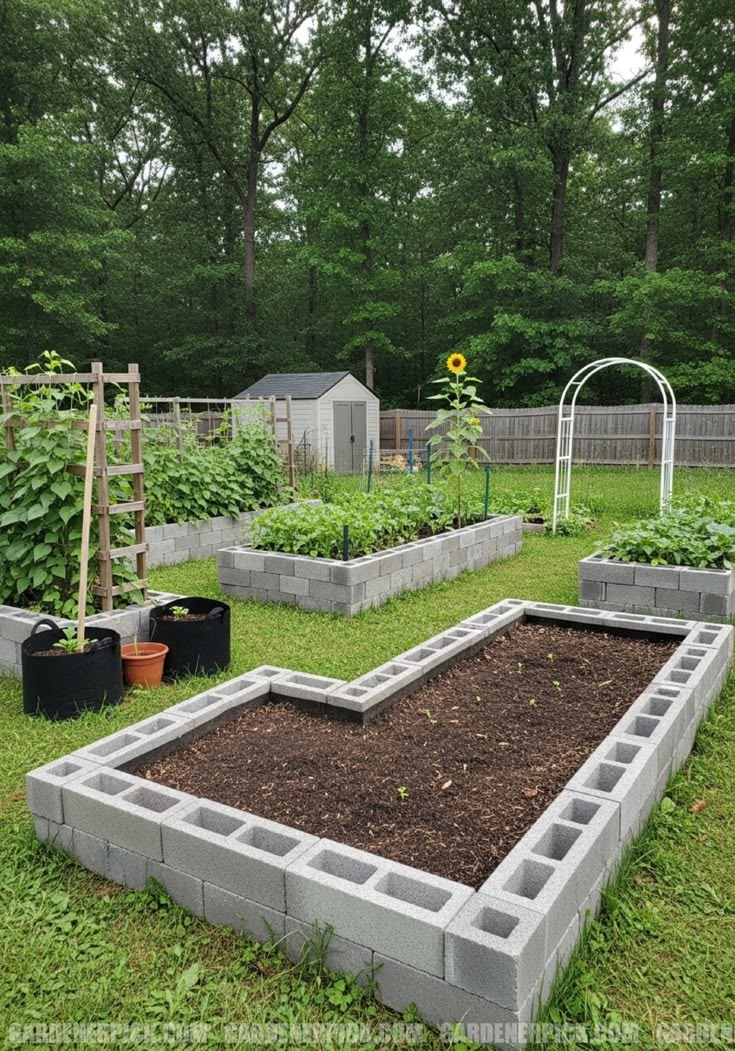
Concrete block raised beds can bring order and structure to a busy backyard garden. Their straight edges define planting areas clearly and make it easier to separate vegetables, herbs, and flowers.
Adding a trellis, arch, shed, or sunflower nearby gives the space personality. This style is practical for everyday gardening while still feeling warm and inviting.
13. Geometric Concrete Block Garden Layout
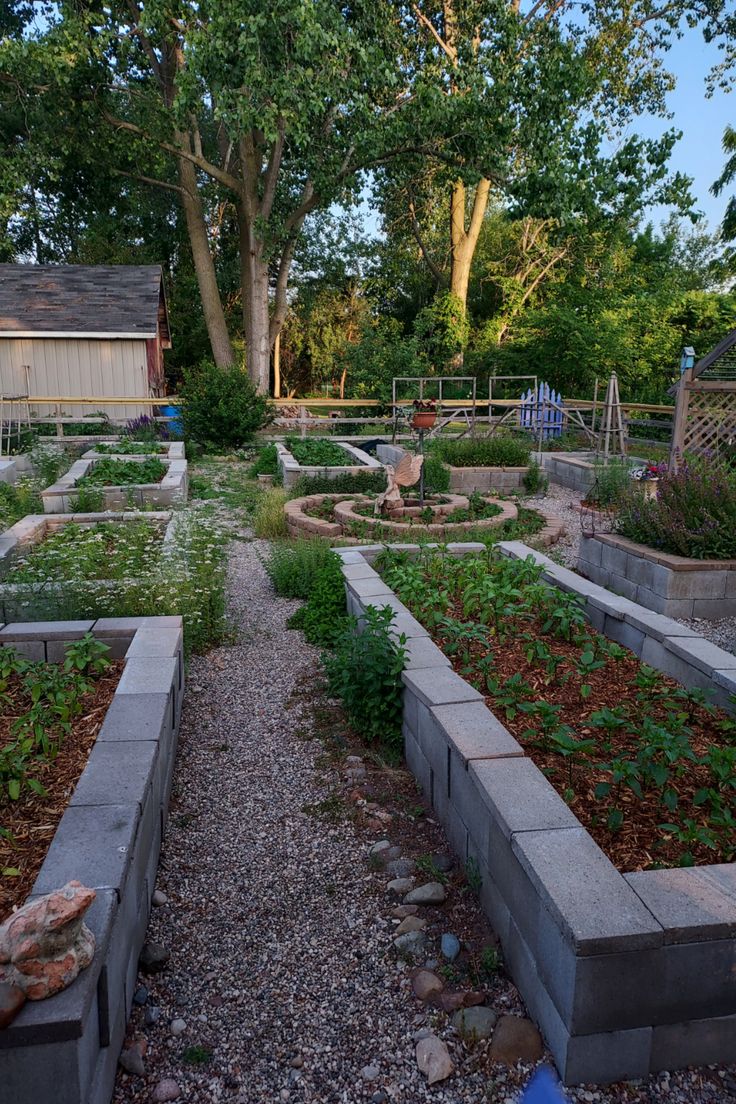
A geometric layout turns concrete block beds into a true landscape feature. Rectangular beds, gravel paths, and a central circular area can make the garden feel planned and elegant.
This design is especially appealing in larger yards where multiple beds can be arranged into a balanced pattern. It combines easy access, strong structure, and visual harmony.
14. Wall-Side Concrete Block Garden Bed
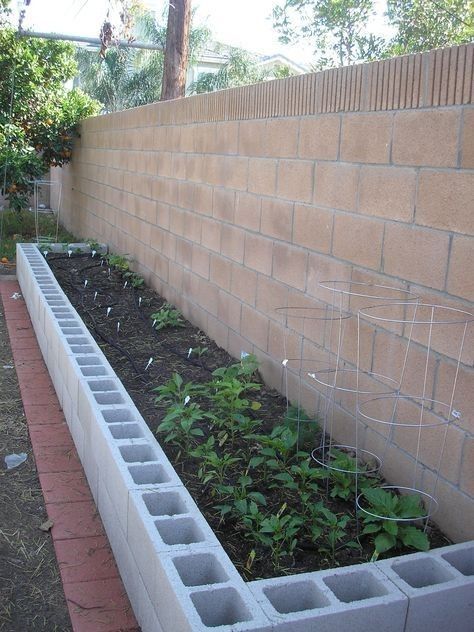
A narrow concrete block bed along a wall is perfect for making use of limited space. It creates a clean planting strip for seedlings, herbs, leafy greens, or tomatoes.
The wall provides a simple backdrop, while cages or stakes can support taller plants. This is a practical idea for side yards, courtyards, and small suburban gardens.
15. Pyramid Concrete Block Garden Bed
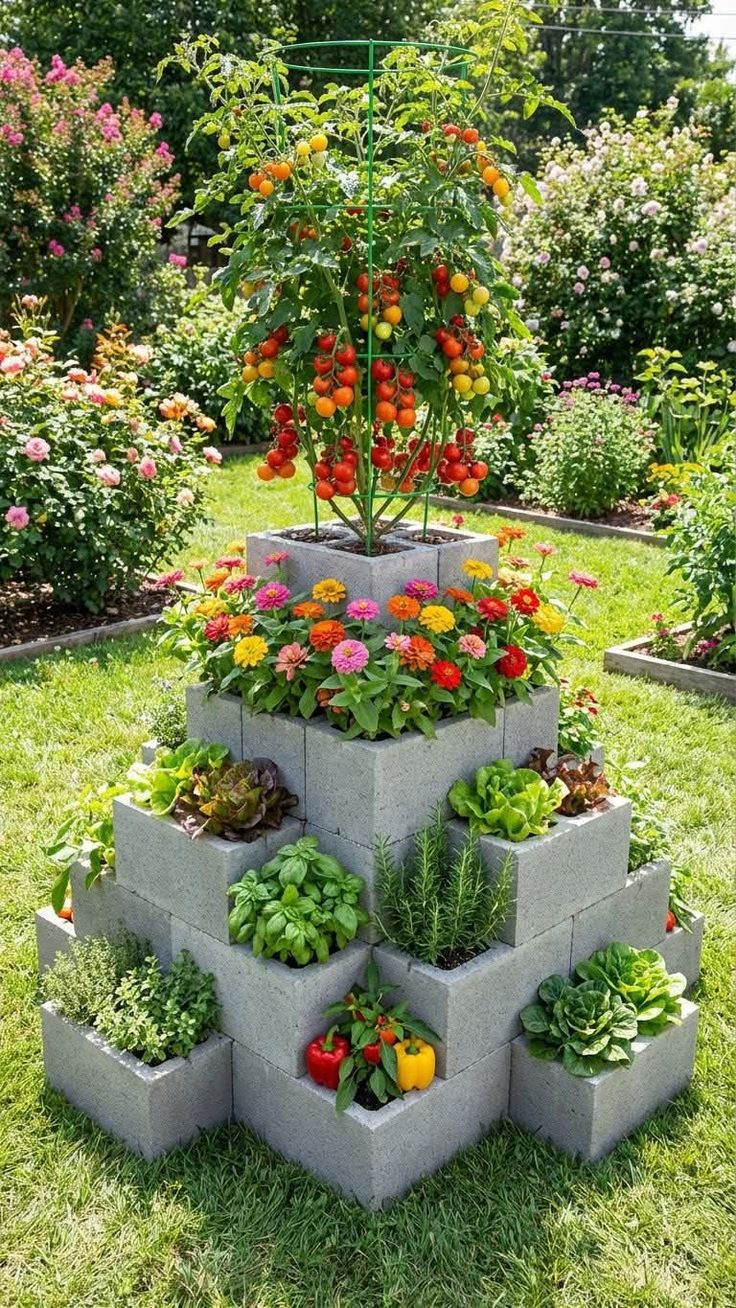
A pyramid-style concrete block bed brings height and drama to the garden. Each tier becomes a separate planting zone for herbs, vegetables, and flowers.
Tomatoes can grow at the top, while basil, rosemary, thyme, lettuce, and bright blooms fill the lower levels. This design is decorative, productive, and ideal for gardeners who want a bold centerpiece.
16. L-Shaped Tiered Concrete Block Planter
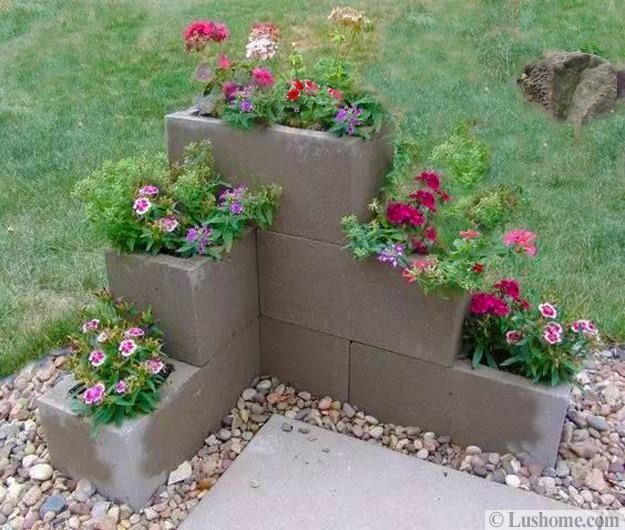
An L-shaped concrete block planter fits neatly into corners and edges. By offsetting the blocks, you can create staggered levels that show off colorful seasonal flowers.
Pebbles at the base add texture and help keep the design looking polished. This is a budget-friendly way to add color, height, and structure to a small garden area.
17. Modular Concrete Block Beds for Vegetables
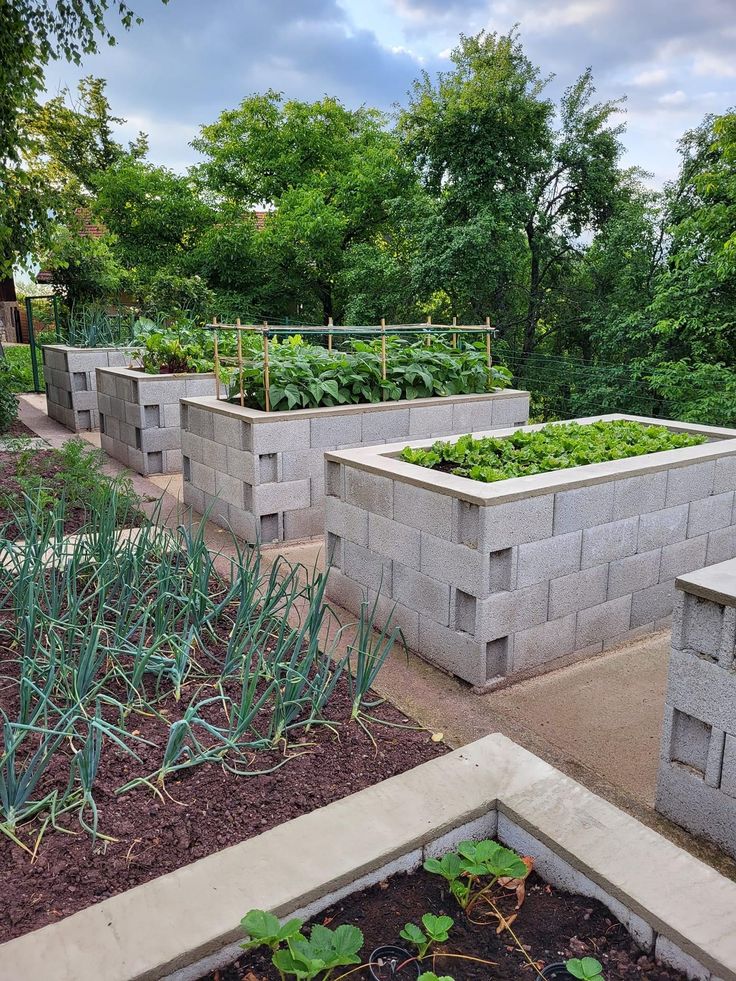
Multiple concrete block beds arranged in rows create a modular garden that is easy to expand over time. Each bed can be dedicated to a different crop, making planting and crop rotation simpler.
The strong lines of the blocks give the garden a clean, organized feel, while the greenery softens the overall look. This approach is excellent for serious vegetable growers.
18. Painted Concrete Block Beds with Brick Trim
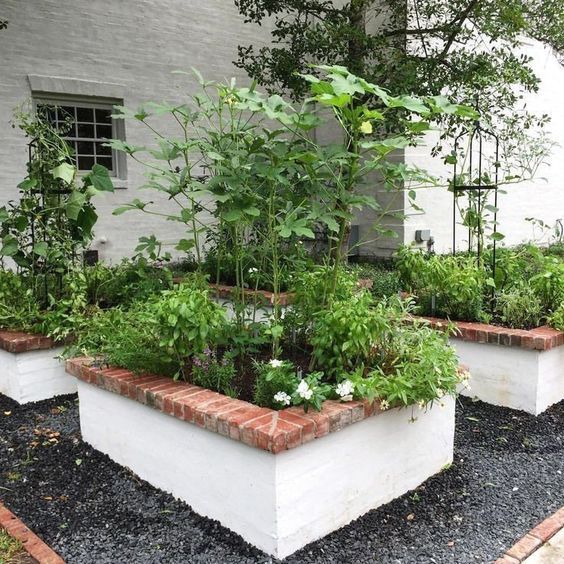
Painting concrete blocks and adding brick trim can make raised beds feel more refined. White blocks create a fresh, bright base, while brick edging adds warmth and character.
This design works beautifully with gravel pathways and lush green plants. It is a stylish option for homeowners who want raised beds that look permanent and polished.
19. Elevated Concrete Block Beds with Garden Tools
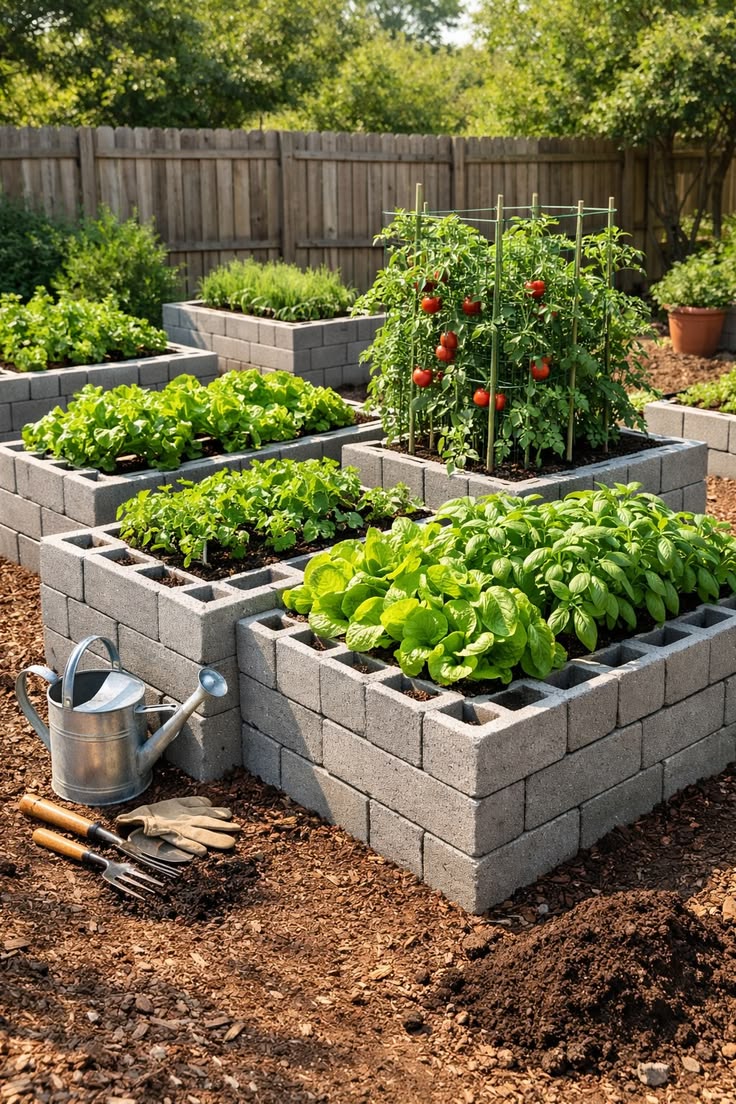
Elevated concrete block beds make gardening more comfortable by raising the soil level. They are sturdy, accessible, and suitable for growing leafy vegetables, tomatoes, herbs, and flowers.
Mulch around the beds adds warmth and keeps the surrounding area tidy. Add a watering can, hand tools, or small decorative accents nearby to give the space a lived-in garden charm.
20. Colorful Painted Concrete Block Garden Bed
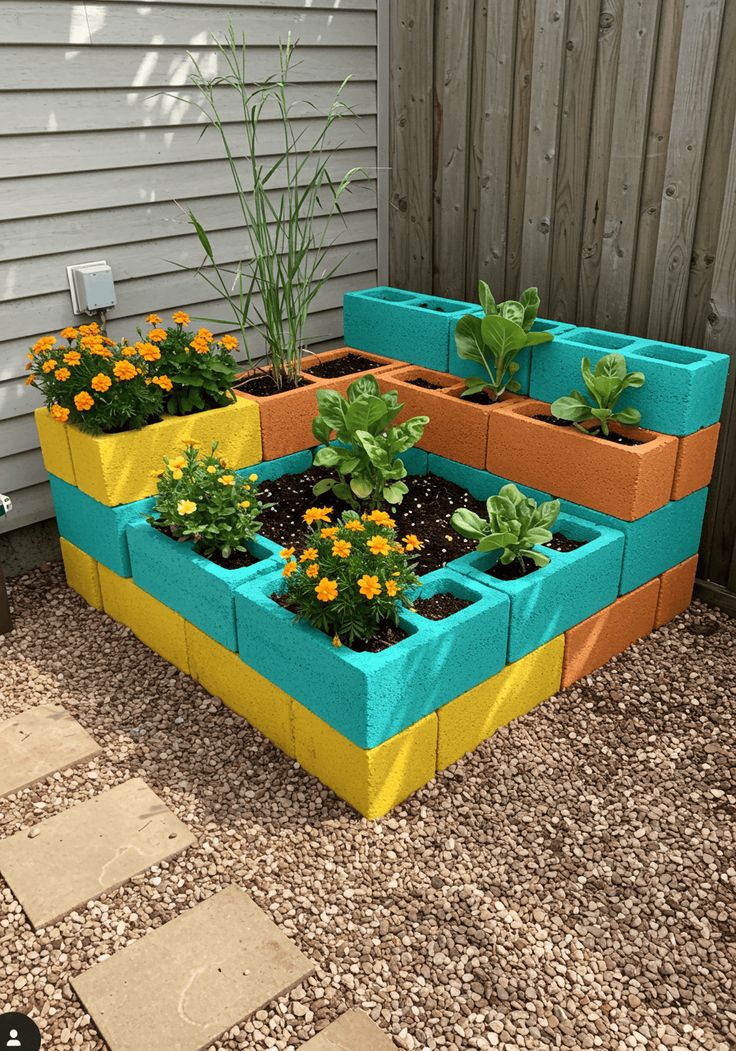
Painted concrete blocks are a playful way to personalize a garden bed. Bright colors such as turquoise, yellow, and orange can transform plain blocks into a cheerful design feature.
The hollow sections can hold marigolds, herbs, leafy greens, or ornamental grasses. This idea is perfect for small spaces, family gardens, or anyone who wants their garden to feel lively and unique.
Final Thoughts
Concrete block garden beds are affordable, durable, and endlessly adaptable. They can be arranged into simple rectangles, stacked into tiers, painted for color, or transformed into modern vertical planters.
Whether your goal is to grow fresh vegetables, display flowers, create a succulent garden, or add structure to your outdoor space, concrete blocks offer a practical foundation for a garden that is both beautiful and productive.
